Gangneung’s beaches face the East Sea, where long pale stretches of sand meet rocky points, small harbours and black pine. The water is colder and clearer than on Korea’s south and west coasts, and the seabed drops away quickly. Waves arrive with open water behind them, rather than from a sheltered stretch of coast. It is a shore with several moods, which is inconvenient for anyone hoping to summarise it as simply “the beach”.
Does every beach here feel like a summer swimming beach? No. The Korean word 해수욕장 (haesuyokjang) means swimming beach, and it appears at the end of nearly every beach name on the coast road. In summer, these are public swimming beaches. Out of season, they are stretches of sand for walking, sitting on the dunes and watching the sunrise. The name stays put; the occupation changes. The beaches do not all share the same shape or pace, either: some open out in long sandy lines, while others sit beside rocks or a harbour.
Gyeongpo
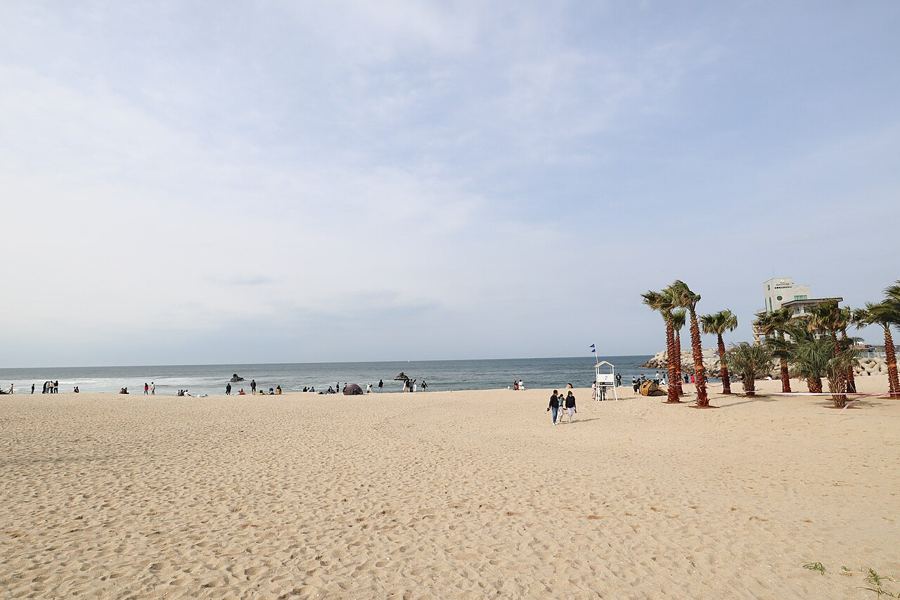
Is Gyeongpo just the busiest beach, with nothing to recommend it beyond the crowd? It is the longest and busiest, but that is not the whole story. The beach lies east of Gyeongpo Lake, with a broad belt of pine trees between the sand and the road. Its northern end turns rocky, and flat boulders green with weed make places to sit and watch the waves. A cycle path follows the back of the beach and circles the lake, joining sand and inland water in one easy change of scenery. The path gives the beach a second life away from the waterline, though a person can also simply stay put and watch the waves do their repetitive work.
In July and August, families, students and day-trippers from Seoul fill the shore. Parasols rise in rows, the promenade gets lively at night, and small firework sparklers fizz along the sand after dark. There is a particular confidence to a beach that can contain pine trees, cycling, fireworks and a large summer crowd without needing to choose just one personality. Summer has its own sound here: the promenade is lively, the beach is busy, and even a quiet patch of sand can seem to have made a reservation.
Is Gyeongpo only worth noticing when it is full? No. Outside summer, its east-facing shore makes it one of the city’s easiest places to see the sun come up over the sea. The beach is still the same length; the company is different. The northern rocks remain, the pines remain, and the sunrise continues without waiting for the parasols to return.
Sacheon and Yeongjin
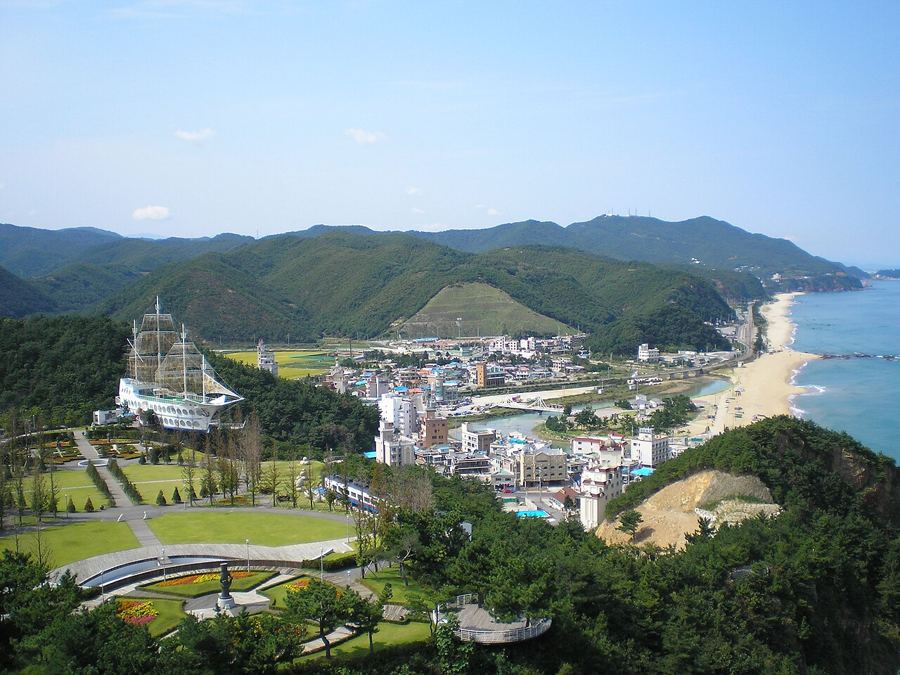
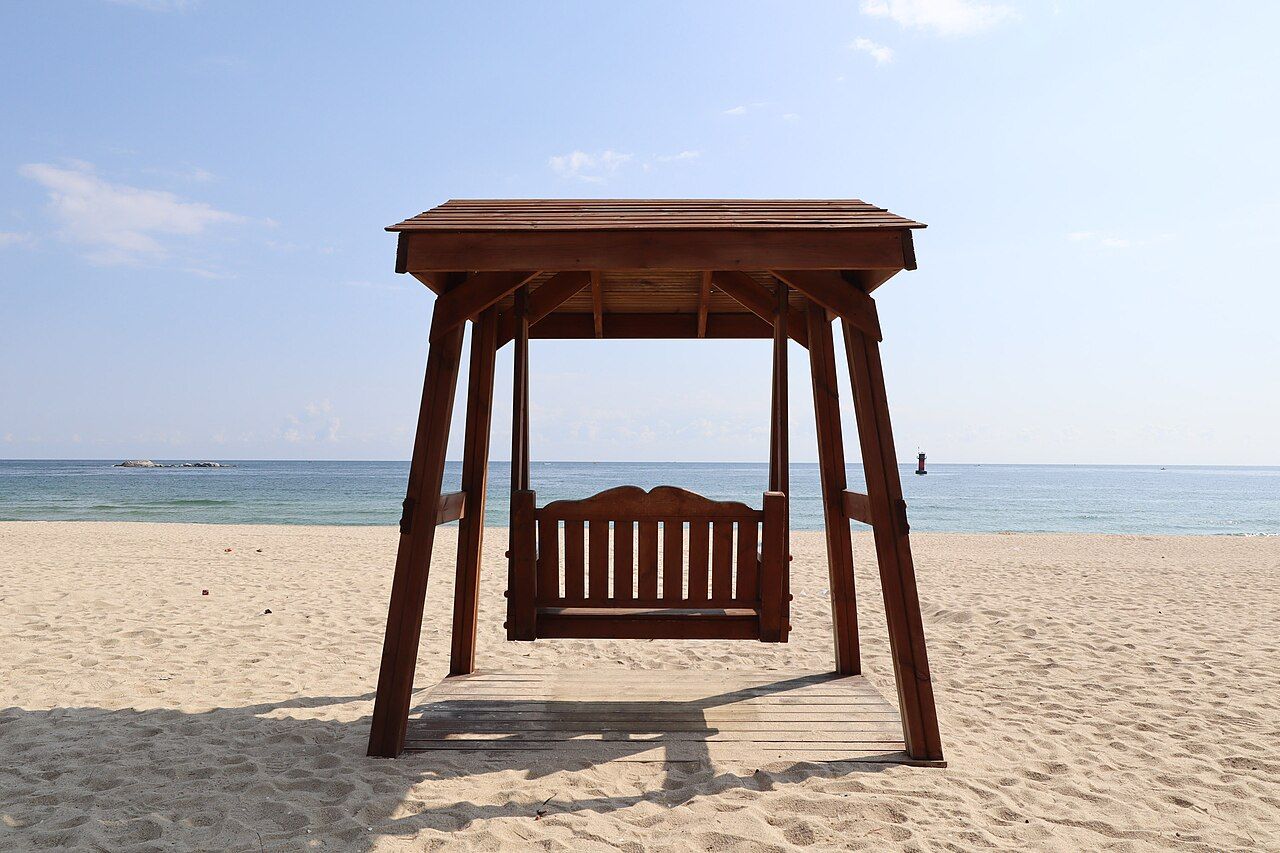
Does the coast north of Gyeongpo become a single, quiet beach? Not quite. The road passes a succession of smaller shores, each with its own arrangement of sand, pine and harbour. Sacheonjin and the neighbouring Sacheon beaches sit beside a small fishing harbour. Low pine woods back the sand rather than tall buildings, and the water often feels calmer. Local families are more in evidence than tour groups. Quiet, in this case, is a comparison, not a promise that the coast has gone away. The change is in the scale and company, not in some sudden disappearance of the East Sea.
Yeongjin is a short, open crescent near the road. At its southern end, a breakwater became well known after appearing in a popular television drama. People pose there in every season, which is one way of making a breakwater part of the scenery and another way of making scenery wait while a photograph is arranged. The shore itself remains an open curve of sand; the breakwater is an interruption with a small supporting role.
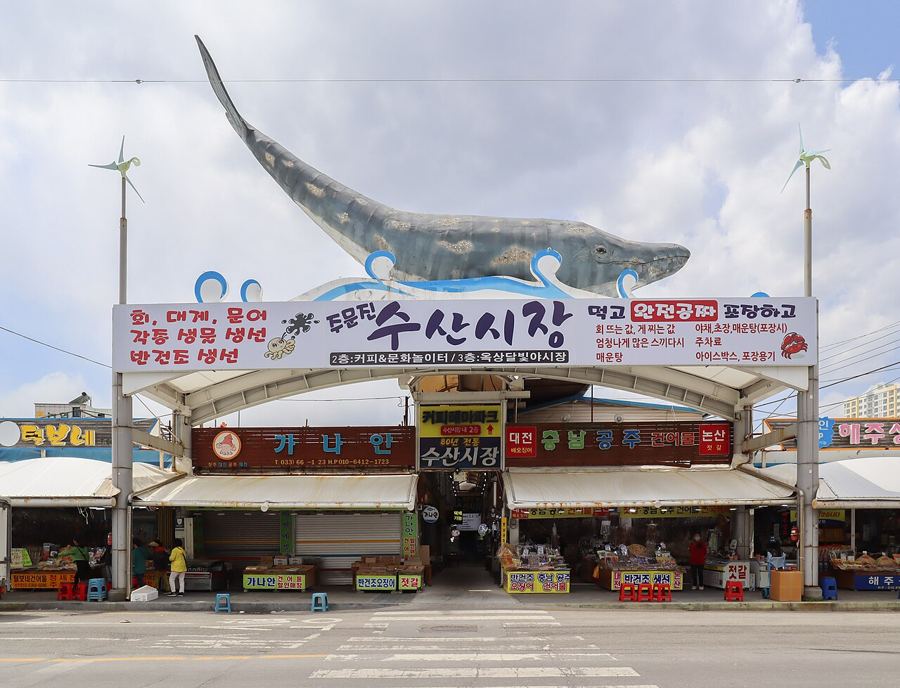
Are these northern beaches mainly places to swim? Swimming is part of their summer life, but the shoreline has other occupations. A morning can include a walk by the water, raw fish or noodles by a harbour, and the coast continuing north to Jumunjin. The harbour and fish market there make the eating portion of a beach day unusually easy to justify. A day at the shore is rarely improved by pretending lunch is a distraction. These beaches lend themselves to a slower sort of day, where the shoreline and the harbour are not competing for attention.
Geumjin
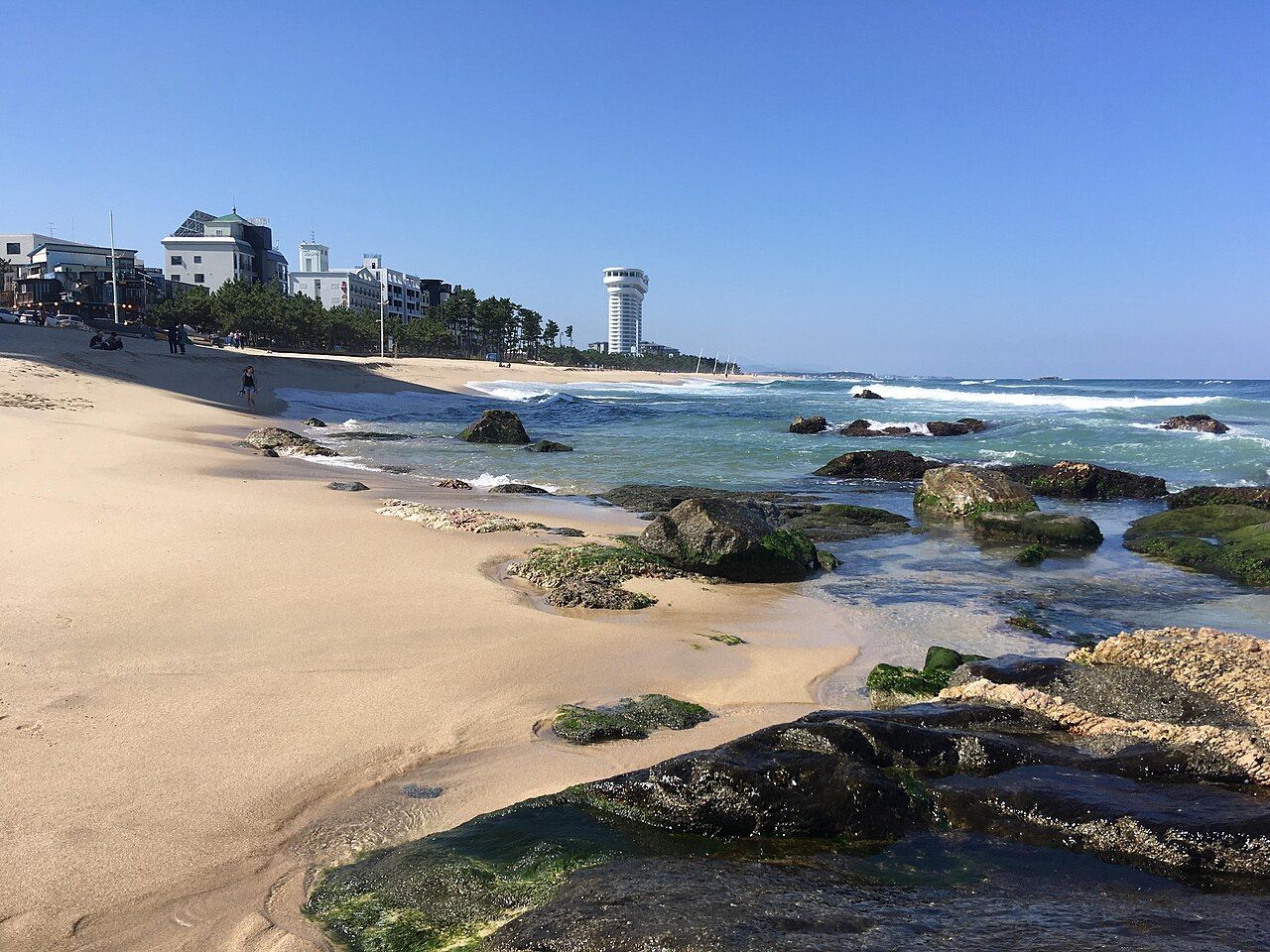
Is the East Sea coast too calm for surfing? No. South of the city, past Anmok and the river mouth, Geumjin has become a well-known surf spot on the east coast. Its sandy bottom and open exposure catch swell from passing weather systems. Summer waves are often small; the better swell tends to arrive in autumn and winter, when northeasterly winds push energy down the coast. Local surfers paddle out in thick wetsuits, hoods and boots. The sea is not obliged to produce the same conditions simply because summer has produced a beach day.
A small summer day can suit a beginner’s lesson, while the colder seasons bring a different kind of commitment to the water. The coast road runs between Geumjin and Jeongdongjin, bordered by steep green slopes as it follows the shore. Military fencing and old guard posts still mark parts of the coast. The coastline has not always been only a place to look at the waves. Here, the beach’s reputation for surfing shares space with signs of a more closely watched past, though neither changes the basic arrangement of sand, water and weather.
Next stop: Anmok Beach and the coffee machines by the sea Coast
Gyeongpo in winter
Is winter merely summer with fewer people? It is certainly quieter, but the change is more than a reduction in numbers. From November to March, the sky is often clear, the air dry and the sea a deep, cold blue. Wind can be sharp; on weekdays the beaches are almost empty, and the slanting winter sun picks out the waves. The sand that summer fills with swimmers and parasols is used mostly by walkers again. The coast has not improved its manners; it has simply become less crowded.
New Year brings a notable exception to the quiet. Thousands gather on Gyeongpo and the southern beaches to watch the year’s first sunrise. On ordinary winter mornings, the company is smaller: joggers, fishermen casting from the rocks and gulls working the tideline. The gulls, at least, are not waiting for the sunrise to become an occasion. Clear skies and a cold sea make a different kind of spectacle from summer’s busy shore, and the wind is quite willing to provide its own commentary.
Does a winter beach day have to be an entire day at the shore? No. A morning on the sand can sit alongside lunch in a market and an afternoon at a museum or an old house. Gangneung’s coastline has room for a full summer crowd and for winter walkers who prefer not to negotiate with one. The same shore offers different pleasures: lively promenades and sparklers in summer, a blue sea and open sand in winter. Which version of the beach seems more like the real one: the crowded summer shore, or the sand after everyone has gone home?
Credits: Mobius6; Creative Commons BY-SA 4.0; Mobius6; Creative Commons BY-SA 4.0; Masterhatch; Creative Commons BY-SA 4.0