What does a visitor expect from a lake? Usually water, perhaps a bench, and no need to reconsider the shoes. Gyeongpo Lake is obliging on the first two counts and unusually good at making a simple walk seem to have a long literary history. The day begins beside a shallow lagoon, calm when the weather allows, with mountains reflected to the west and a strip of sand and pine forest between the water and the East Sea. The sea keeps its distance without being far away. That is the arrangement.
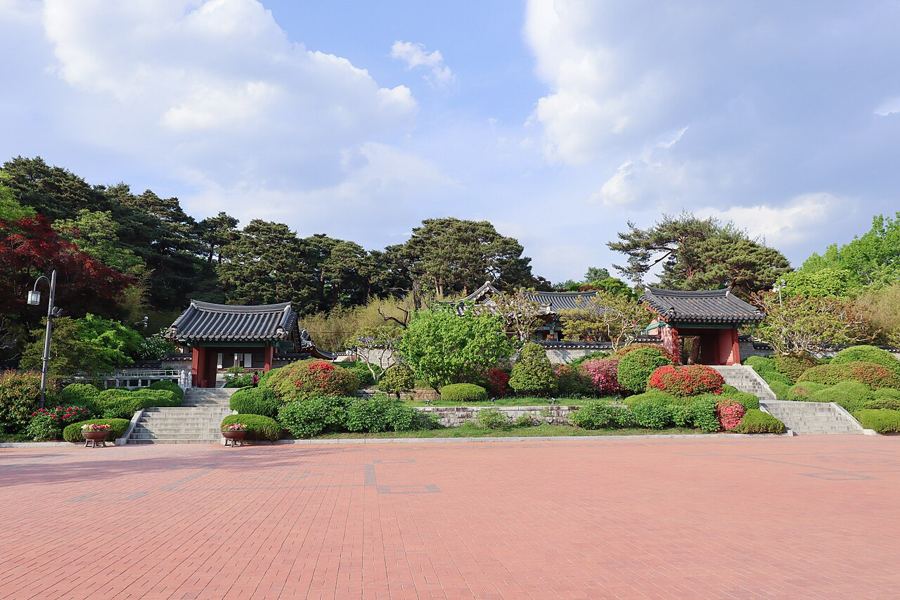
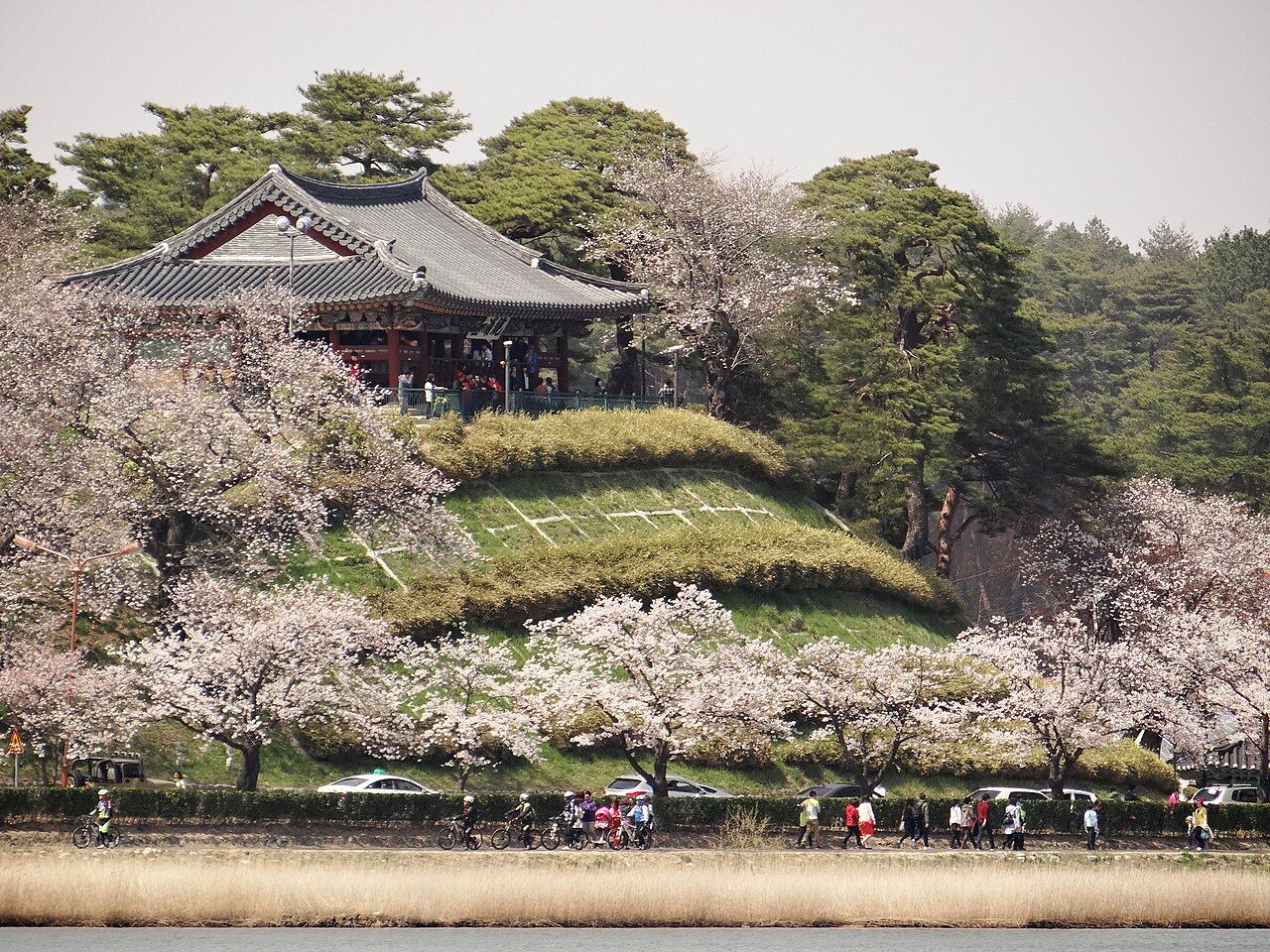
Where does the morning lead first? To Gyeongpodae, on the low hill above the western side of the lake. The pavilion was first built during the Goryeo dynasty, in the fourteenth century, and moved to its present hill in the early sixteenth century. Repairs and rebuilding followed. It is an open-sided structure on stone foundations, with a raised wooden floor beneath a tiled roof. Scholars and officials gathered here to look out, drink and compose verse. One can see why the view prompted writing. One can also see why the writing became part of the view.
Gyeongpodae
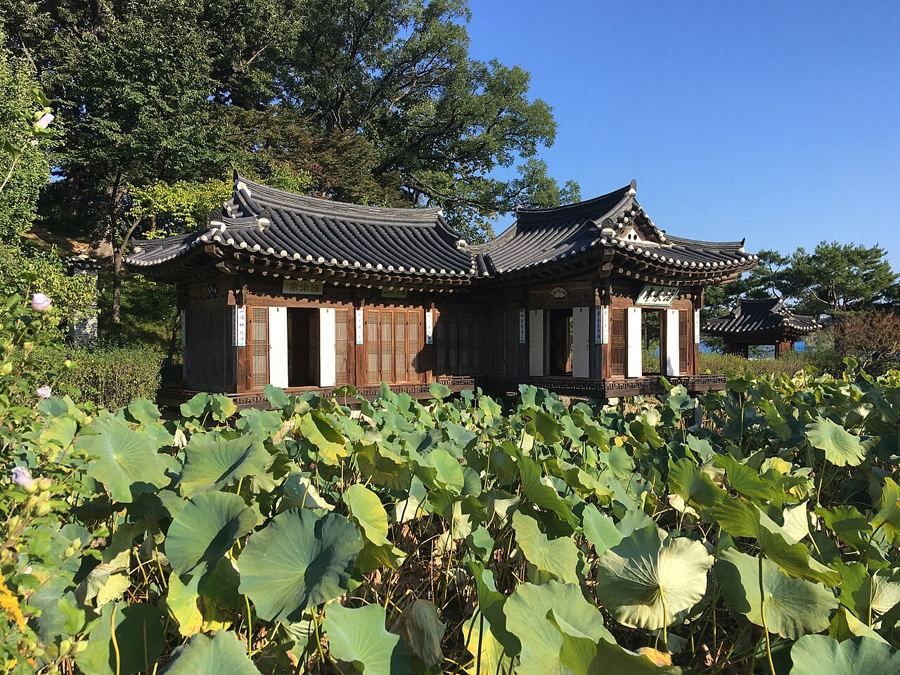
What is there to read inside? Wooden boards hang from the beams, carrying poems and inscriptions in Chinese characters, some attributed to famous visitors. Yulgok, born a short distance away at Ojukheon, is among the names associated with the pavilion; he is said to have written about it as a boy. The boards make a quiet point: people have been looking at this lake and trying to improve on silence for a very long time.
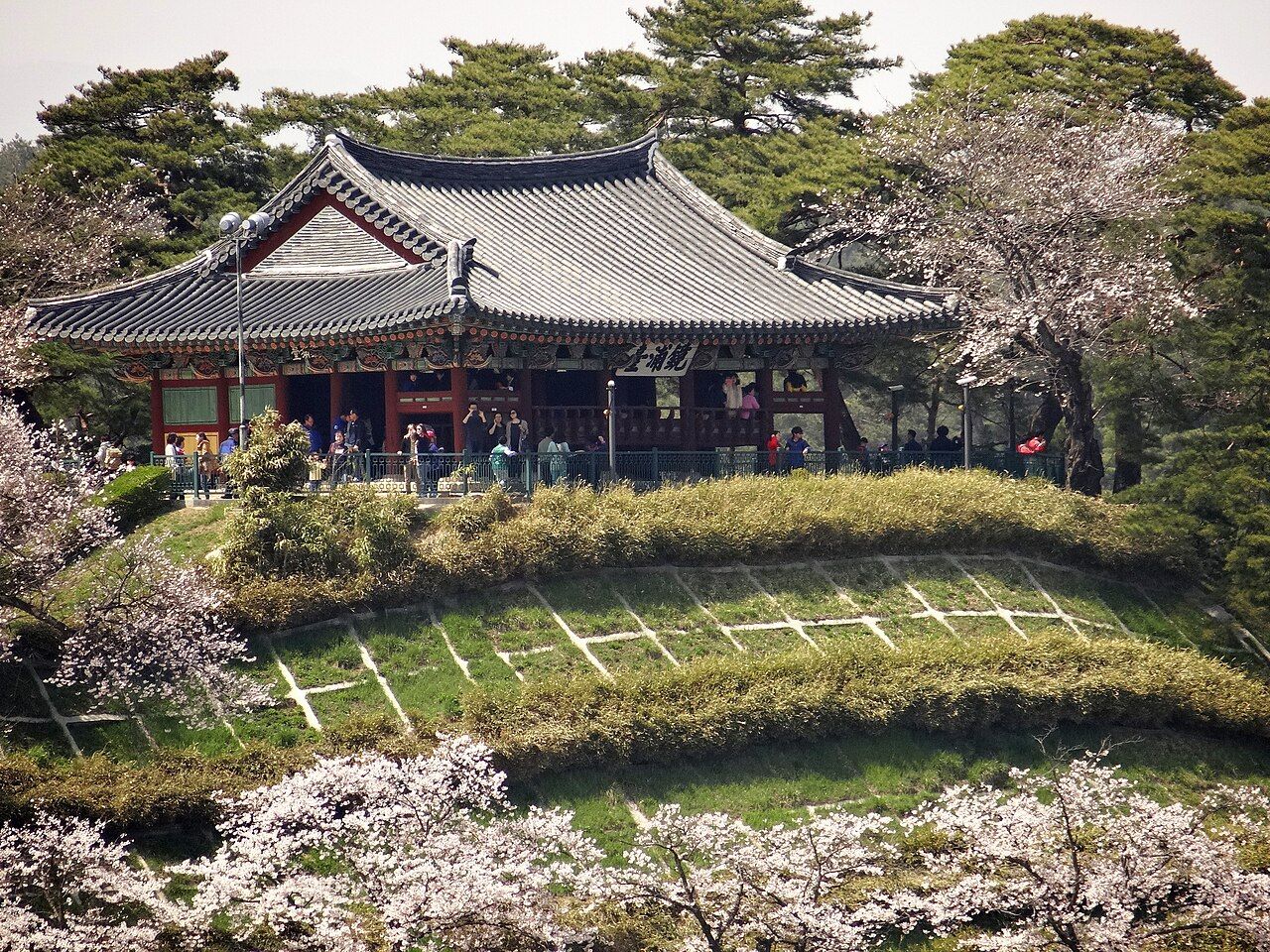
What does the view do from the pavilion? It opens east across the lake to the pines that screen the sea. The columns divide the water into separate pictures, while the deep eaves cut away some of the sky’s glare. A pavilion of this kind, called a jeongja in Korean, is built to frame a view, not merely to give the view somewhere to stand. The hill is planted with pines and cherry trees, and small paths descend through them towards the lakeside road.
Is this a place for a long climb? No. Steps lead up from the road, and the climb takes only a few minutes. If the floor is open to visitors, shoes come off before sitting at its edge. The lake is a more convincing subject from there than any board on a wall, though the boards have had centuries to make their case.
What changes as the day advances? On a cool morning, mist may rise from the lagoon. Later, the flat path carries the walk around the water, past viewing decks and sculptures along the shore. The western side looks back across the lake towards the pavilion. A pine leans over the path and its wooden railing; elsewhere, the promenade is paved and open to the afternoon sky. The route gives a person time to stop, which is generous of it, though stopping is how a short outing develops opinions about every bench.
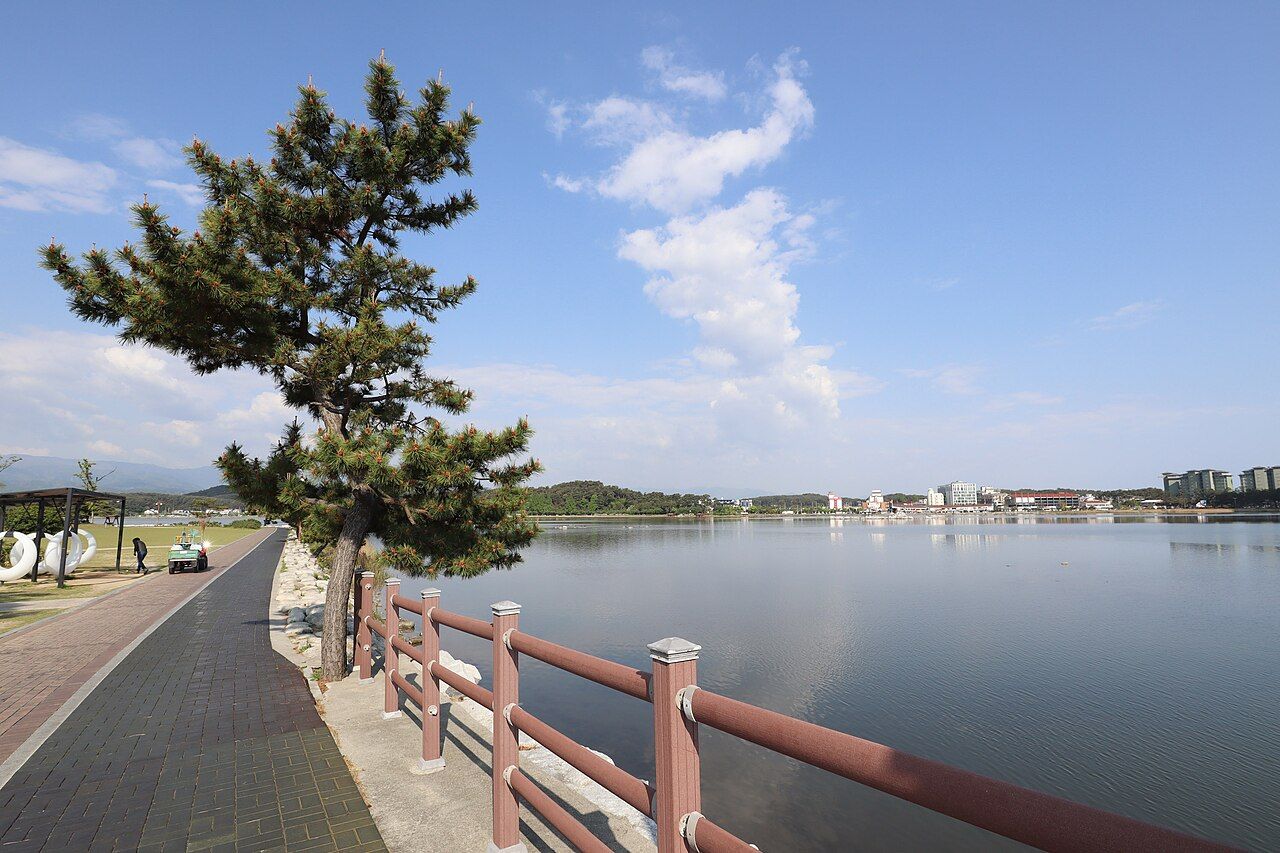
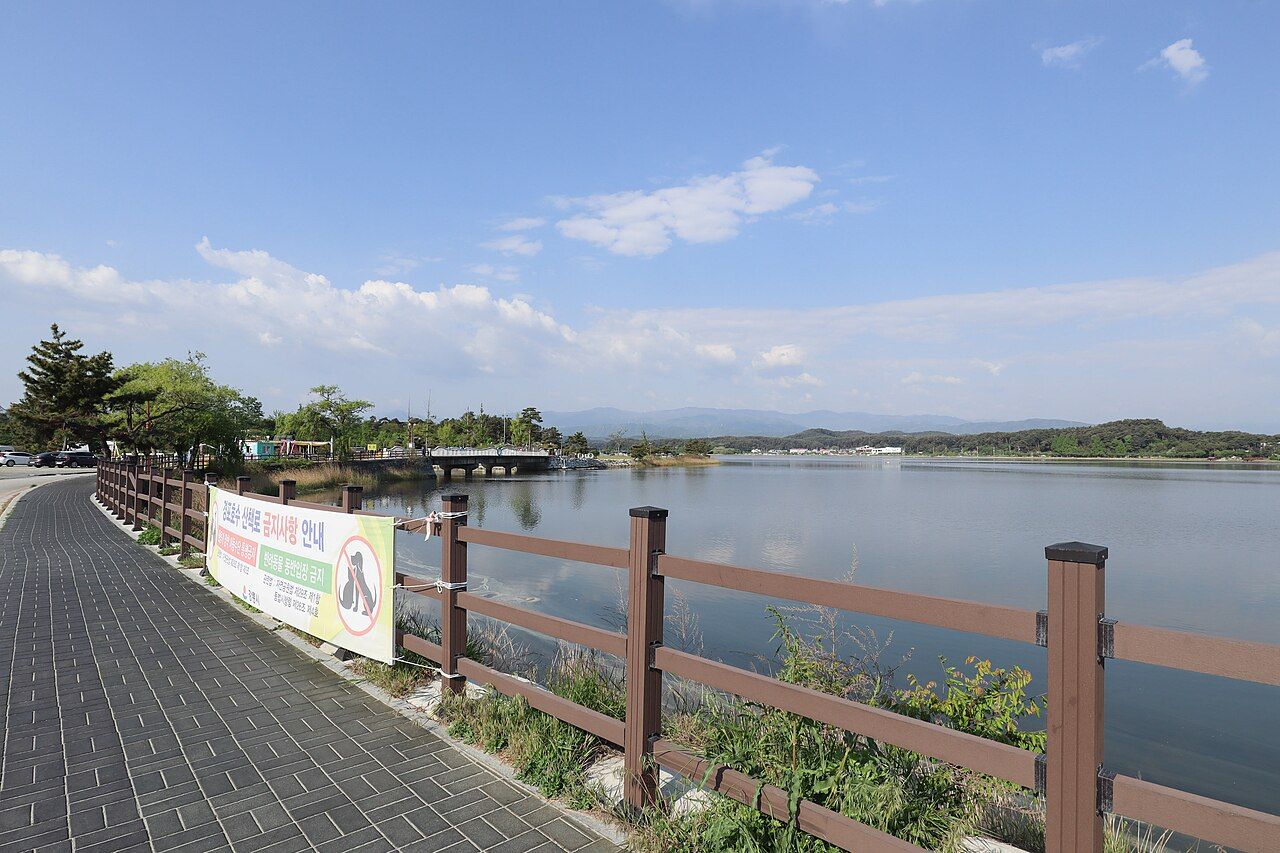
What is on the northern side? Reeds and shallow pools, where herons and other water birds are especially likely outside summer. Small rocky islets sit in the lake, some carrying their own legends and a pine or two. The lake does not seem troubled by the amount of symbolism placed upon it. It remains shallow, still when the day is still, and quite content to reflect the western mountains.
Who else is out on the path? Local families use it at weekends, while runners and dog walkers appear in the early evening. A weekday morning can leave long stretches nearly to oneself. The path is flat and paved, with a separate bicycle lane or a broad shared route for much of the way. Walking around the lake is not a test of endurance. It is a test of whether a person can pass a viewing deck without stopping at every one.
And what is flowering in spring? Cherry trees line the roads around the lake and the slope below the pavilion. When they bloom, usually in early to mid April, the loop turns pale pink. The festival around the peak usually brings food stalls, performances and night lighting. The bloom lasts little more than a week and depends on the weather; the season’s confidence is not improved by a calendar. For the wider pattern, there is seasons on the Gangwon coast.
Gyeongpo Lake
What is the lake’s more fanciful claim? On a clear night, the saying goes, five moons can be seen here. One hangs in the sky, one lies on the sea, one floats on the lake, one shines in your cup, and the last is reflected in the eyes of the person beside you. Some versions exchange the sea for another reflection. The point survives the editing: this is a place for a moonlit evening and good company, with the cup doing useful work.
One hangs in the sky, one lies on the sea, one floats on the lake, one shines in your cup, and the last is reflected in the eyes of the person beside you.
Can all five be seen from the pavilion? No. The sea is out of sight from there, which is an awkward limit for a legend that has given it a starring role. Still, a full-moon evening suits the place. The path is lit in sections, and the pavilion stands dark against the sky. The lake supplies one reflection; the rest ask for a little imagination and, apparently, company.
Next stop: Seongyojang and the lake that moved away City
Where does the walk go as evening comes on? From the eastern side, a short way through the pines leads to Gyeongpo Beach, the city’s largest and busiest beach. It has a long promenade and a broad sweep of sand. In summer it is the centre of Gangneung’s seaside life; outside the season, the wind makes a case for a brisk walk. The separate story of Gangneung's beaches takes up the shore in more detail.
What lies beyond the lake’s immediate scenery? Chodang village, south of the water, is known for soft tofu. Seongyojang and Ojukheon lie to the west, both within a short ride. The day has already supplied a pavilion, a lake, a pine grove and a beach; tofu is a reasonable next thought, and perhaps the least demanding subject of the lot.
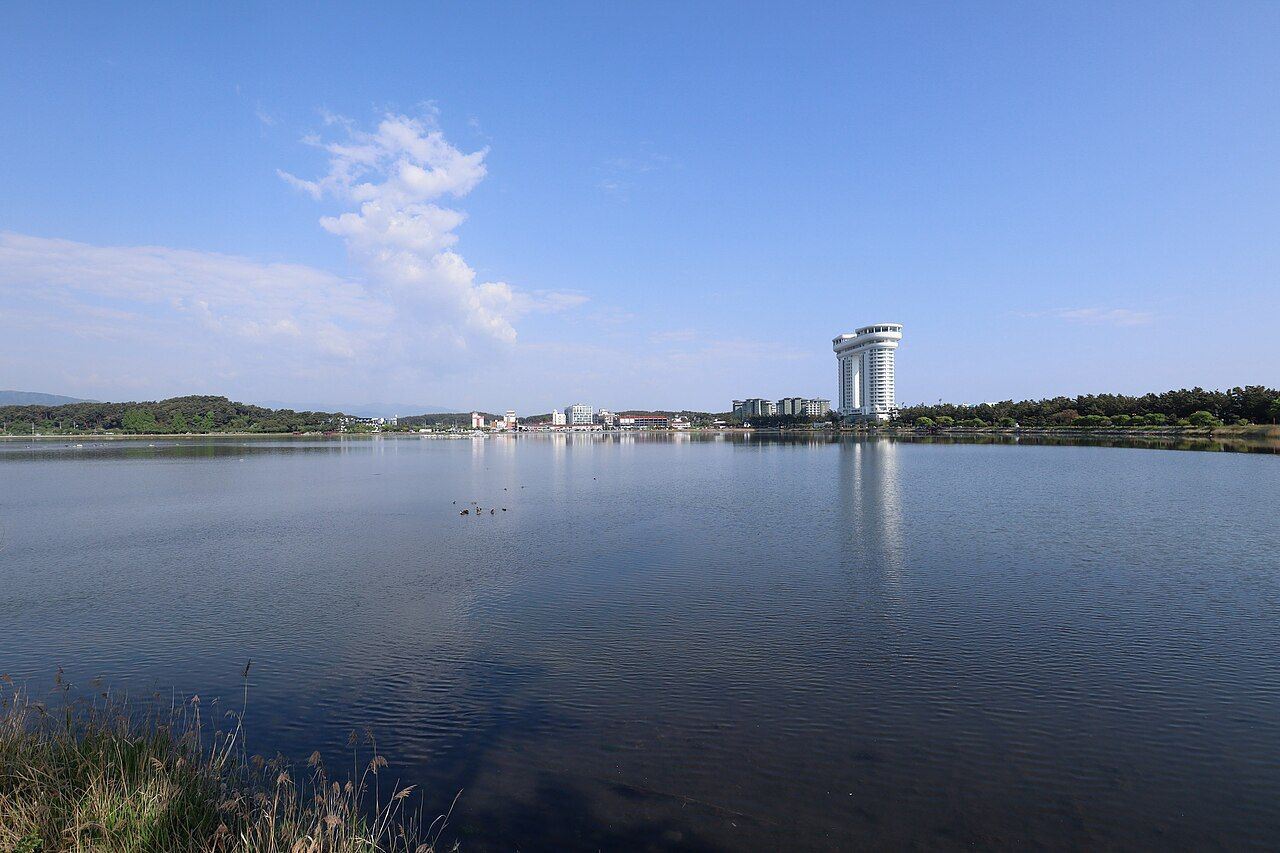
So what remains when the light goes? The pavilion, the path and the lake’s habit of holding a reflection. The sea stays screened by the pines until the walk reaches the beach, and the five moons remain partly a matter of belief, partly a matter of where one happens to be standing. By then the day has gone from poems to blossom to the shore. Which moon would be the last to leave?
Credits: Mobius6; Creative Commons BY-SA 4.0; Christophe95; Creative Commons BY-SA 4.0; Mobius6; Creative Commons BY-SA 4.0