Gangneung
Gangneung sits between the Taebaek mountains and the East Sea. That is the first fact, and it explains why the weather does not always behave like the weather in Seoul. The mountains shelter the coast from the west; the sea lies open to the east. The result can be milder, snowier, and nearly always windier.
Does the coast follow a neat seasonal timetable? Not quite. Each season has a clear character, but the weather is allowed to improvise. This is inconvenient for calendars, which have never been much good at arguing with a mountain range.
Is spring simply the coast’s gentle introduction to the year? It can be. Cherry blossom usually opens in early April, ahead of the mountains, and the trees around Gyeongpo Lake draw plenty of attention. A festival often accompanies the bloom, although its timing follows the weather rather than a particularly firm appointment.
Spring also means dry air and strong westerly winds coming down from the mountains. Warm and dry after crossing the range, they have helped spread major wildfires in the region in the past. The hills turn fresh green by May, and the days can be clear and mild, with cooler evenings. There can also be fine dust and yellow dust from the continent, leaving the air hazy. Spring manages both blossom and a rather less decorative sky.
Does summer belong to the beach? Broadly, yes. From July to August, the beaches open for swimming, and the coast fills with people, parasols and the usual conviction that everyone else has had the same idea by chance. It is hot and humid, though the coast is often a little cooler than Seoul. The hills at Daegwallyeong are cooler still.
Summer is not all blue skies and agreeable plans. The monsoon, jangma, arrives in late June and July, bringing long spells of heavy rain. Rain can be intense. The coast has its beach season; the clouds, apparently, have their own.
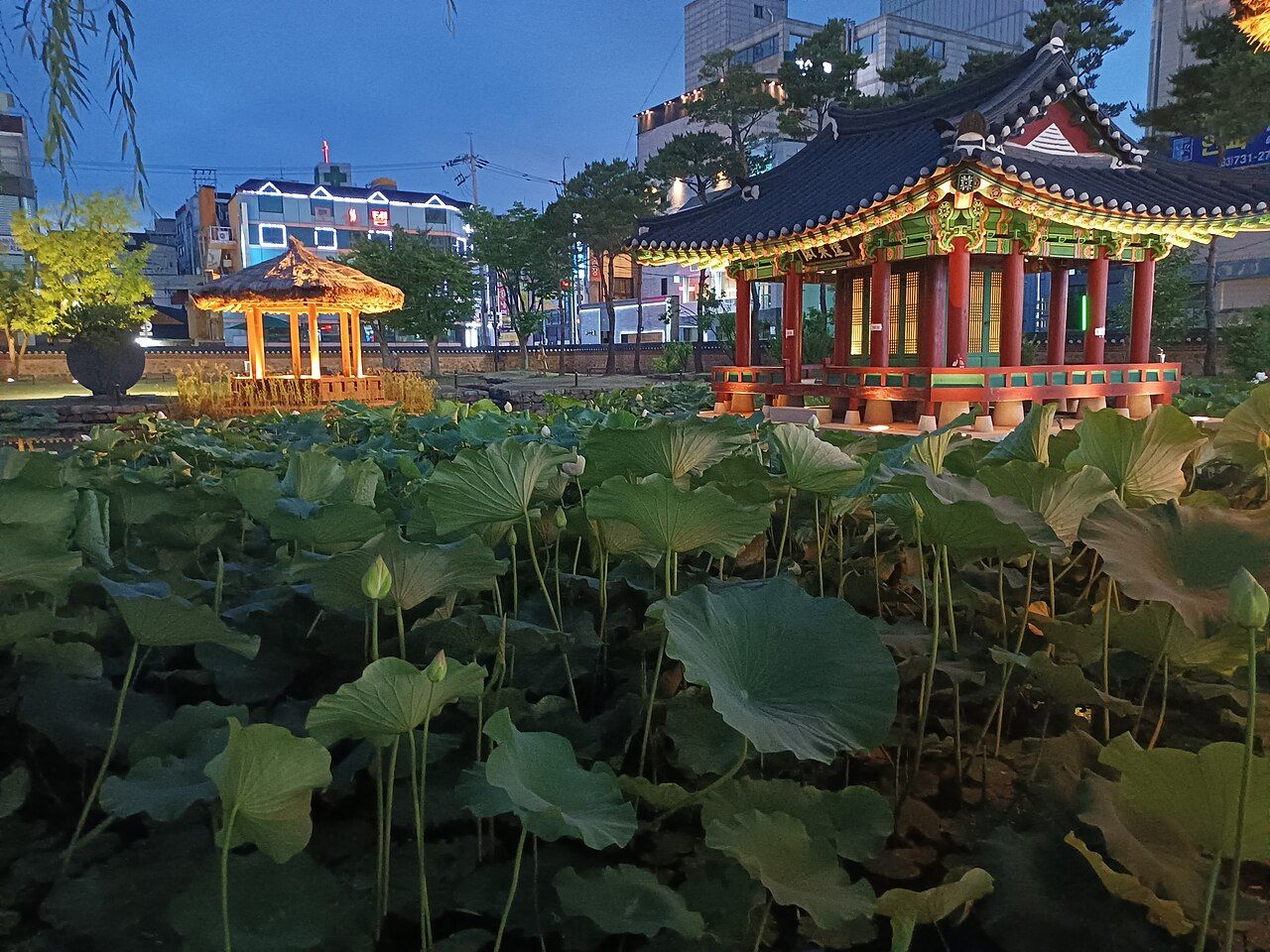
Is the whole province then just a beach with mountains behind it? No. Inland, lotus ponds fill out around old government buildings in cities such as Wonju, while river valleys draw people for camping and rafting. The coast is the part facing the sea, not a summary of everything west of it.
Next stop: Gangneung Danoje, from river rites to lanterns City
Does autumn win the argument about the best season? It makes a strong case. The air turns clear and dry, the sea remains warm enough for walks on the sand, and the mountain colours move downhill. Leaves turn first on the high ridges as September gives way to October, then reach valleys such as Sogeumgang by mid to late October. This is a pleasingly gradual change, though October weekends in the mountains are popular enough to make the roads less poetic.
Autumn is also not a single long stretch of colourful leaves. From November, the dry conditions return and some mountain trails close for the fire season. The season has a second act, and it is mostly about dry wind rather than foliage.
East Sea
Is winter on the coast as harsh as winter in the mountains? Usually not. The mountains are cold and snowy, with temperatures far below freezing; the coast is milder, often bright, and dry. That sounds settled until the wind comes from the east. Carrying moisture off the sea, it can bring heavy snow to the coast as it meets the mountains. Snowfall can be sudden and very heavy, sometimes burying Gangneung in a single night, especially in February and March. The local definition of a mild winter has room for disagreement.
Winter has its own quiet attractions. The sea turns deep blue, the beaches are almost empty, and the cold, dry air gives long views along the shore. Fish and squid hang drying on racks in the villages; markets offer warming soups and hot street snacks. Indoors, traditionally heated ondol floors make homes and guesthouses cosy. The coast can feel at its most restful when the beach is no longer trying to host the entire summer.
Is winter only for staying indoors? The ski season in the hills usually runs from December into March, and New Year’s Day brings crowds to the beaches and Jeongdongjin for the first sunrise of the year. Snow also makes winter less predictable than its clear skies might suggest. The coast and the mountains keep different versions of the season, sometimes within the same province.
Do the festivals follow a fixed annual pattern? They follow the seasons, but not always the same date. Blossom walks come in spring; the Danoje festival takes place in early summer, with a date that moves with the lunar calendar. Summer brings beach concerts and night markets on weekends. Autumn has food and coffee events and harvest celebrations in inland towns; winter brings sunrise gatherings and snow festivals in the mountains. The calendar is full, though the weather remains the more persuasive organiser.
So which Gangneung is the real one: blossom, beach, clear autumn hills or snow arriving from the east?
Credits: stuart spivack (a flickr user); Creative Commons BY-SA 2.0; Myeongho jeong; Creative Commons BY-SA 3.0; Mobius6; Creative Commons BY-SA 4.0