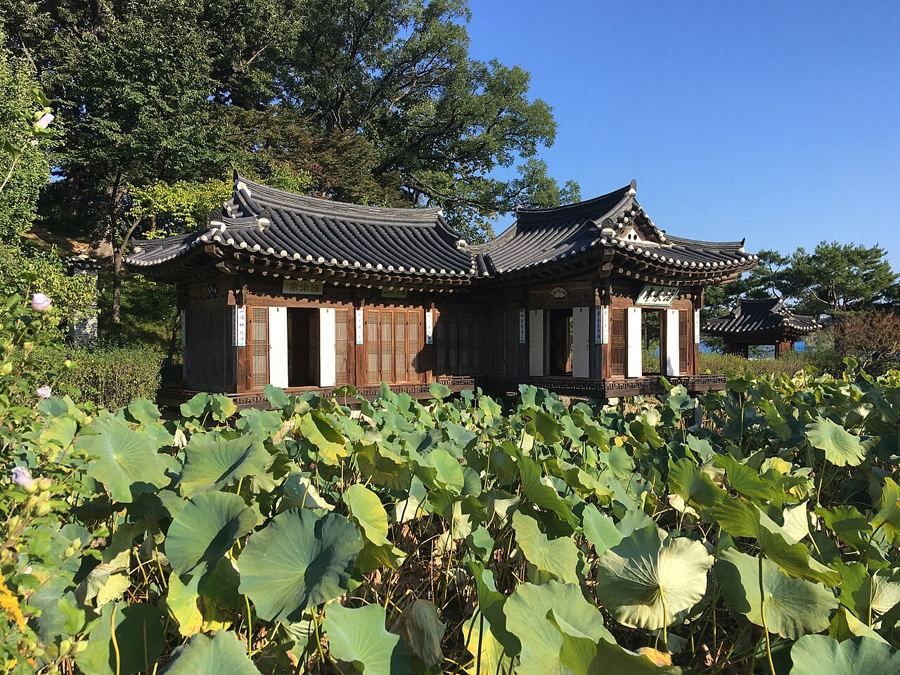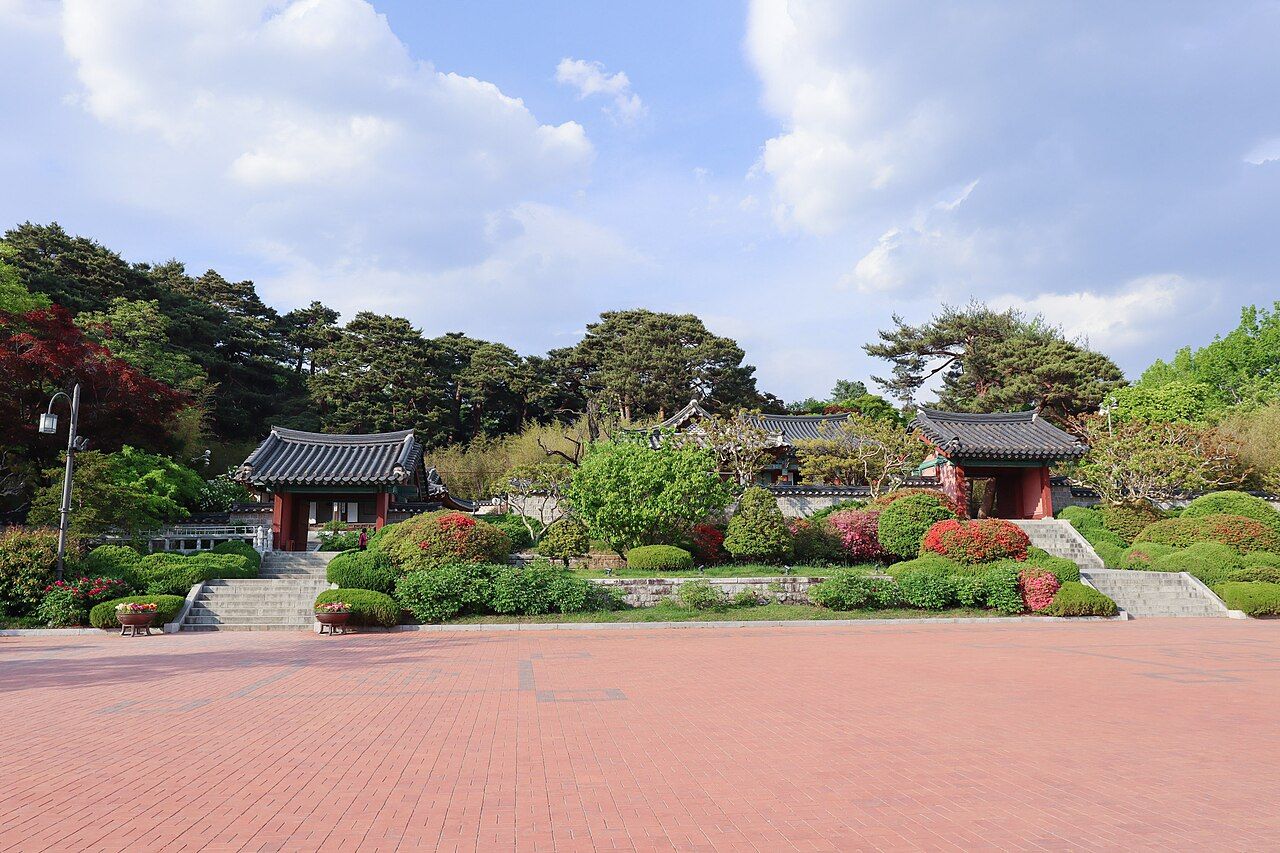
Ojukheon is a Gangneung house whose fame rests less on its roof than on the mother and son born inside it. The morning begins among lawns, pines and brick plazas, in grounds that feel more like a park than a museum. Then the dark stems appear, and the name makes sense: Ojukheon means black bamboo house.
What is the first thing to notice? The bamboo, of course, once somebody has pointed out that it is bamboo. Slender stems, almost purple-black, grow around the buildings and along the hedges. The plant turns up repeatedly across the site, including in souvenir designs. It is an unusually persistent clue, though the house has rather more to say than its name.
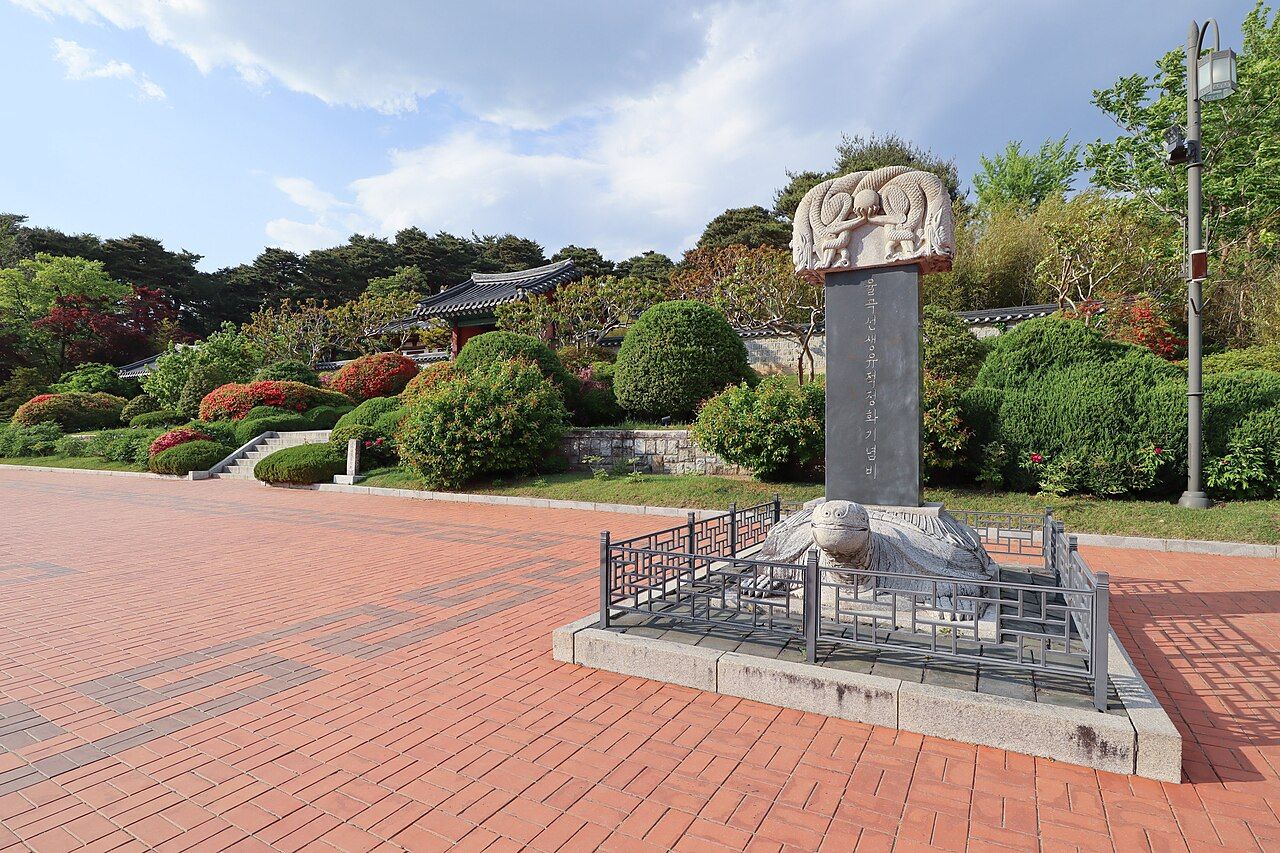
The grounds are easy to read as a sequence of older buildings, gardens and museum spaces. The red-brick plaza gives way to traditional gates and the central group of house, shrine and small halls. A stone stele on a carved turtle base stands among the monuments. The turtle signifies long life and steadiness; the slab on its back carries the memorial inscription. Even stone here has a family connection to explain.
Why this house? Shin Saimdang was born here in 1504. She was a painter, poet and calligrapher, known for works showing plants, insects and small creatures. She spent much of her life in Gangneung, in her own family home, an unusual arrangement for a married woman of her time. Some of her poems express longing for her mother and this house while she was living in Seoul.
For centuries, Saimdang was held up as a model wife and mother. Today, she is also considered as an artist in her own right. The two ideas sit beside each other here, not always as neatly as a label might prefer. Her pictures of grasses, melons, butterflies and beetles make a case without much help: they are detailed, lively and worth looking at slowly.
And the son? Yi I, known by his pen name Yulgok, was born in 1536 in a room of the main house now called Mongryongsil, or the dragon dream room. The story says Saimdang dreamt of a dragon flying in from the sea on the night before his birth. A dragon is a more memorable pre-birth visitor than most, and the room has kept the name.
Yulgok passed the state examinations repeatedly with top marks, became a high official and wrote on government, education and philosophy. His works are still studied. He spent part of his childhood at Ojukheon before moving to the capital. The house is modest beside later aristocratic homes such as Seongyojang: tiled roof, raised wooden floors and paper-screened doors. Mongryongsil is small enough to take in at a glance through the open door. The viewing stays outside; this is less a place to roam through rooms than to look carefully at one.
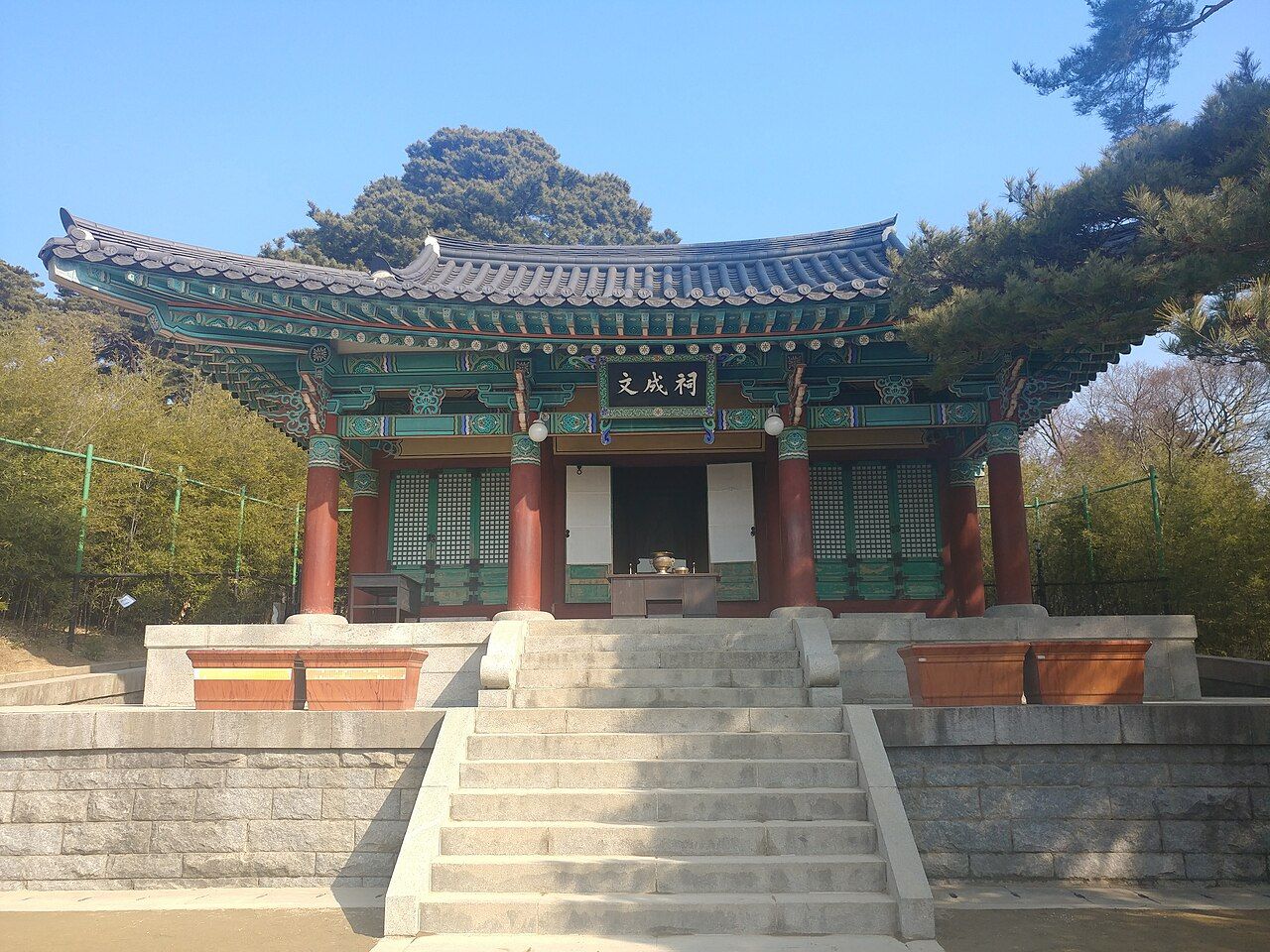
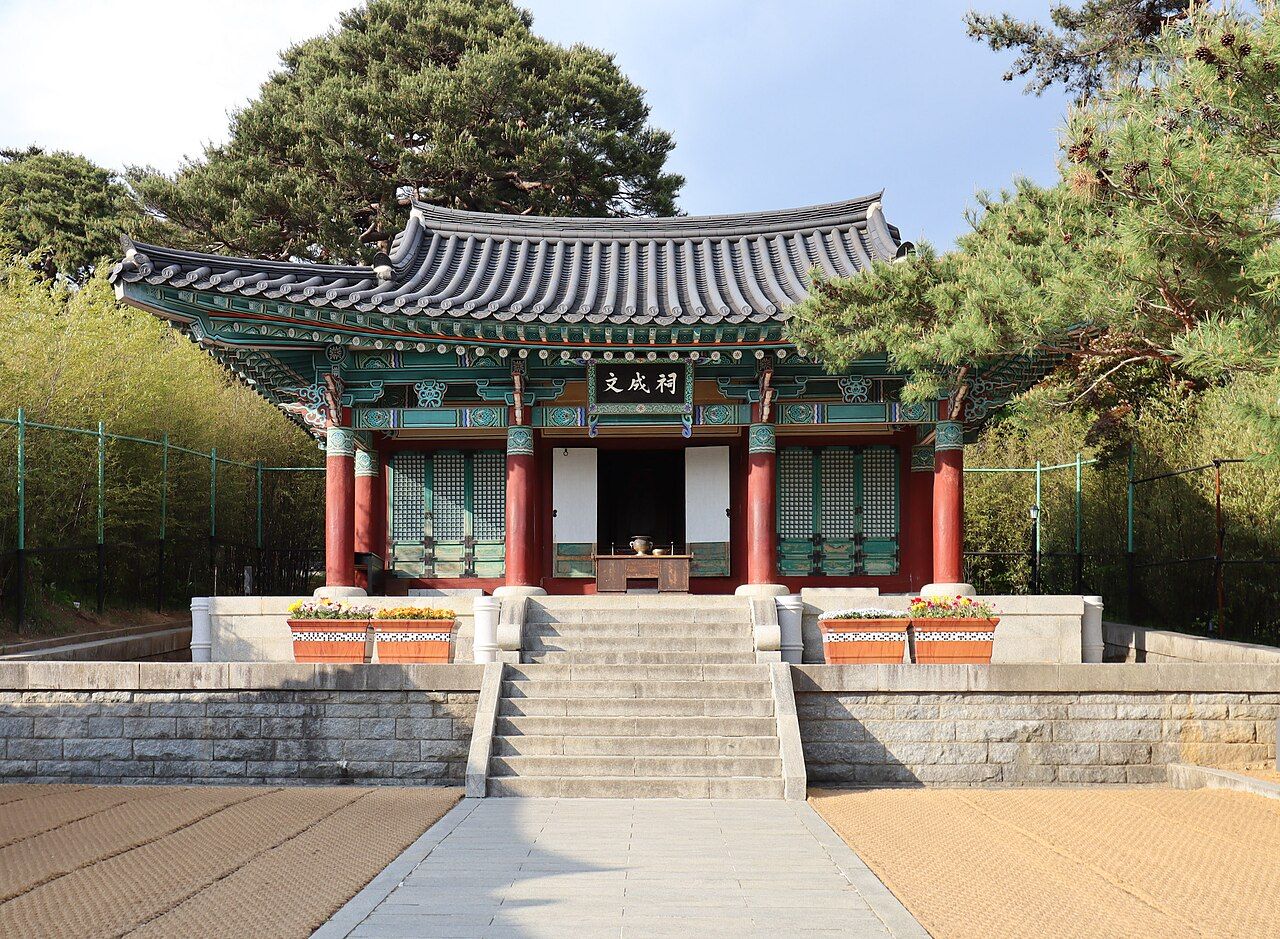
Where does the morning lead next? To Munseongsa, the shrine dedicated to Yulgok. It stands on a raised stone terrace, reached by steps, with red pillars and painted eaves in green, red and blue. This pattern, called dancheong, also appears on temples and palace buildings. A portrait of Yulgok is kept inside. The pause at the foot of the steps feels appropriate: the place is for remembrance, not for testing how loudly a voice carries.
Nearby, Eojegak holds Yulgok’s childhood inkstone and a manuscript of his primer for young students. A later king asked to see the objects and sent them back with words of his own. Elsewhere are the black bamboo hedges beside the house, an old plum tree said to date from Saimdang’s time, and statues of mother and son. The family has not been allowed to slip quietly into the background.
What else belongs to the house? The architecture offers a small lesson in domestic life. The main hall’s raised wooden floor, called maru, helped keep rooms cool in summer. Heated rooms had paper floors and walls that held warmth in winter. These are practical details, but they also change the way the house reads: less as a distant monument, more as a home arranged for actual weather and actual people.
Spring brings blossom and fresh green bamboo; late autumn brings colour to the trees around the plaza. The seasons alter the grounds, while the dark stems remain the house’s steady signature. The brick plazas can be hot and bright in summer, with shade under the pines near the older buildings. In winter, the bamboo stays green and the grounds are quieter. None of this makes the house a different house. It does, however, make the same walk feel rather less like a fixed museum circuit.
What fills the afternoon? The city museum, which shares the grounds and widens the story beyond the famous family. Its galleries contain pottery, documents, folk objects, works by Saimdang and her descendants, and displays on Gangneung’s history. English appears in the main sections, though some details are in Korean only. The displays change; Saimdang’s work, in reproduction or original, is usually part of them.
It is easy to spend time over her studies of grasses, melons, butterflies and beetles. They have the patient detail of someone who looked closely, rather than merely glanced and moved on. The museum also gives the family’s fame a wider setting: Ojukheon is not only the birthplace of two celebrated people, but a place within the history of the area around it.
Why do the faces feel familiar? Yulgok appears on the 5,000-won note, with Ojukheon and its black bamboo included in the design. Since 2009, Saimdang has appeared on the 50,000-won note, the highest denomination in circulation. They are the only mother and son to share Korea's banknotes, and the signs around the site make the most of it. The resemblance between the printed house and the real rooflines is a pleasing small test, particularly for a younger visitor with a note to hand.
They are the only mother and son to share Korea's banknotes, and the signs around the site make the most of it.
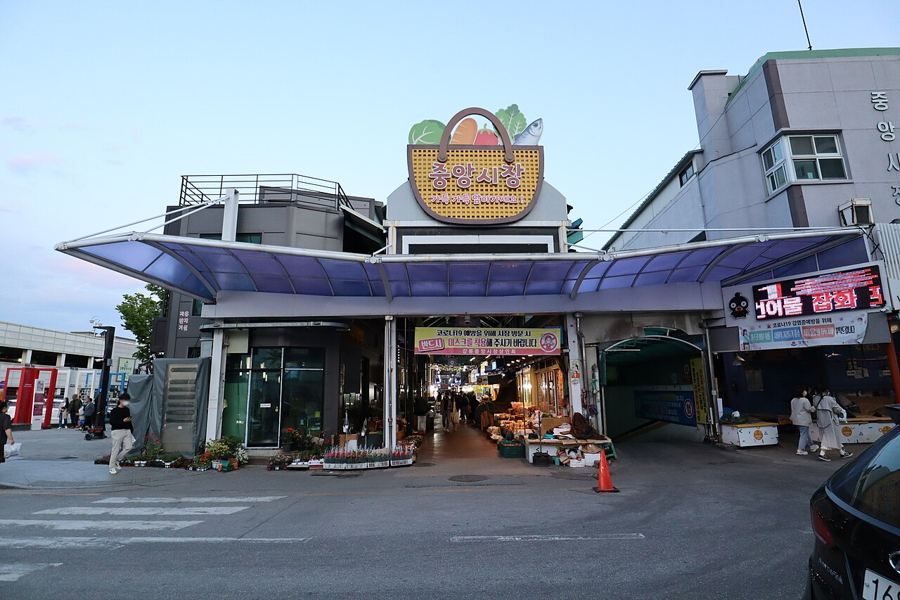
The house also sits in a living city, rather than a sealed historical bubble. Gangneung Station belongs to the city’s present-day story; the old house gives that story a much longer past. And a greeting, with a little attention to basic Korean and good manners, suits a place where visitors come to remember and learn.
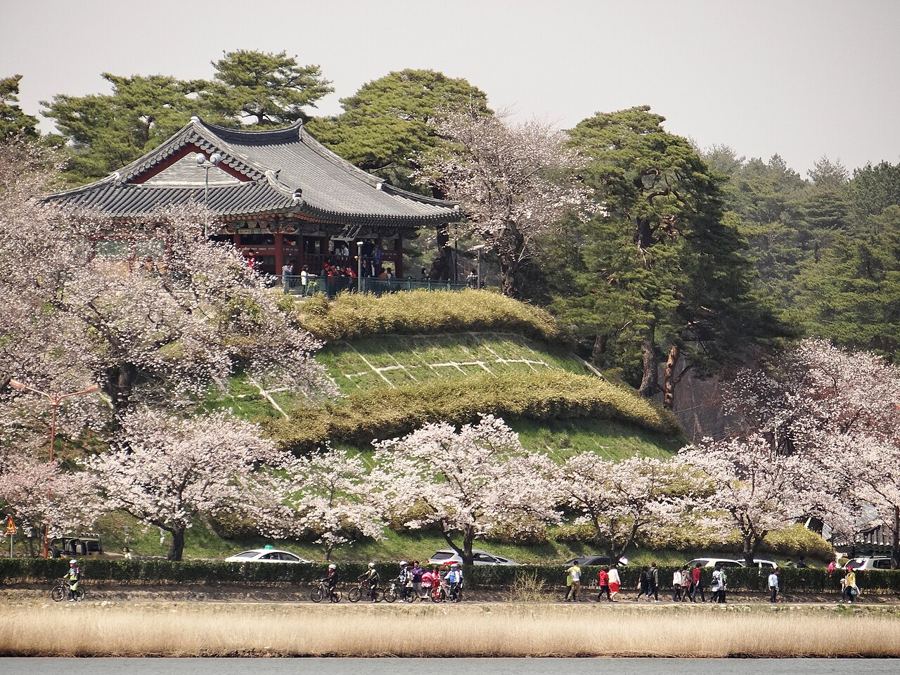
As the day moves towards evening, the black bamboo provides a quieter ending than the banknotes. Wind moves through the stems with a dry rustle, while the hum of the city feels far away, despite being only a short walk beyond the walls. The house has held its place between family memory, scholarship and the everyday currency of the country. Gangneung has other stories to follow; for one with a different setting, continue to Gyeongpo Lake.
Next stop: Gangneung Danoje, from river rites to lanterns City
Credits: Christophe95; Creative Commons BY-SA 4.0; Scroozle; Creative Commons BY-SA 3.0; Mobius6; Creative Commons BY-SA 4.0