Jungang Market
Jungang Market is a working market in the heart of old Gangneung, where locals buy fish, vegetables, rice cakes and kitchenware. What is it like in the morning? Less like a food attraction and more like a place with actual shopping to do. Before the snack crowds arrive, the pace is brisk and businesslike: the day's vegetables and fish are the business, and a visitor with a camera is not the main event.
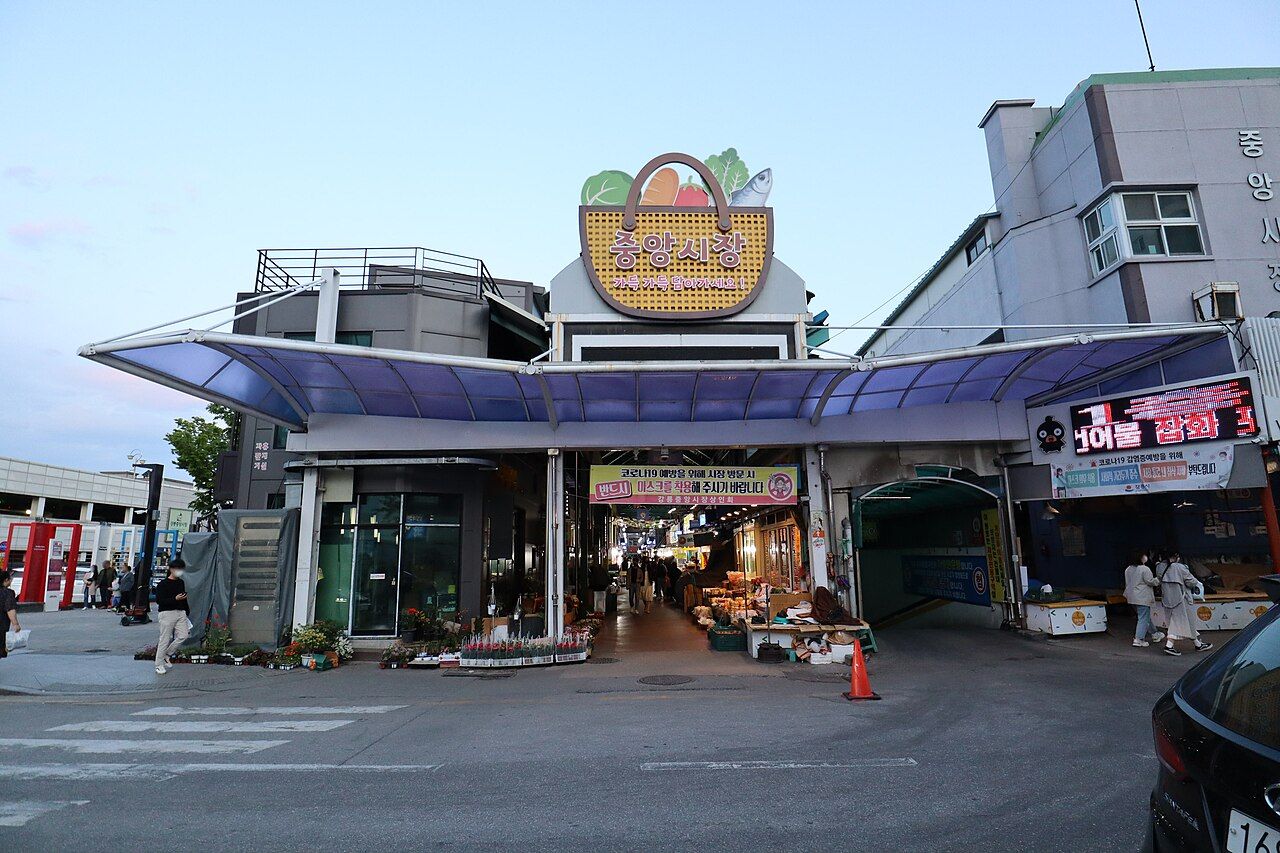
Where does the market begin? The covered building and the lanes around it run into neighbouring Seongnam market, with no especially firm line between them. At the main entrance, the basket above the canopy is a useful landmark; the market itself is not quite as tidy as a diagram.
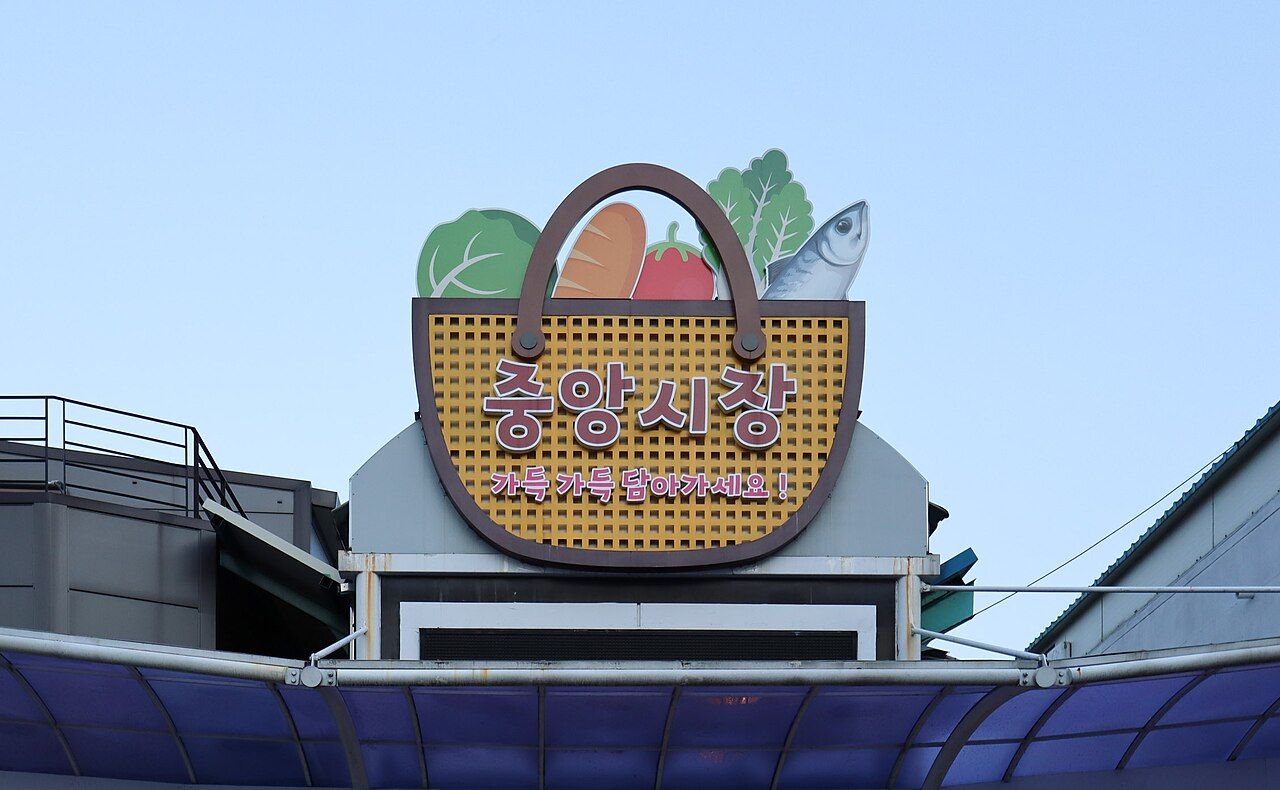
What is inside? Narrow aisles cross the ground floor, with food counters and stalls among produce and dry goods. Signs are mostly in Korean. The arrangement is not difficult to grasp, though the same dishes turn up at several counters, each with its own version. A lap of the place makes sense before appetite starts making decisions. Appetite is confident; its judgement is less reliable.
Does the market change as the morning goes on? The food counters draw more visitors from late morning into early evening, while many stay open into the night, particularly at weekends. The market has room for both kinds of day: one organised around vegetables and fish, another around the serious business of deciding what to eat next.
What is the dish Gangneung is especially known for? Dakgangjeong: bite-sized fried chicken coated in a sticky glaze of soy, garlic, sugar and chilli, with nuts or seeds scattered over it. The glaze can be sweet and mild or properly hot. It is eaten hot, but also at room temperature, which is convenient for a paper box making its way home on the train. Of the market’s food, this is the one most likely to turn a passing look into a longer discussion.
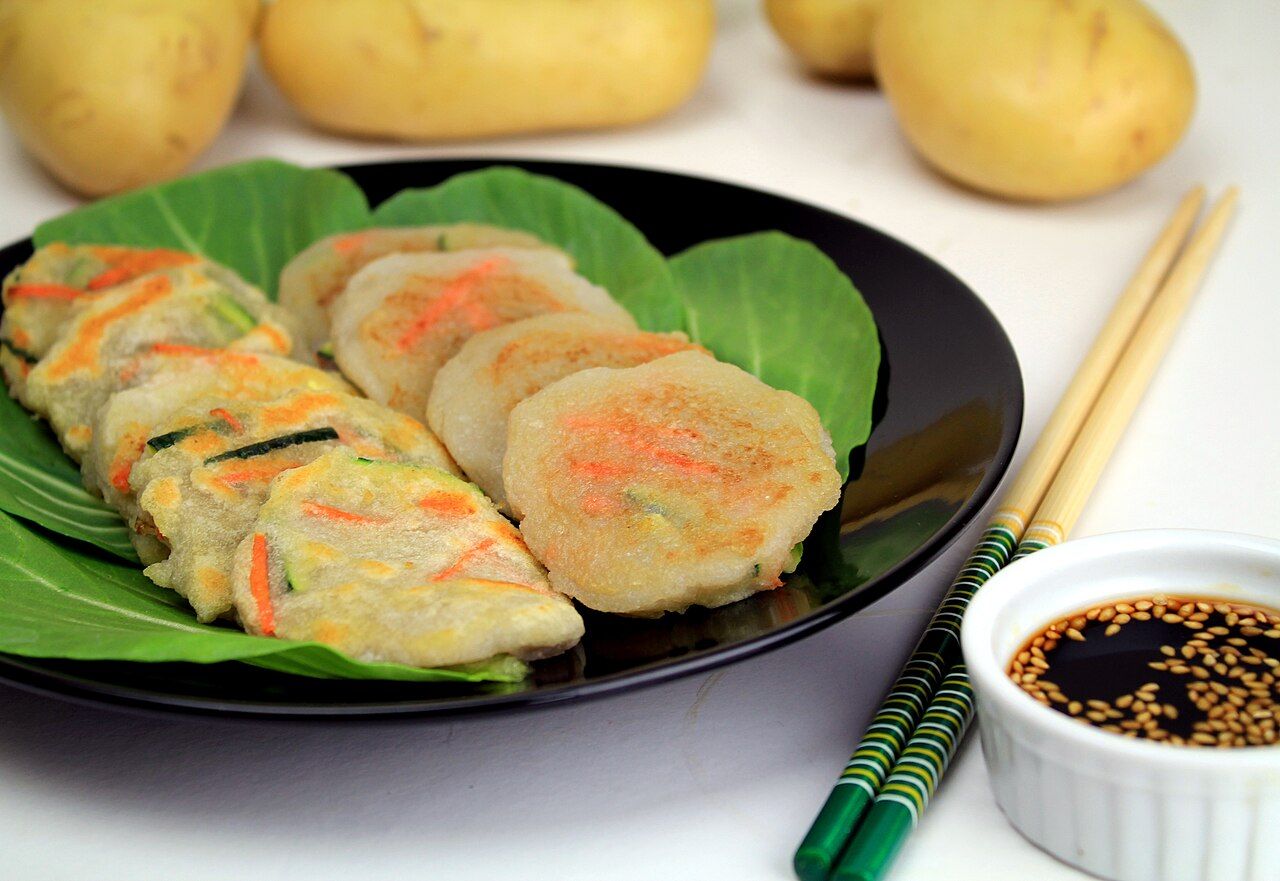
Why so many potatoes and squid? Gangneung sits on a coast long associated with squid fishing and on the edge of a mountain province known for potatoes. The snacks bring those two landscapes into the aisles. Ojingeo sundae is a whole squid stuffed with rice, vegetables and noodles, then steamed, sliced into rounds and often pan-fried in egg. Gamja-jeon, grated-potato pancakes, are crisp at the edges and soft within, with soy dipping sauce. Potato, it seems, has several ways of making its case.
Next stop: A day in Chodang, from seawater tofu to the pines Coast
What else appears between the pancakes and the chicken? Gamja ongsimi, chewy potato dumplings in broth, is a Gangwon speciality and a warming choice on a cold day. Hotteok brings sweet filling inside a pancake; fritters cover vegetables, dumplings and other fried snacks. Dried squid, fish and seaweed are sold for eating or taking home. The market offers a range of ways to carry on eating, including, eventually, admitting that the first plate was quite enough.
Can food be eaten here, rather than carried away? Most counters have a few stools or a narrow bench, and some pack food in boxes or paper cups. Sharing is normal. A dish between two people leaves space to try another; whether that is restraint or merely an administrative arrangement is open to debate.
What happens downstairs? The lower floor is given over to fish and seafood, and the mood changes with it. Tanks hold live fish, crabs, shellfish and octopus; fishmongers fillet to order. In the traditional arrangement, a chosen fish is prepared as raw slices called hoe, then eaten at a nearby table with lettuce, garlic, chilli paste and side dishes. The table and extras may be charged separately. It is a different meal from the one upstairs, though the market has done nothing to make choosing between them easier.
How does that meal work if the customs are unfamiliar? The guide to eating in Gangneung covers sharing, side dishes and paying. A few phrases from Korean words and manners may also help with the counters, where menus are mostly in Korean. For a larger, more working fish market closer to the boats, there is Jumunjin, up the coast.
What lies beyond the aisles as the day wears on? The Namdaecheon river is a few minutes south, with a riverside path and open ground where Gangneung's spring festival takes place. The Danoje Festival has its own story. Nearby, older shopping lanes, small clothing and hardware shops, and occasional tiled roofs sit among modern blocks. The market belongs to the old centre, though the centre has not agreed to stay old.
By evening, the counters are still serving and the day’s two markets have had their turn: first the brisk business of shopping, then the less brisk business of one more snack. Which will win the last argument, the sticky chicken or the potato pancake?
Credits: Mobius6; Creative Commons BY-SA 4.0; Christophe95; Creative Commons BY-SA 4.0; Scroozle; Creative Commons BY-SA 3.0