Chodang
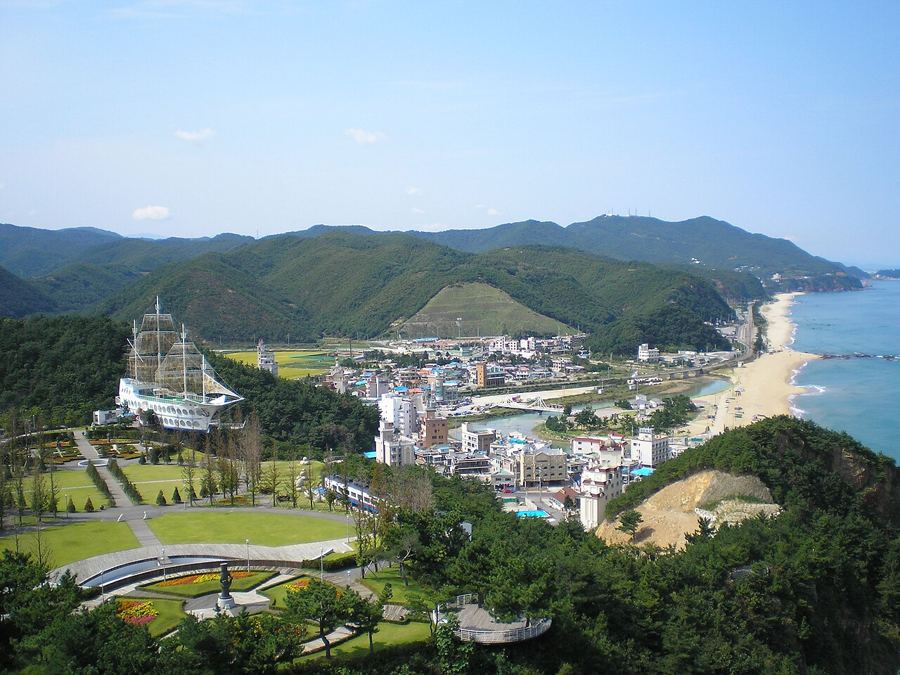
What starts the day in Chodang? A bowl of hot tofu, which is a more convincing morning plan than pretending breakfast is optional. Chodang is a quiet district of low houses and pine trees between downtown Gangneung and Gyeongpo Lake. Tofu is the reason the neighbourhood has a character of its own: family kitchens here make and serve sundubu, soft, barely set curds traditionally made with seawater. Rice and small side dishes arrive alongside the bowl. There is no need for the tofu to perform. It is already the point.
What is different about the tofu? The method begins with soaked soybeans ground with water, then boiled and strained into soy milk. A coagulant sets the proteins into curds. In many kitchens that is a mineral salt; in Chodang, clean seawater has traditionally done the work, supplying minerals that help the curds form. The result is soft and slightly sweet, with a faint saltiness that asks for little seasoning. There is a certain elegance in a dish whose main ingredient is also its seasoning, and no garnish has yet managed to improve on that arrangement.
Is all the tofu soft? Not quite. Left loose in the pot, the curds are sundubu. Pressed beneath cloth and weight, they become modu-dubu, a firmer tofu cut into pieces and dipped in soy sauce. Many kitchens serve both. At breakfast, the distinction is easy enough to grasp: one tofu keeps its shape; the other has made no such commitment. Both come from the same seawater method, and both make a useful case for taking tofu seriously before the day has properly begun.
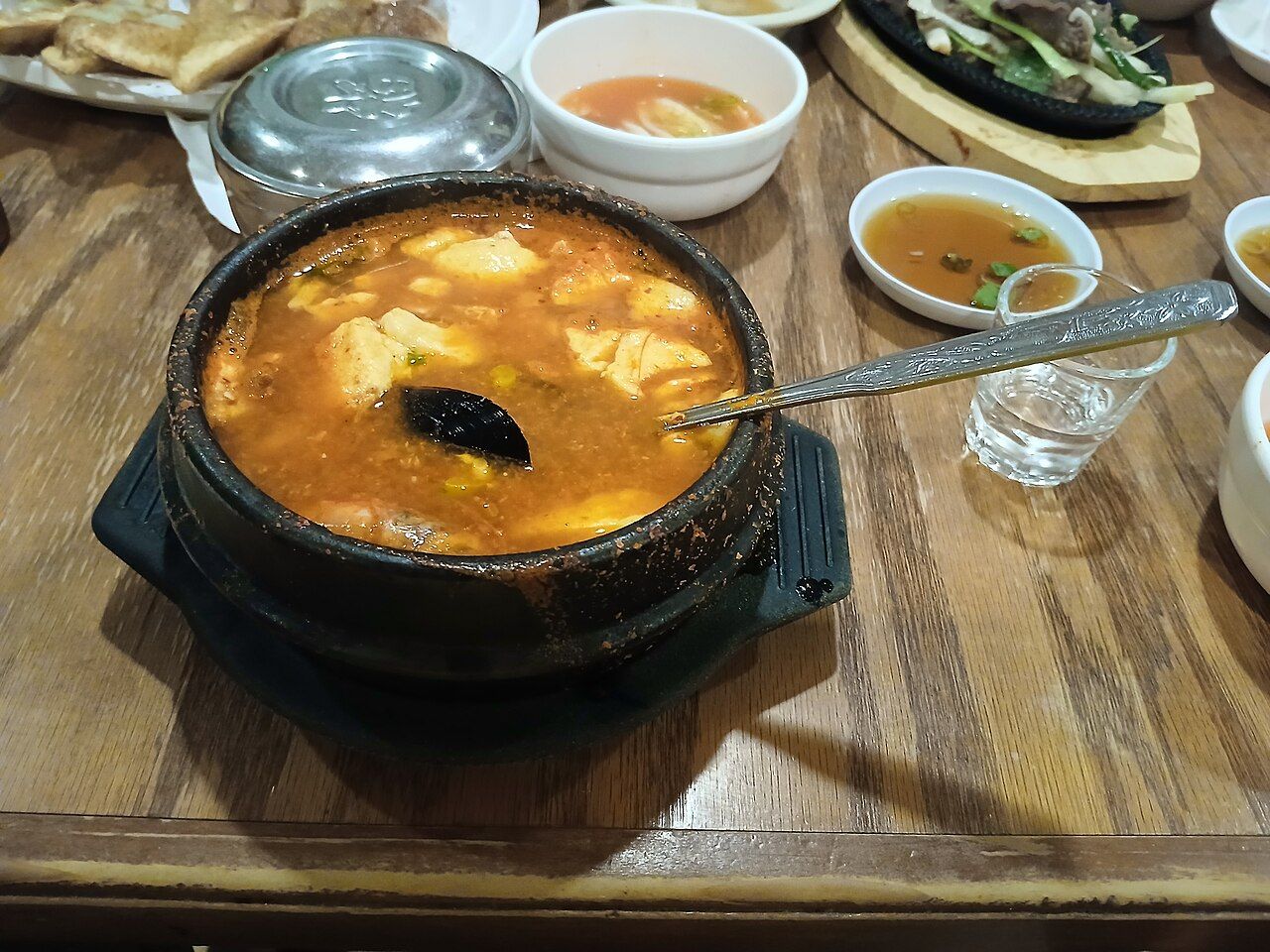
White or red? The white bowl is plain soft tofu with warm whey, seasoned with a little soy sauce. It lets the seawater tofu speak for itself, which is either a pleasure or a reminder that breakfast can be very direct. The red version is a spicy, chilli-coloured stew, often with seafood or pork, served bubbling in a stone pot; some kitchens flavour theirs like jjamppong, the spicy seafood noodle soup. Rice and banchan—small dishes such as kimchi, seasoned greens and pickled radish—complete the table. For more about the habits of eating in Gangneung, the meal itself is a fairly persuasive introduction.
Why is this place called Chodang? The name comes from Heo Yeop, a scholar-official of the Joseon period whose pen name, Chodang, means a thatched hall. Local tradition says he had tofu made with seawater from a well near his house while serving in the region in the sixteenth century, and that the method spread from there. The story cannot be proved. The name, at least, stayed put, and the tofu followed it into local memory. A good origin story is not always a verified one; it has nevertheless done rather well for itself.
The pine woods
What comes after breakfast? The pines, which are not an elaborate change of subject: they stand among the houses and along the lanes, close to the tofu kitchens. Tall black pines line this part of the Gangwon coast. They were planted and kept over centuries as protection from sea wind and sand, and now give the district its shaded, hushed quality. In the woods is a memorial park to Heo Yeop’s children, Heo Gyun and Heo Nanseolheon. Heo Gyun is credited with one of the earliest novels in Korean script; his sister’s poetry was admired in China and Japan as well as at home.
Is the memorial park only a pause between meals? It has a restored traditional house, a small exhibition and quiet paths under the trees, so the answer is no, though the tofu has made a strong opening argument. The family’s literary history gives the name Chodang another layer: the district remembers both the dish associated with their father and the writing of his children. Paths through the pines make the shift from breakfast to the rest of the day without much ceremony. The trees have been doing their work for centuries; they are not especially concerned with the itinerary.
Gyeongpo
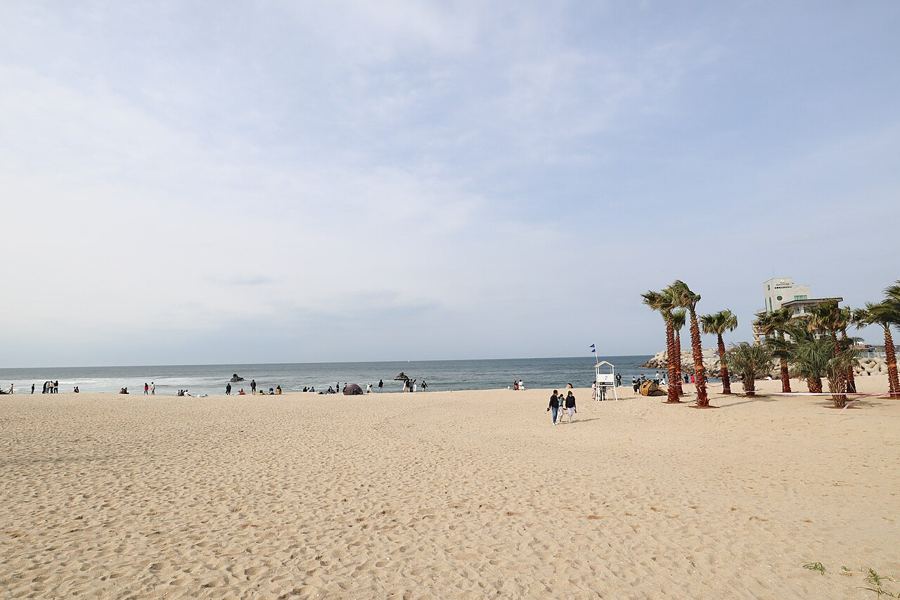
Where does the day lead from the woods? Towards Gyeongpo Lake, with paths and quiet roads crossing the green space between Chodang and the water. The lake’s cycle path is close by. From there, across the coast road, lies Gyeongpo Beach. Breakfast, pines, lake and sea make a neat progression, although the sea does not require the day to have been carefully planned. The coast is simply the next part of the landscape. In Chodang, even a bowl of tofu has managed to put the water in the story twice: first in its making, then at the end of the walk.
And what becomes of the evening? The tofu can leave the breakfast table in another form: blocks, tubs of soft curds and other soybean products are sold to take away. Seawater tofu makes a simple supper, warmed and eaten with soy sauce and spring onion. There are also soybean-flavoured ice creams and sweets, a newer fashion along the lanes. They are a light finish to a day whose central dish has been made in much the same way for generations. After the white bowl, the red stew, the pines and the coast, is there room left for one more tofu variation?
Next stop: Ojukheon, from black bamboo to the banknotes City
Credits: Mobius6; Creative Commons BY-SA 4.0; Mobius6; Creative Commons BY-SA 4.0; Masterhatch; Creative Commons BY-SA 4.0