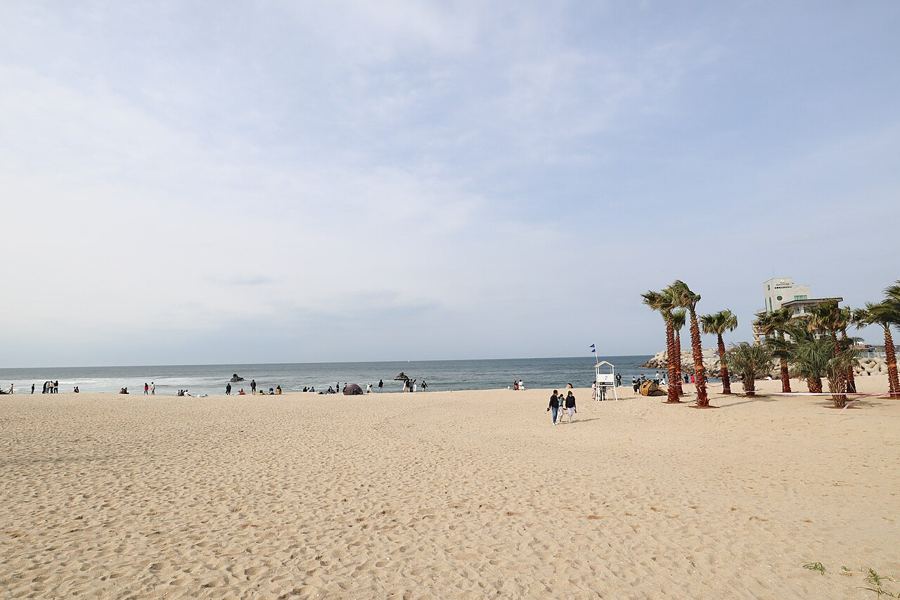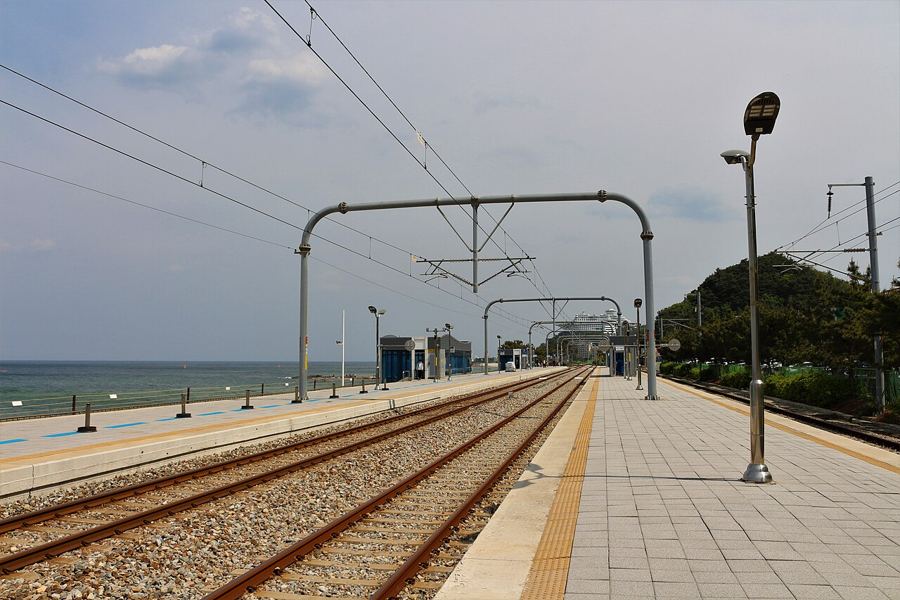
A train reaches Jeongdongjin and the beach is already part of the view. That is a mildly ridiculous arrangement for a station, which may explain why people remember it. Is the whole village just a platform for watching sunrise? That is the neat story. The less neat version has a harbour, hills, an hourglass and a former military site, all gathered around a small stretch of coast.
Jeongdongjin
Does the name come from a poet’s idea of the place? No. It describes geography: Jeongdongjin is the harbour due east of the royal palace in Seoul. For a long time, that was simply a point on a map. In recent decades, people have made the same alignment into a reason to come here, particularly to see the sun rise from the sea on the year’s first morning.
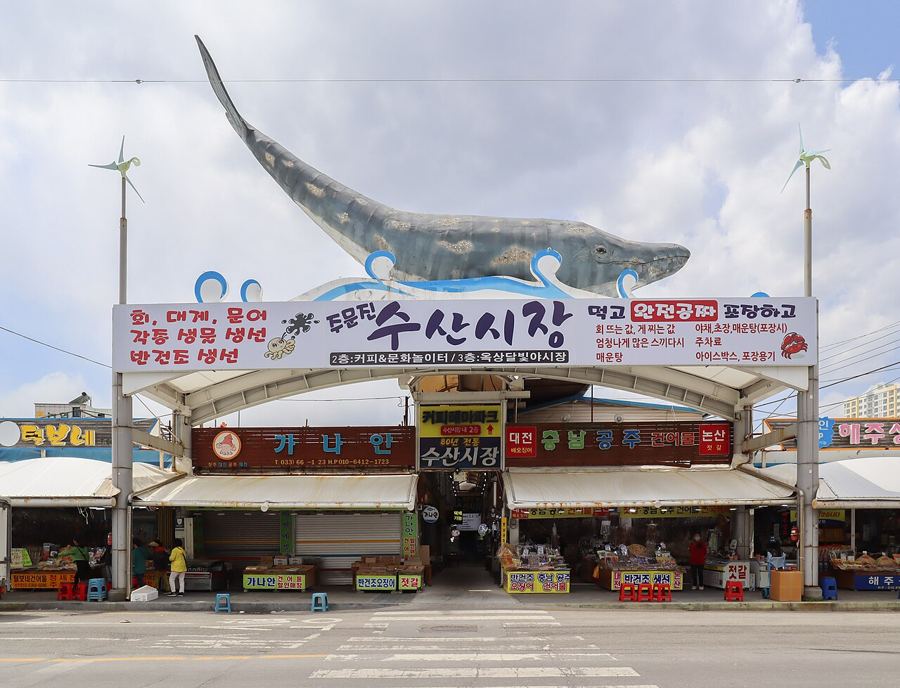
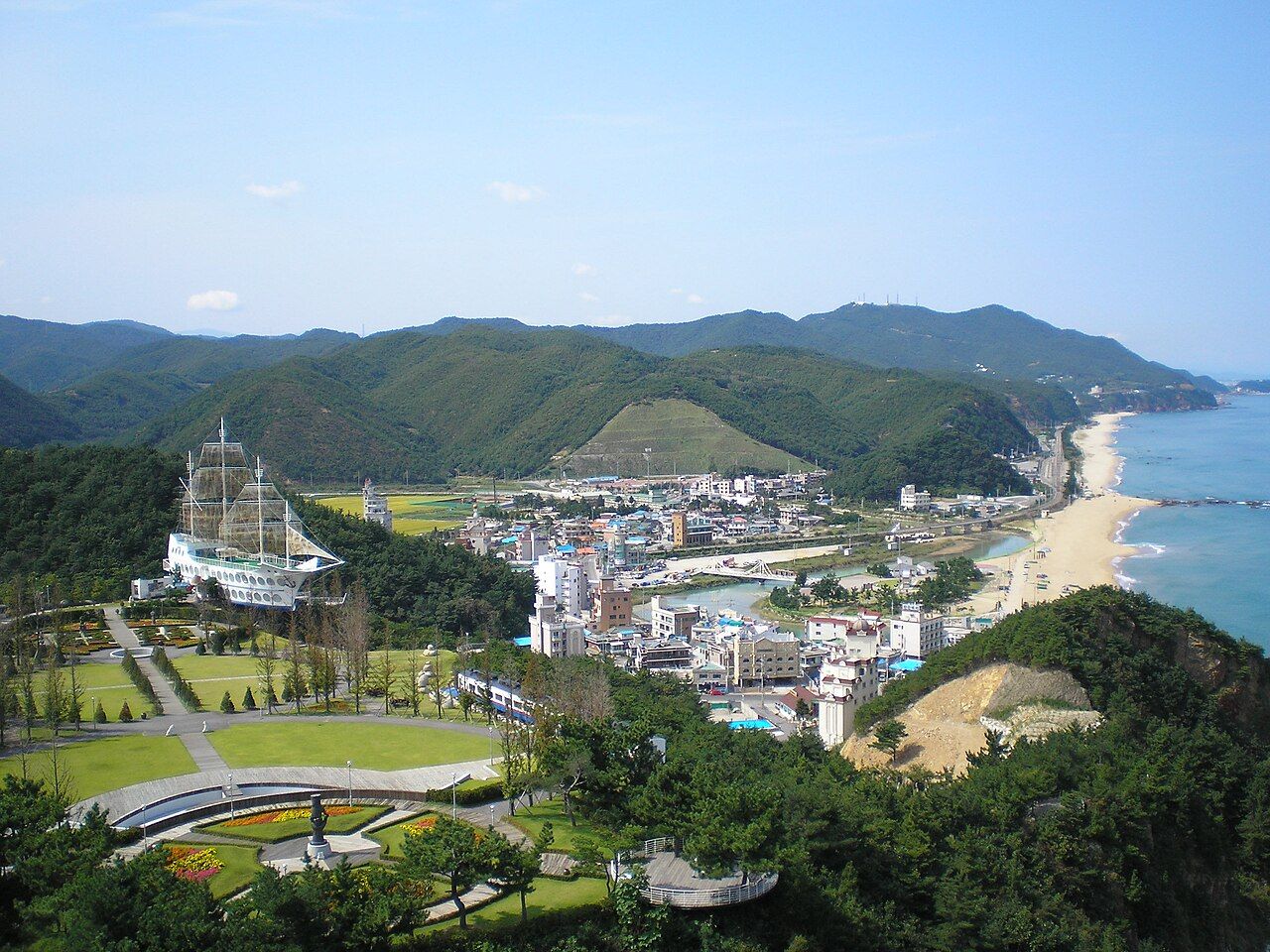
Is there much village to get lost in? Not much. The beach, station, little harbour and a handful of streets of shops sit close together. A hill park lies to the south; a former military site is to the north. Jeongdongjin is small enough that the sea remains the main event, even while the station tries to share the billing.
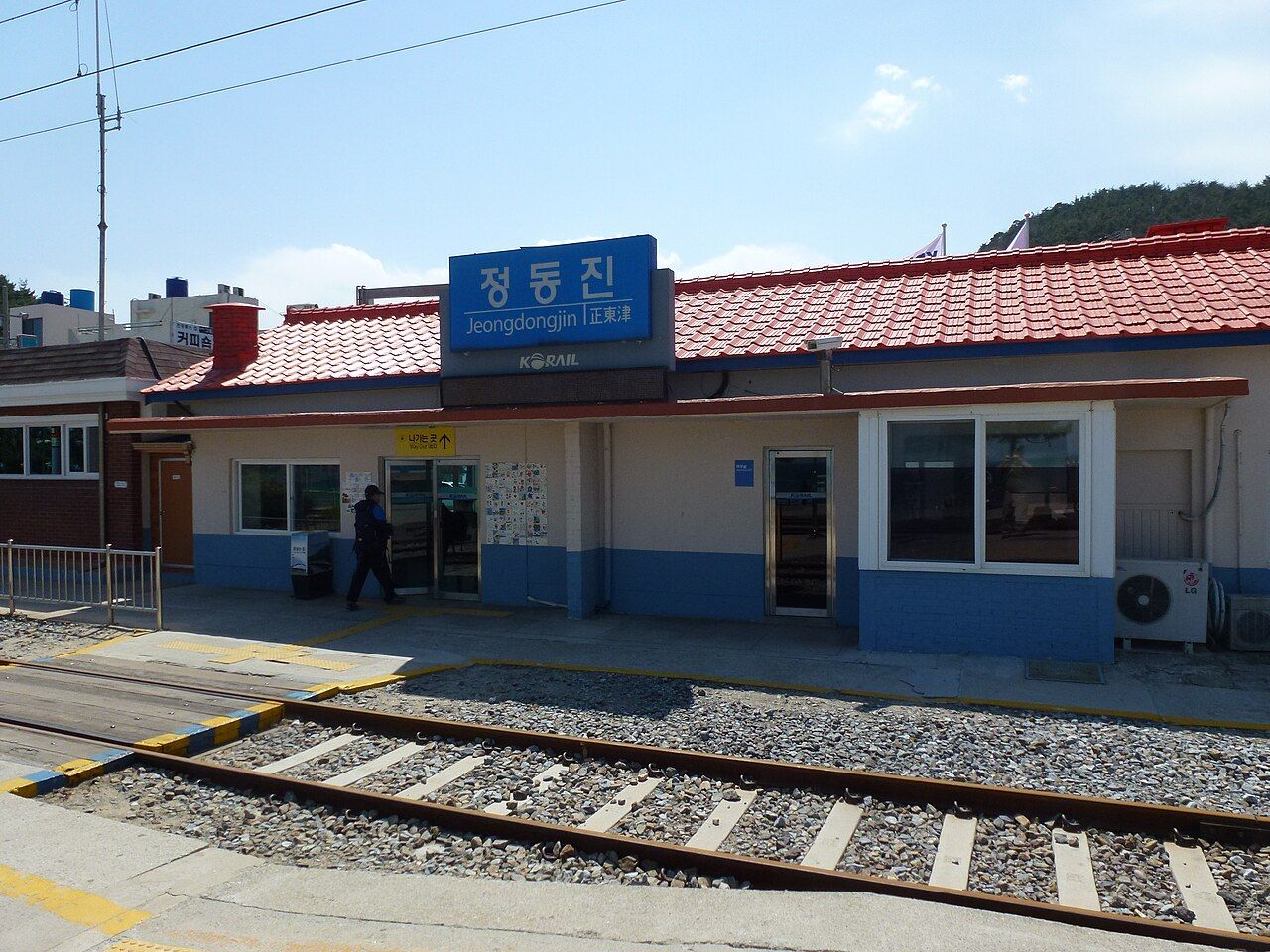
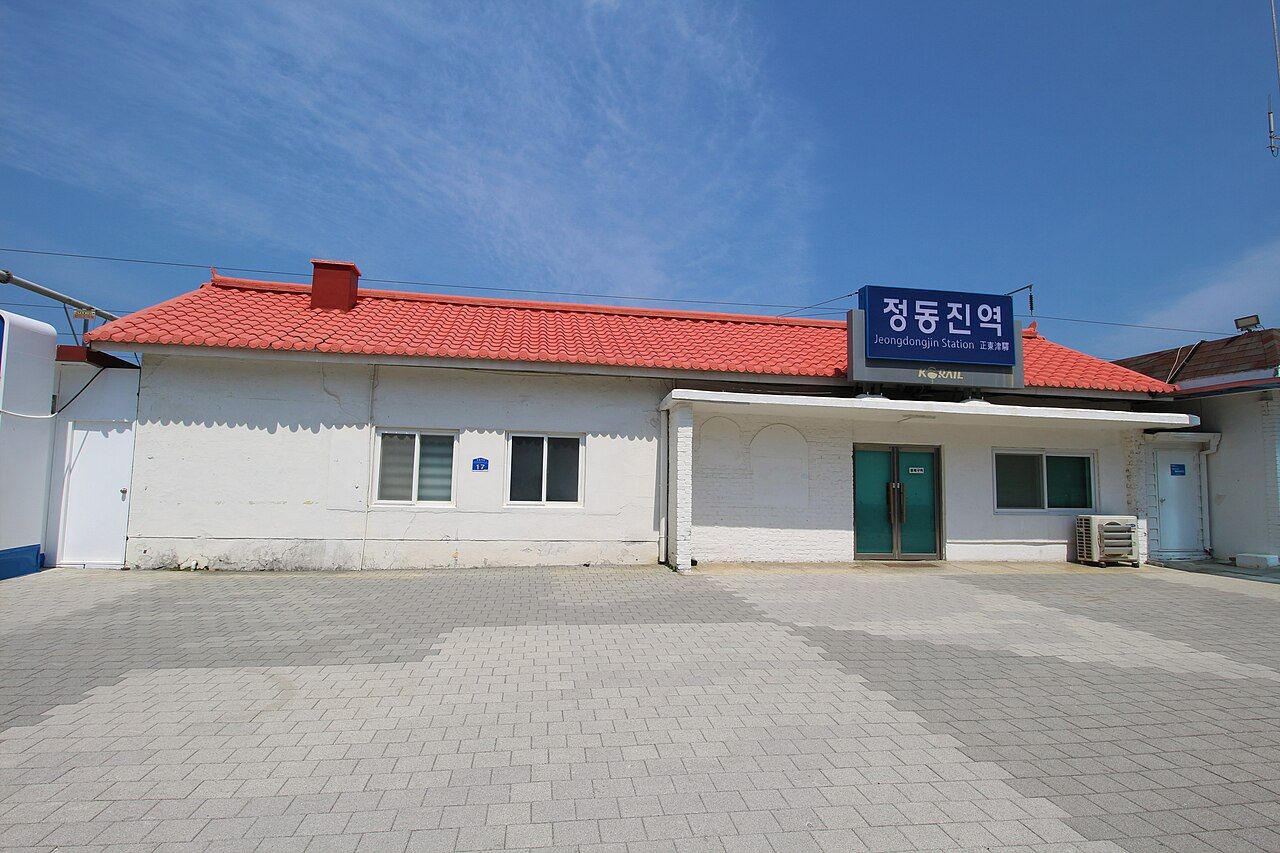
Was the station built for sunrise visitors? No. The low red-roofed building opened in the nineteen sixties on the coastal railway line, and for years it served as little more than a stop for local trains. Its platform follows the beach so closely that the station has long been promoted as among the nearest to the sea anywhere. There are grander railway claims. This one has water beside it.
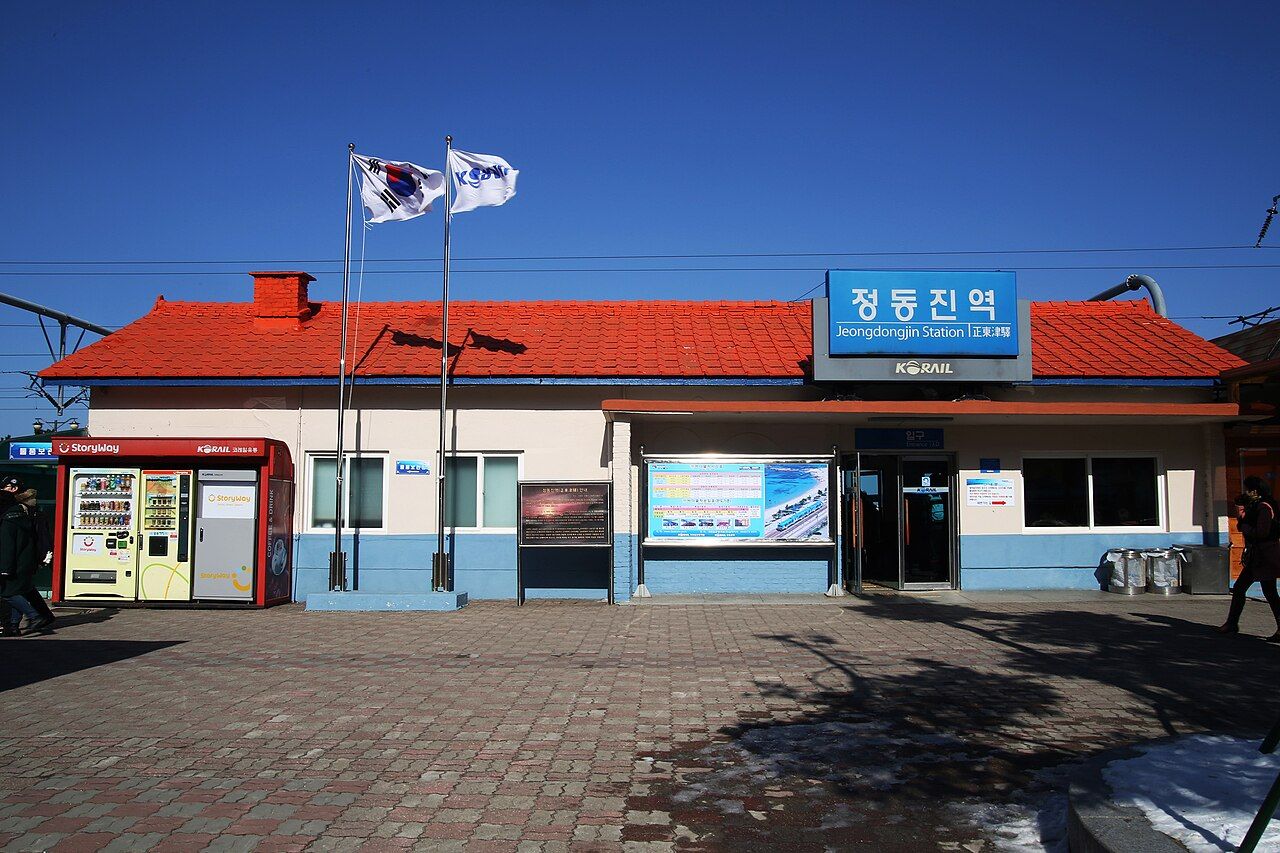
A television drama filmed scenes at the station in the nineteen nineties. After that, people came to see the place itself, not only to pass through it. Overnight trains from Seoul, arranged to reach Jeongdongjin before dawn, helped give the sunrise a romantic reputation, particularly around New Year. Those special services have not stayed the same. High-speed trains from Seoul now run down the coast and stop here, as do other trains.
Is the station more impressive inside than out? It is a modest building, with a waiting room and forecourt. Visitors leave photos and notes on its walls, and the blue sign is part of the familiar scene. The station’s physical size has not expanded to match its fame, which seems a sensible decision.
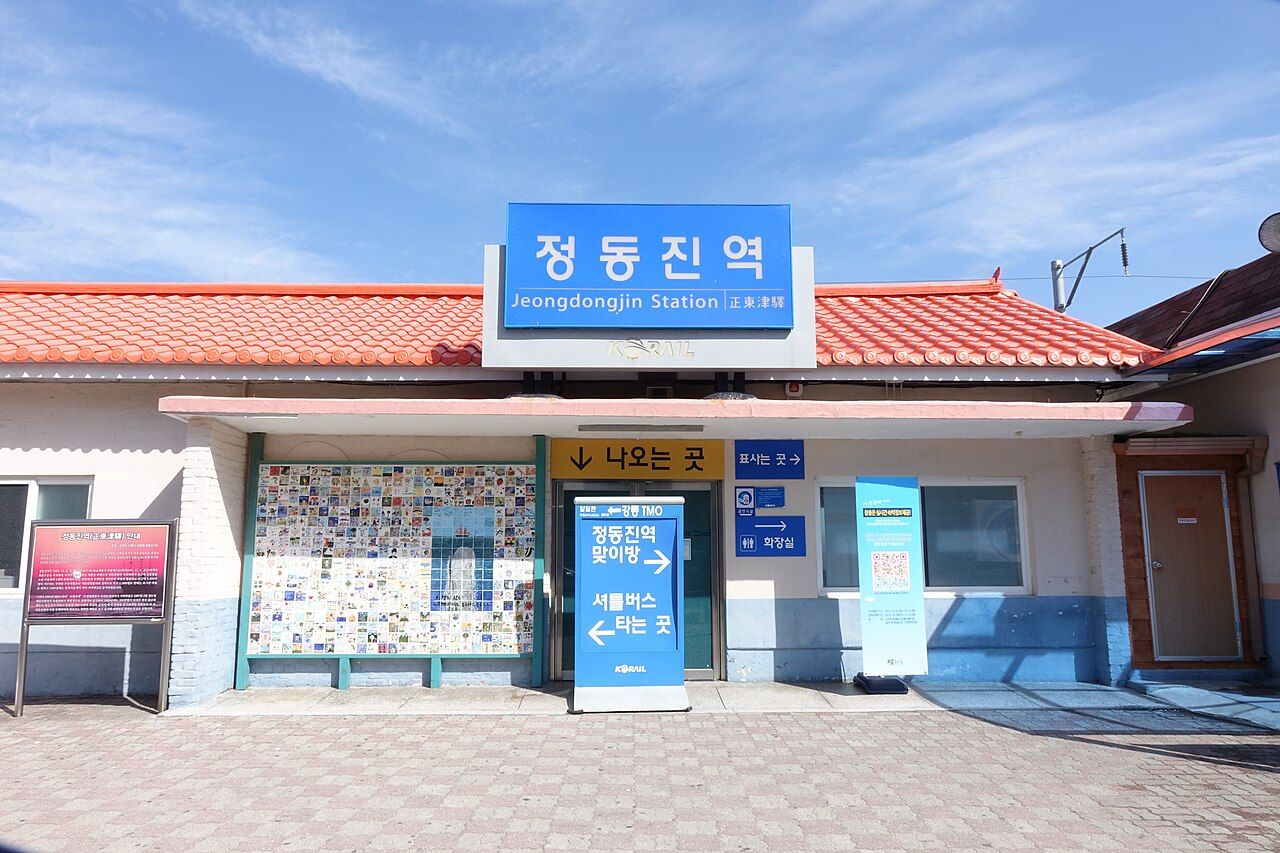
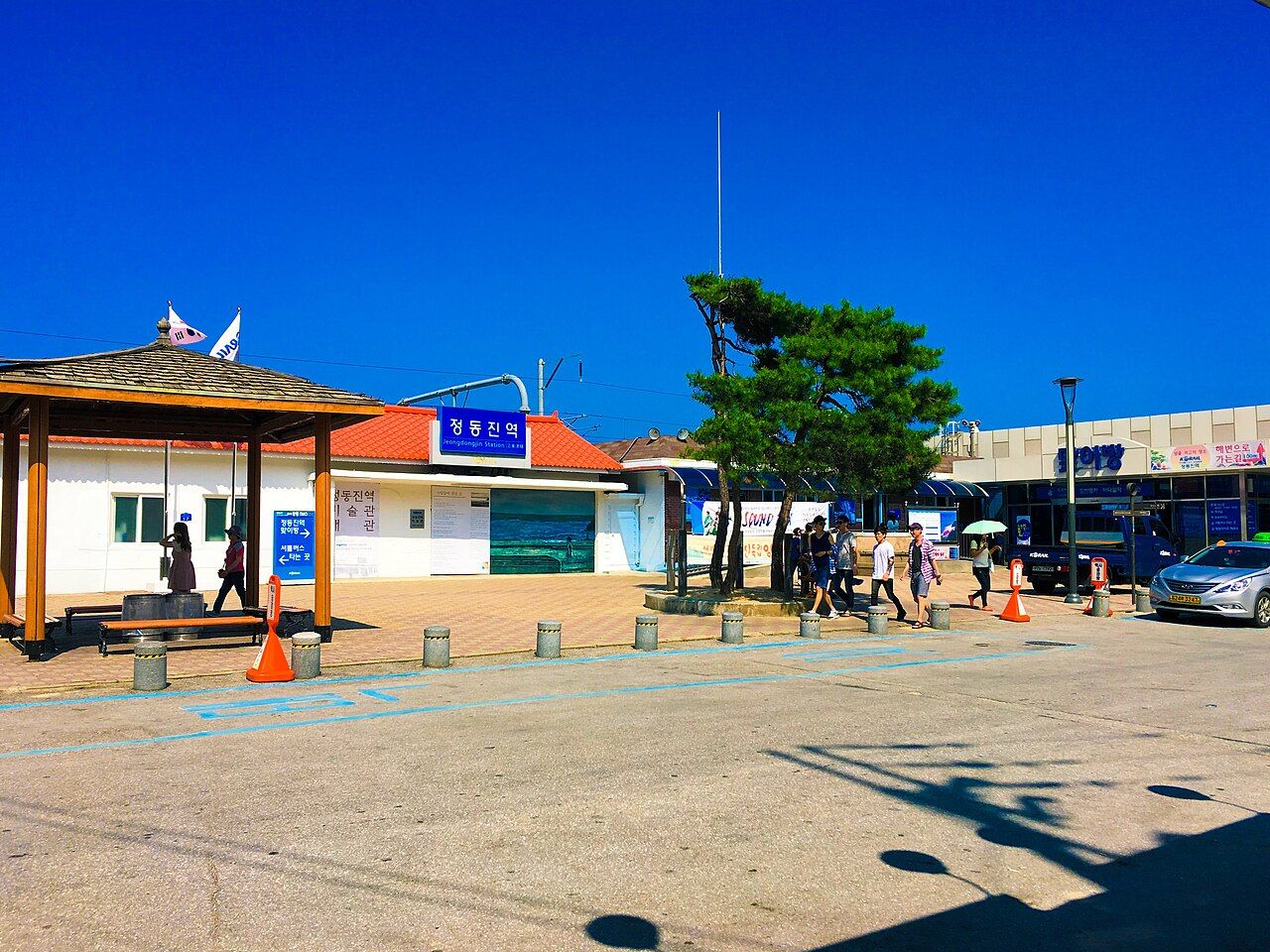
Can the sunrise be relied upon to behave? The beach points almost due east, across open water to an unobstructed horizon. In clear weather, the sky shifts from grey through pink and gold, and the sun appears with little ceremony. But summer often brings cloud and haze. Some mornings offer a clear view; others offer a sky that declines to co-operate. Overcast weather can still let shafts of light show over the sea, though it is not quite the postcard arrangement.
Is the first morning of the year just another sunrise with a better reputation? It is also much busier. Tens of thousands come to Jeongdongjin on the night of thirty-one December and the morning of one January, hoping to see the year’s first sun and make wishes for what follows. Roads are jammed, trains fill well ahead of time, and people crowd the beach shoulder to shoulder. Performances and fireworks are among the events, as is the turning of the giant hourglass. A shared horizon is evidently more appealing when several thousand people are sharing it.
For anyone who prefers the sea without the shoulder-to-shoulder arrangement, another winter morning has the same coastline and a much smaller crowd.
For anyone who prefers the sea without the shoulder-to-shoulder arrangement, another winter morning has the same coastline and a much smaller crowd.
Does the hourglass serve any purpose beyond looking enormous? It marks the millennium and keeps time at a decidedly unhurried pace. In a waterfront park south of the station, the glass sits inside a round frame. A year passes while its sand runs through; at New Year it is turned over. Old train carriages and railway displays nearby continue the theme. Jeongdongjin is not short of reminders that time passes. It has chosen to make one of them very large.
Is the southern hill park only about the view? A large ship-shaped building stands on the cliffs above the shore, within a privately run hilltop complex. Sculpture gardens look down towards the village, and from the hillside the view takes in beach and mountains. The older station building is another piece of the railway story: whitewashed walls under a red tile roof, rather less grand than a ship on a cliff.
Are the vessels at Unification Park just curiosities? They belong to a security education park several kilometres north of the station, and the stories around them are not light ones. A North Korean submarine ran aground off this coast in September nineteen ninety-six. Its crew came ashore, followed by a long search in the surrounding mountains and deaths on both sides. The submarine was recovered and placed on land; visitors can go inside its narrow interior.
The other ship is a retired South Korean navy destroyer. It was built in the United States in the years of the Second World War, then transferred to Korea. Visitors can see its decks and cabins, which give some sense of life aboard a mid-century warship. Exhibits cover the submarine incident and the broader history of tension on the peninsula from the South Korean perspective. This is a different sort of stop from a sunrise beach, and no amount of rosy sky turns it into a light subject.
Does the coastline end with the hourglass? It carries on south along the cliffs. The Jeongdong Simgok sea path follows that shore, while seasons on the Gangwon coast gives the changing weather a wider setting. For the rail connection, the story on getting to Gangneung takes the line beyond this small station. Jeongdongjin’s reputation begins with looking east. What else is there to see along the coast?
Next stop: Jeongdong Simgok, where the cliffs meet the sea Coast
Credits: Mobius6; Creative Commons BY-SA 4.0; Mobius6; Creative Commons BY-SA 4.0; Rsa; Creative Commons BY-SA 3.0