Jumunjin
What reaches a visitor before the harbour comes into view? Salt, and the smell of squid drying in the sea air. Jumunjin announces itself without much interest in introductions: boats crowd the water, fish are laid out at the market, and the working port sits within Gangneung while feeling rather like its own town. The coast is here too, on both sides. The harbour tends to speak first.
Is Jumunjin just a beach town with a fishing port attached? The order is the other way round. It is one of the largest fishing ports on Korea’s east coast, and the harbour shapes the streets around it. The boats, market and drying seafood are not decorative extras assembled for a view. They are the visible parts of a working place. The beaches can wait their turn; they seem accustomed to it.
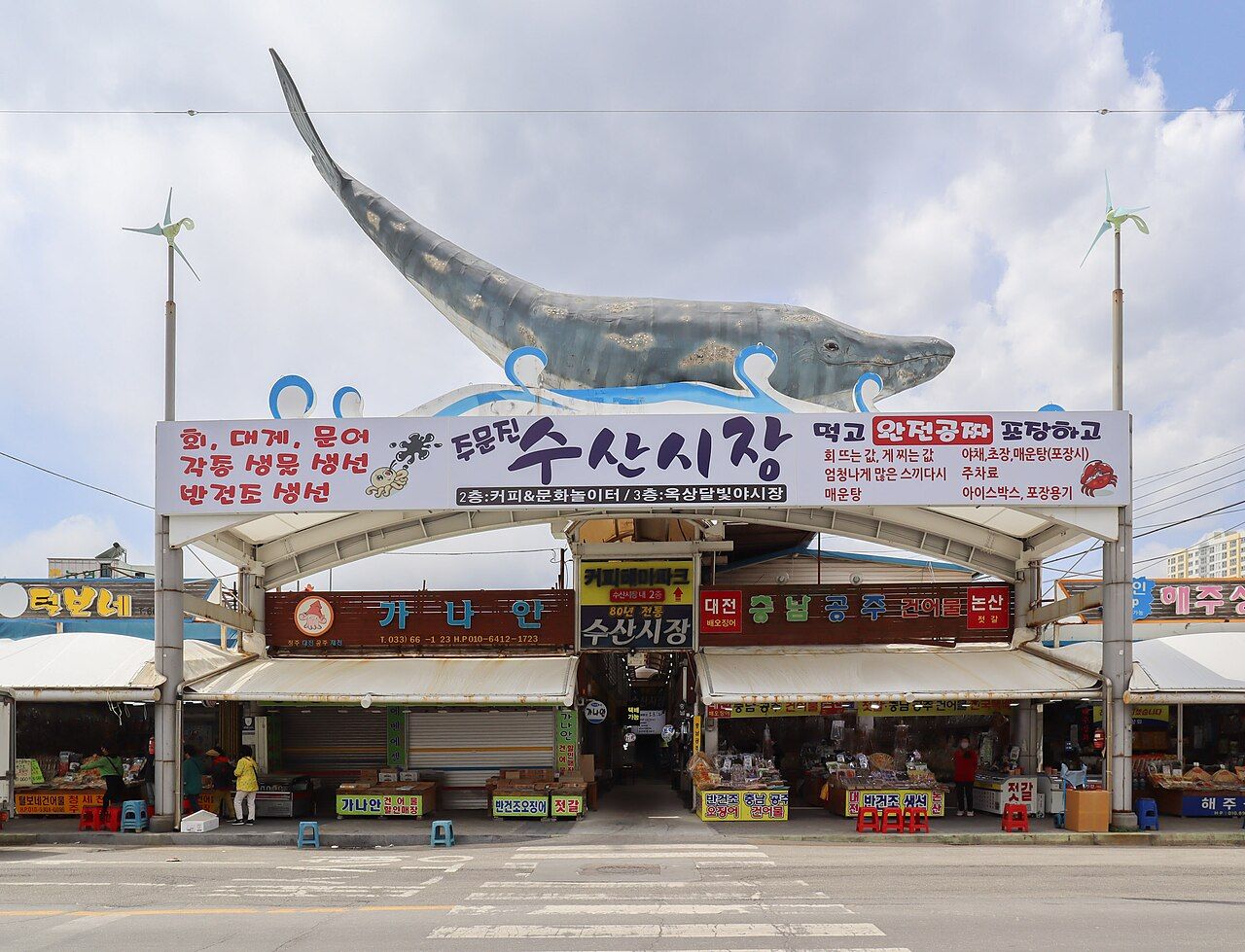
Does a fish market mean a neat row of counters and a quick look? Not quite. Jumunjin Fish Market spreads through covered buildings and lanes just inland from the harbour. A large whale sculpture sits above the gateway, which makes the entrance difficult to mistake for a quiet side street. Inside, tanks hold live fish, tubs are full of shellfish, crabs are stacked in boxes, and fresh-cut fish rests on ice.
Is the catch only fresh? No. Beside it is a dried-seafood section where squid, pollack, anchovies, seaweed and fish of different sizes have been flattened, split, salted or dried in the wind. Dried seafood is a popular gift in Korea, and bags of squid commonly leave the market with visitors. Vendors often let people taste before buying. That is a sensible arrangement: squid is a more persuasive souvenir after it has made its case.
Does the market’s food stop at the counters? The familiar meal begins with seafood chosen at a stall and prepared for eating upstairs or nearby. Raw slices, called hoe, are a classic choice; a spicy fish stew made from the bones may follow. Grilled fish, steamed crab and seafood noodles belong to the same broad family of possibilities. The meal has its own small customs, helpfully explained in the guide to eating in Gangneung.
Are the displayed prices the whole story? Prices depend on the catch and the season, and English prices are rarely written down. Preparation, side dishes and a table may be charged separately. Jumunjin is not pretending to be a polished seafood hall, and the distinction is part of its appeal.
Jumunjin harbour
Is squid merely one dish among many here? Jumunjin built its name on squid. For generations, boats went out at night with bright lamps to draw squid towards the surface, then the catch was hung to dry in the sea wind. The east-coast squid catch has fallen sharply in recent years, and much of the squid now sold comes from elsewhere. The old association remains visible, and squid is still grilled, stir-fried, stuffed as ojingeo sundae or served raw. A town can keep its appetite even when the catch changes.
Jumunjin built its name on squid.
Is there another local favourite? Red snow crab, or hongge, is the other star: a long-legged crab caught in deep water off the east coast. It is sold steamed, with sweet meat and a rich interior often mixed with rice. The fishery closes in summer, so it is usually found from autumn through spring. Pollack and sandfish are among the winter catches; mackerel, flounder and a range of shellfish appear at other times. The sea does not keep a fixed menu, however convenient that would be for everyone else.
Are the drying racks there for atmosphere? They are part of how the catch has been preserved on this coast for generations. Rows of split fish or squid can be seen on racks along lanes behind the harbour and on rooftops, pegged out in sun and wind. In winter, pollack is hung further inland to freeze and thaw repeatedly in the mountain air. The pale, flaky dried fish produced this way is called hwangtae, and bundles of it are sold at the market. The scenery, in this case, is also the work.
Is the harbour best understood from a viewpoint? A walk beside it gives a more useful answer. Fishing boats of different sizes line the quays; nets and floats pile up on the concrete, and the night’s catch is auctioned in a covered area near the water at dawn. The port is not arranged around the visitor’s perfect view. That is precisely why it feels like a port rather than a picture of one.
Next stop: Jeongdongjin and the sunrise everyone came to see Coast
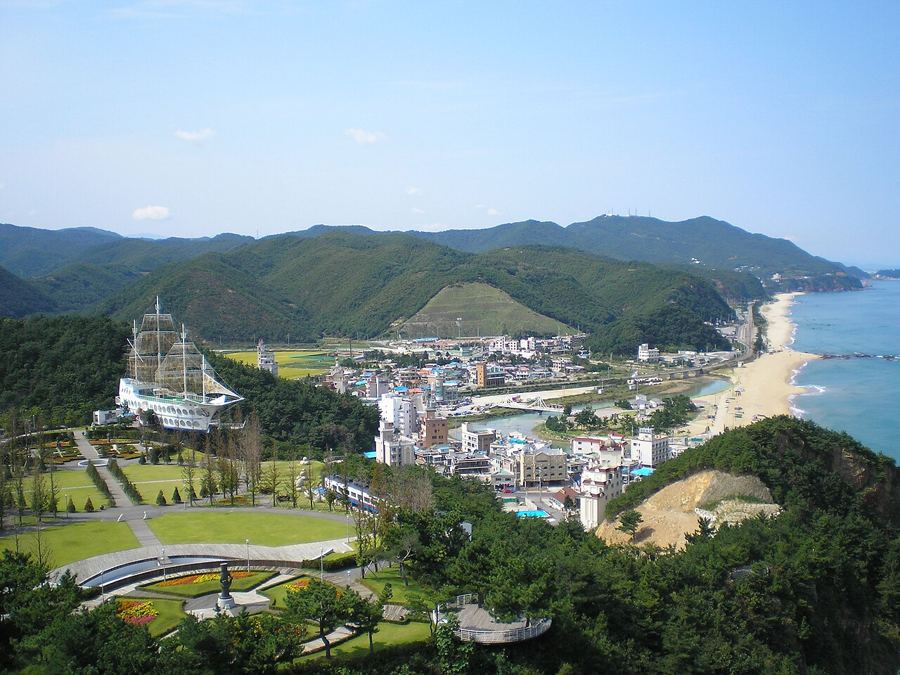
Does the lighthouse belong to another, more distinctly different Jumunjin? Jumunjin Lighthouse stands on a hill above the port, a white tower dating from the first decades of the twentieth century, and is among the oldest on this coast. Narrow lanes of small houses wind uphill to it. From above, the harbour, breakwaters and open sea fall into view together, making the town’s layout easier to read. The walk is short and steep, which is a fairly efficient way for a hill to make its point.
Are those lanes just a route to the top? They pass homes, laundry lines, potted plants and small gardens squeezed between houses; some alleys have painted walls. They are residential streets before they are scenery. Above them, the coast curves away north and south in long pale arcs. Nearby, a small seaside park has rock formations, short paths and viewpoints over the waves. It is also popular for sunrise, a time when the sea is awake and the town has not yet asked it to do anything else.
Jumunjin coast
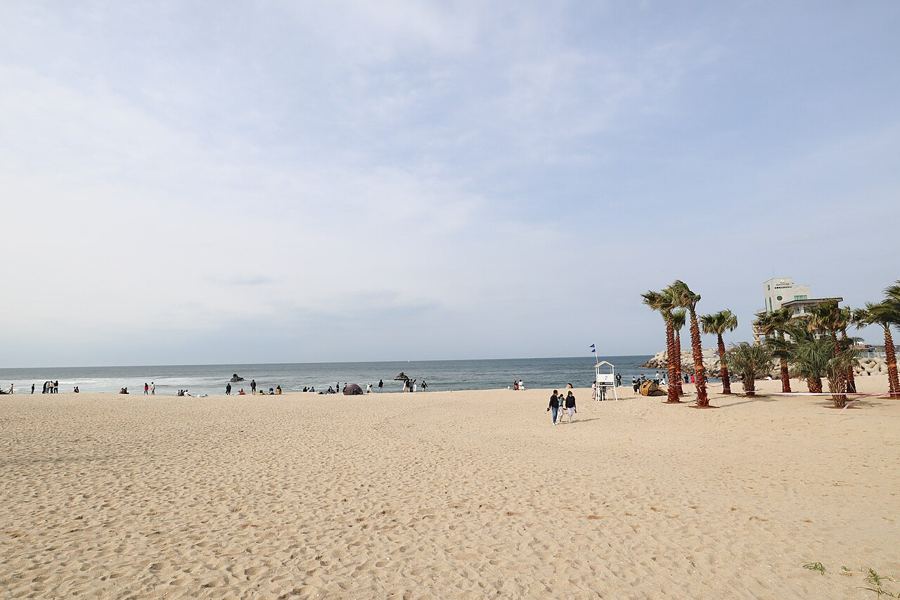
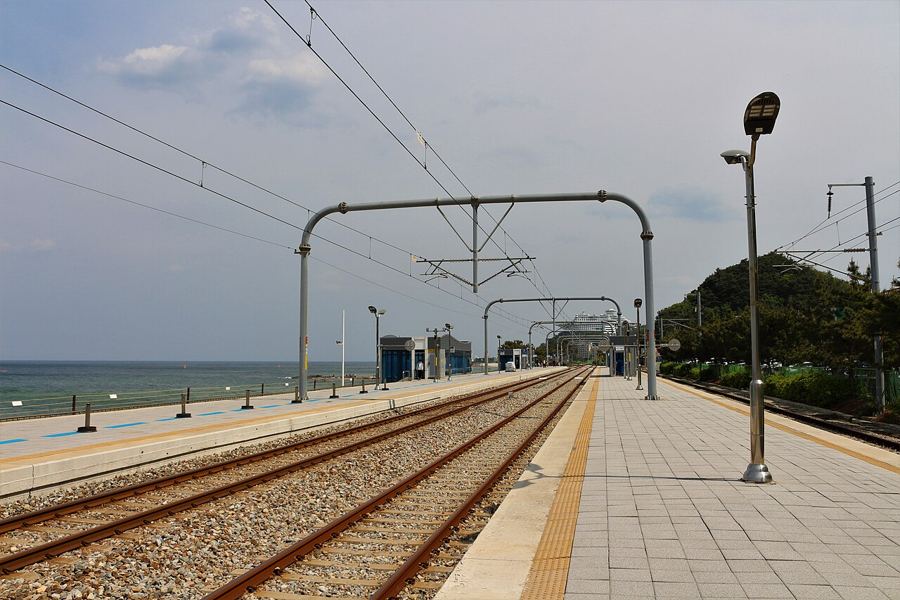
Are the beaches separate from the harbour story? The coast runs into long beaches in both directions, and the port is the hinge between them. Southwards, the sand continues towards Yeongjin, where a short jetty became known through a television drama. Visitors come to recreate a scene there. Northwards, beaches towards Hyangho are wide and quiet, with a bus shelter on the sand that has become a photo stop. Its glass walls and plain bench against the sea are an unambitious arrangement, which may explain why people keep taking its picture.
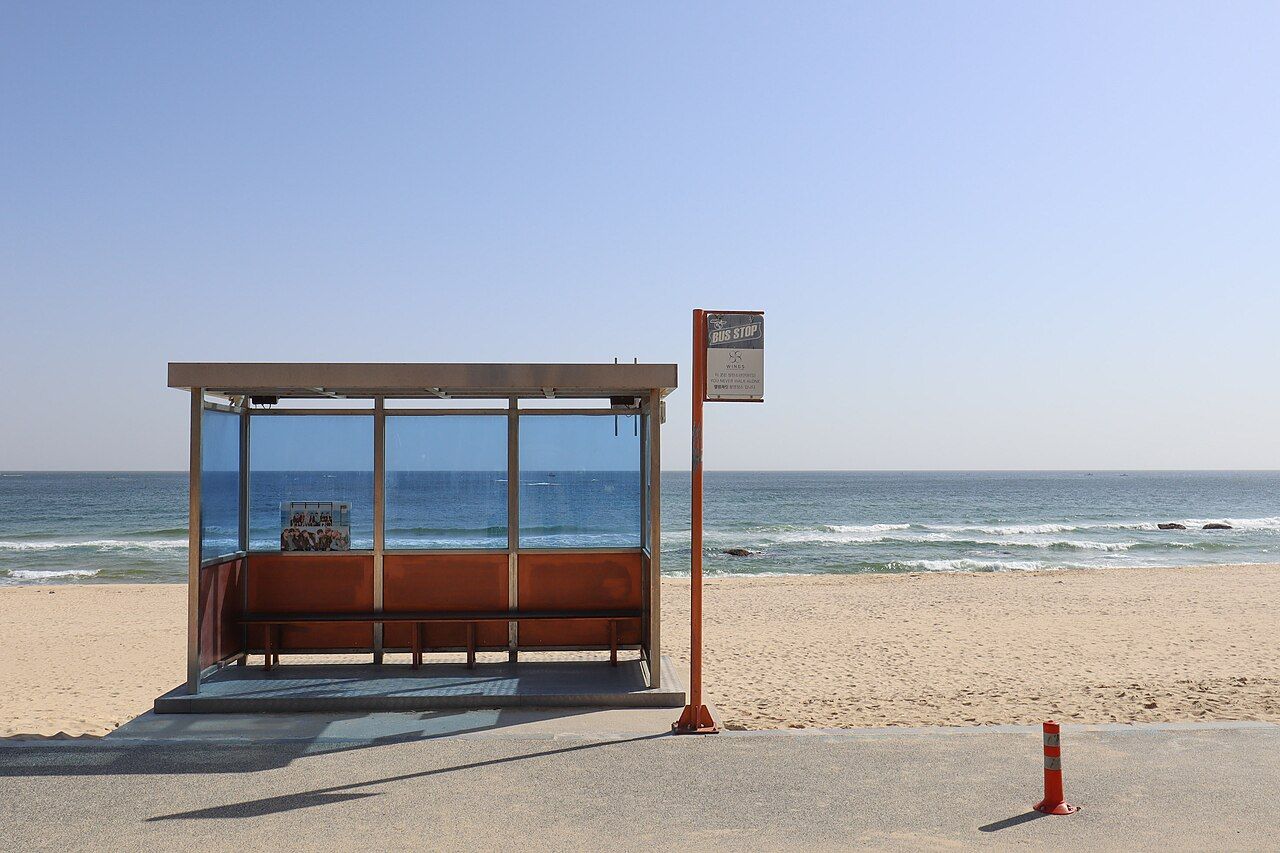
Does a famous screen location need the screen story to work? Not especially. The beaches are pleasant without knowing the drama, with clean sand, clear water in calm weather and more space outside summer. In the official summer season, lifeguards and designated swimming areas are part of the beach scene. More of the coast nearer the city appears in the guide to Gangneung's beaches.
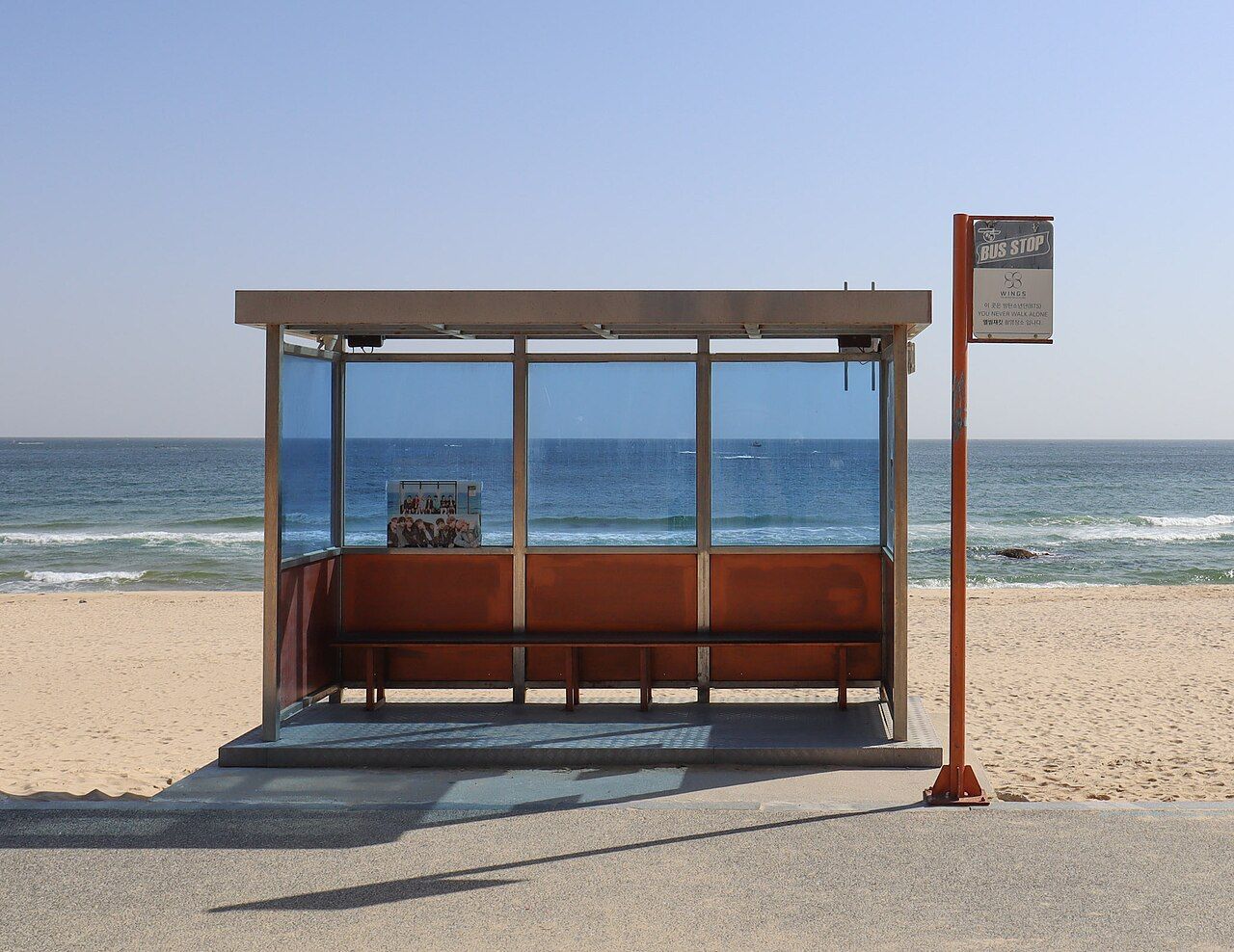
So is Jumunjin a market, a harbour, a hillside town or a beach stop? It manages to be all of them, without smoothing away the seams. The fish market and boats make the working day plain; the lighthouse gives the port its shape; the beaches let the coast carry on in either direction. Beyond the coast lies Sogeumgang valley, inland to the west. Perhaps the question is not which Jumunjin is the real one, but which part stays in mind after the smell of drying squid has gone.
Credits: Mobius6; Creative Commons BY-SA 4.0; Masterhatch; Creative Commons BY-SA 4.0; Rsa; Creative Commons BY-SA 3.0