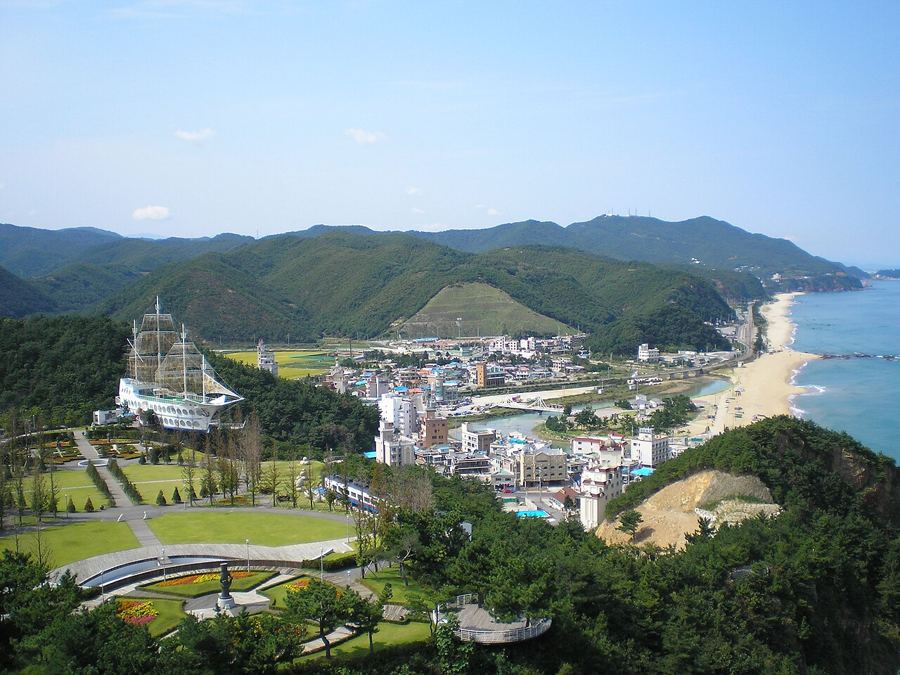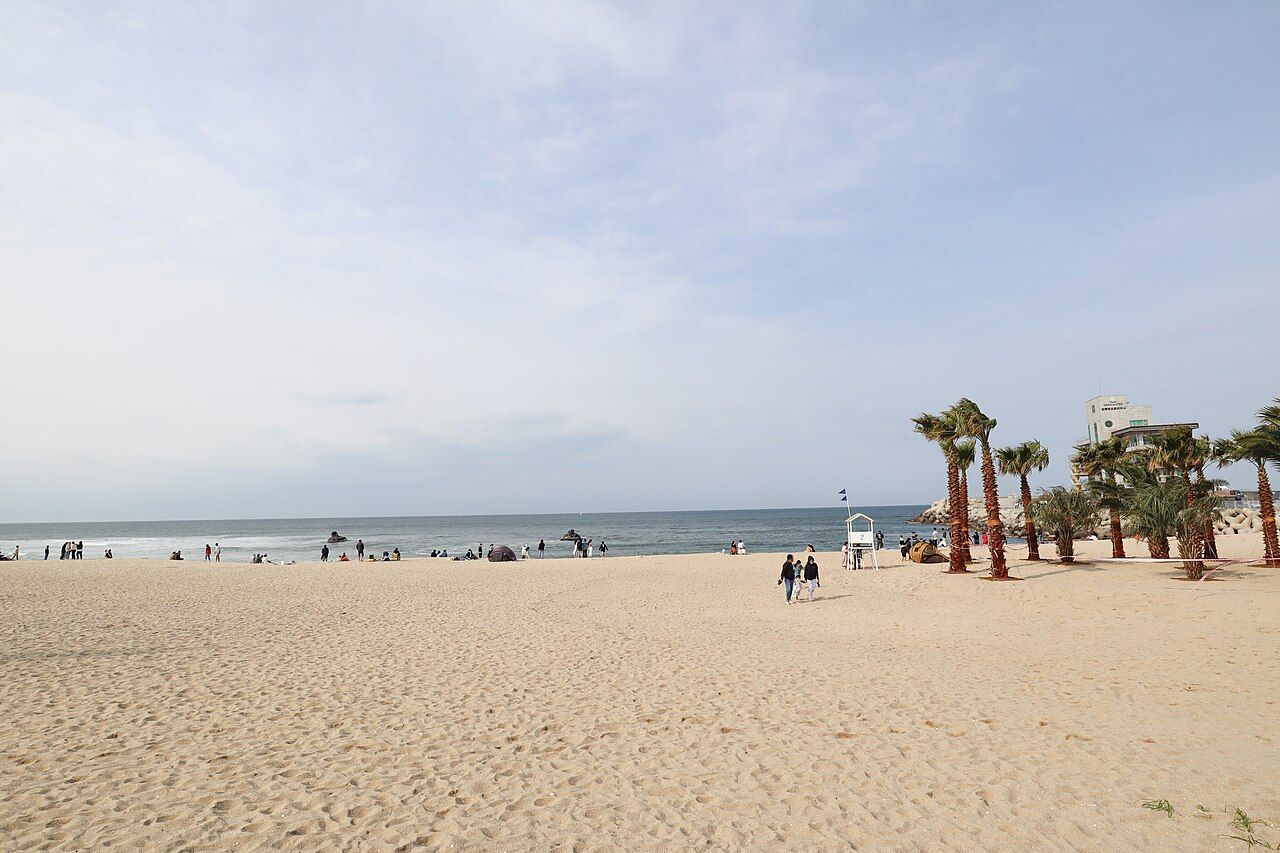
Anmok Beach is a short stretch of sand on the southern side of Gangneung Port. Behind it, a road lined with coffee shops faces the sea. The beach is modest; the coffee, as it happens, has acquired a whole street.
Anmok
Is Anmok just another beach with a few cafes behind it? Not quite. The sand is one small part of the story. The road above it has cafes in buildings of two, three and four floors, with windows and terraces turned towards the water. On a fine weekend the promenade fills from morning until well after dark. A place can be small and still arrange a substantial amount of attention for itself.
Did the coffee street begin with fashionable cafes? The story usually told begins with vending machines. Decades ago, a row stood along the seawall, selling sweet instant coffee in paper cups to fishermen, drivers and couples who had come to look at the water. The machines became an attraction in their own right. People drove out from town for a cup beside the sea, which is a perfectly respectable reason to go somewhere, even if coffee aficionados have since developed more elaborate explanations.
So the machines became the street that is here now? Not quite in one leap. Cafes began opening along the same road as the new century approached, and some roasted their own beans. Gangneung grew a reputation for taking coffee seriously; Anmok became its shop window. The street is now officially promoted as Gangneung Coffee Street, and a sculpture marks its entrance. The occasional vending machine remains, a small reminder of the earlier, less architectural arrangement.
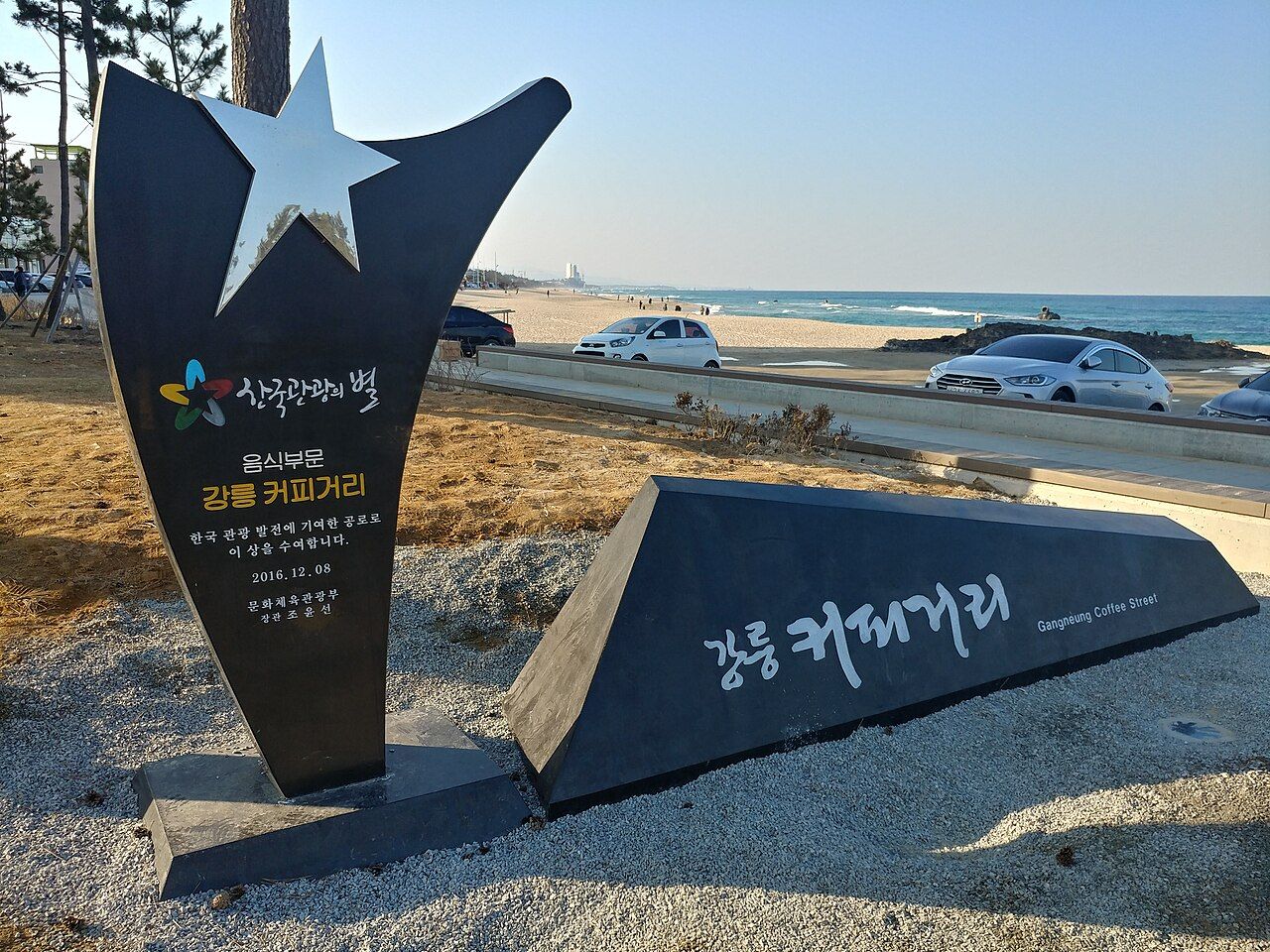
Is there one proper sort of cafe here? No. The line runs from tiny counters to large glass buildings, each offering its own version of a sea view, a terrace or a brewing method. Hand-drip coffee is widely offered, alongside espresso drinks and iced americanos. Pastries and cakes are common too, and some cafes sell beans to take home. The range appears to be part of the point: the coffee street has no need to settle on a single personality.
Does the view make the coffee secondary? That depends on the drinker, and possibly on how long the sea holds their attention. Upper floors and roof terraces look out towards the harbour and its lighthouses; from behind glass, the water remains visible without the wind being invited to join the conversation. Morning can be calm and bright, late afternoon brings softer light and fuller tables, and evenings are lit and lively. There is no shortage of ways to sit with a cup and pretend that choosing a seat was the main decision of the day.
Next stop: Gangneung’s beaches: sand, surf and mistaken assumptions Coast
Gangneung
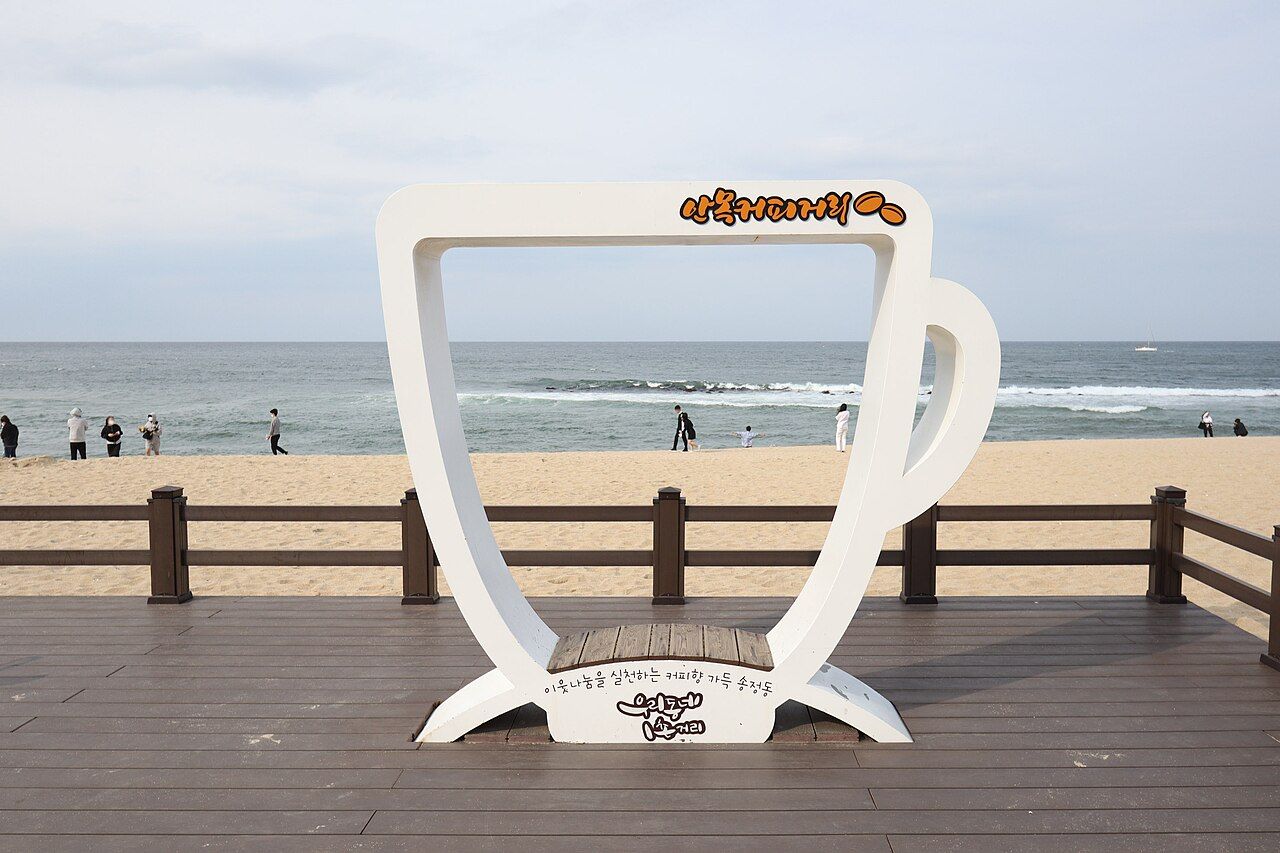
Is Anmok all cafes and no beach? The beach is short, with pale fine sand, a few palm trees and a wooden boardwalk with benches and photo frames. It is a real shore, rather than a decorative forecourt for coffee. A cup-shaped sculpture frame on the boardwalk does, however, make the relationship between the two rather hard to misunderstand.
Does the harbour belong to a different story? It is at the southern end of the beach, with breakwaters, red and white lighthouses and fishing boats. Passenger ferries to Ulleungdo sail from here at some times of year. A footbridge crosses the harbour mouth to the Namhangjin side, where fish restaurants face a view back along the shore. The port gives the coffee street a working edge; the cafes have not managed to persuade the boats to become scenery only.
Is coffee confined to this one road? No. Coffee-themed souvenirs and snacks, as well as cafes, turn up across Gangneung, from the old centre to the mountains. The city’s coffee identity has travelled rather further than the original machines. For a different set of local habits, there is more in the guide to eating in Gangneung.
Does the coffee festival make Anmok a festival town? Gangneung holds a coffee festival each year, usually in autumn. Local roasters and baristas gather for tastings, talks, workshops and competitions, with events across the city and near the sea. It gives coffee its own public occasion, which feels suitably confident for a city where a street grew out of vending machines. The festival is lively for people interested in coffee; a quiet seafront is less likely to be the chief attraction at that particular moment.
Is the coast north of Anmok more of the same? It is a long, nearly continuous run of beaches and pine groves. A path and quiet roads pass Songjeong Beach, where old pines line the sand, then continue towards Gangmun and Gyeongpo. At Songjeong, red-barked trunks stand above a soft floor of needles, with the sound of waves coming through them. The trees offer shade on hot days and shelter from winter wind; the coast has made room for more than one sort of pause.
From there, the shore leads towards Gyeongpo Lake, or inland to Chodang village for soft tofu. Anmok’s coffee is only one answer to the question of what Gangneung is good at. The beaches farther north have their own stories, and the next one begins just up the coast.
Credits: Mobius6; Creative Commons BY-SA 4.0; Masterhatch; Creative Commons BY-SA 4.0; Rsa; Creative Commons BY-SA 3.0