Why does a visitor come to Odaesan and then spend the first part of the day walking through trees? It sounds like a small detour, the sort that can happen when a temple is the stated destination and the forest gets mistaken for the approach. The mountain, whose name means five plateaus, has other ideas. Its southern valleys hold Woljeongsa and Sangwonsa, joined by a stream and a forest road, while the old fir path gives the day its proper beginning.
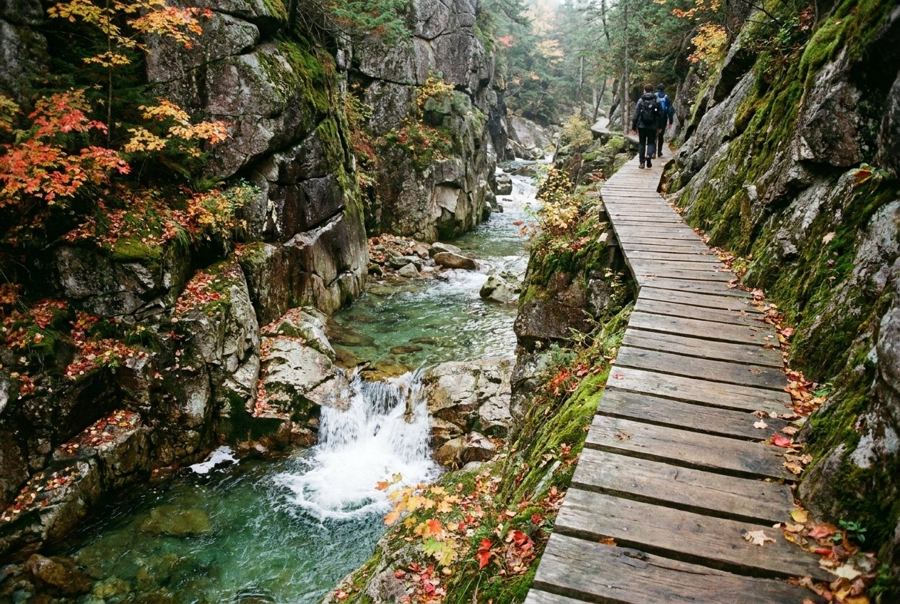
Odaesan is among Korea’s great Buddhist mountains. Pilgrims have long made their way towards its high ridges, though the valley offers a gentler first chapter. The coast is west of these mountains; here, the air and the pace feel different. In winter, snow settles through the valley. In autumn, red and gold appear on the slopes around the dark firs. Neither season needs much help from a visitor’s imagination.
Odaesan
What does the morning offer before the temple? The fir forest, plainly. The path begins at the Iljumun, the one-pillar gate marking the edge of temple ground, and follows the stream through tall trees. Many firs are very old. Their straight grey trunks rise above the path, and the ground is soft with needles. Even in summer the air is cool and resin-scented.
The forest is not a corridor to be crossed; it is the day’s first answer to the question of why anyone came.
The forest is not a corridor to be crossed; it is the day’s first answer to the question of why anyone came.
Is this a strenuous beginning? No. The path is broad, flat and easy, with benches among the trees. A soft section is set aside for barefoot walking in warm weather, an arrangement that suggests the ground has been given more thought than the average visitor’s itinerary. One enormous fallen fir remains where it fell. It is a quiet reminder that even trees that seem to have settled in for the long term are not permanent.
The walk is short enough to be treated as an errand, which would be a pity. The point is not to hurry towards the buildings. The forest has its own steady argument: grey trunks, needles underfoot, stream alongside. The day can start there, without a grand revelation. Odaesan is not obliged to produce one before breakfast.
Woljeongsa
What waits at the end of the fir path? Woljeongsa, founded in the seventh century by the Silla monk Jajang. He is remembered for bringing Buddhist relics to Korea and for his devotion to Odaesan. The temple has been destroyed and rebuilt more than once, and much of it burned during the Korean War. Its present halls are largely reconstructions in the traditional style, with the deep greens, reds and blues of dancheong.
The courtyard’s central treasure is the octagonal, nine-storey stone pagoda from the Goryeo period, listed as a National Treasure. Grey stone forms each storey; small bells hang from the corners of the roofs, and a bronze finial sits above. In front, a kneeling stone bodhisattva appears to offer something to the pagoda. The figure in the courtyard is a replica. The original is kept in the nearby temple museum, where originals are spared the daily business of being looked at.
What makes this a place of worship rather than simply a fine courtyard? Monks and lay believers pray inside the halls. Visitors can walk through the courtyard and look in from the doorways, while the quiet work of prayer continues. The buildings have already had more than enough interruptions in their history; the day’s visitors need not add another. The pagoda, the painted halls and the fir forest belong to the same visit, but they ask for different kinds of attention.
And what changes as the day moves on? The temples of Odaesan have bell pavilions, where a bronze bell hangs beside a drum, a wooden fish and a cloud-shaped gong. These four instruments are struck at dawn and dusk, calling beings in the sky, on land and in water to the teaching. The idea is expansive. The sound of a bell rolling across a forest is rather less interested in whether anyone has planned a suitably thoughtful response.
Temple stays are another part of life in the valley: visitors sleep in a temple, eat temple food and join daily routines such as chanting, meditation and bows. This is not simply a different sort of bed for the night. It means following the temple’s hours and rules, including an early start. Some people will find that meaningful; others will discover that their devotion has a surprisingly strong opinion about mornings.
Next stop: A day along Sogeumgang’s granite stream Mountains
Sangwonsa
Where does the day go after Woljeongsa? The stream continues up the valley towards Sangwonsa, with road and walking trail following the water. The trail crosses by bridges and stepping stones through mixed forest. It is a long, gentle route, with few steep sections; it need not be taken all at once. The stream does not seem to mind whether the walk is complete.
Sangwonsa is smaller and higher in the woods. Its bronze bell was cast in the eighth century and is widely considered Korea’s oldest surviving temple bell. The original is protected and rung only on special occasions. From the temple there are fine views back down the valley, a pleasing change in direction after following the water uphill.
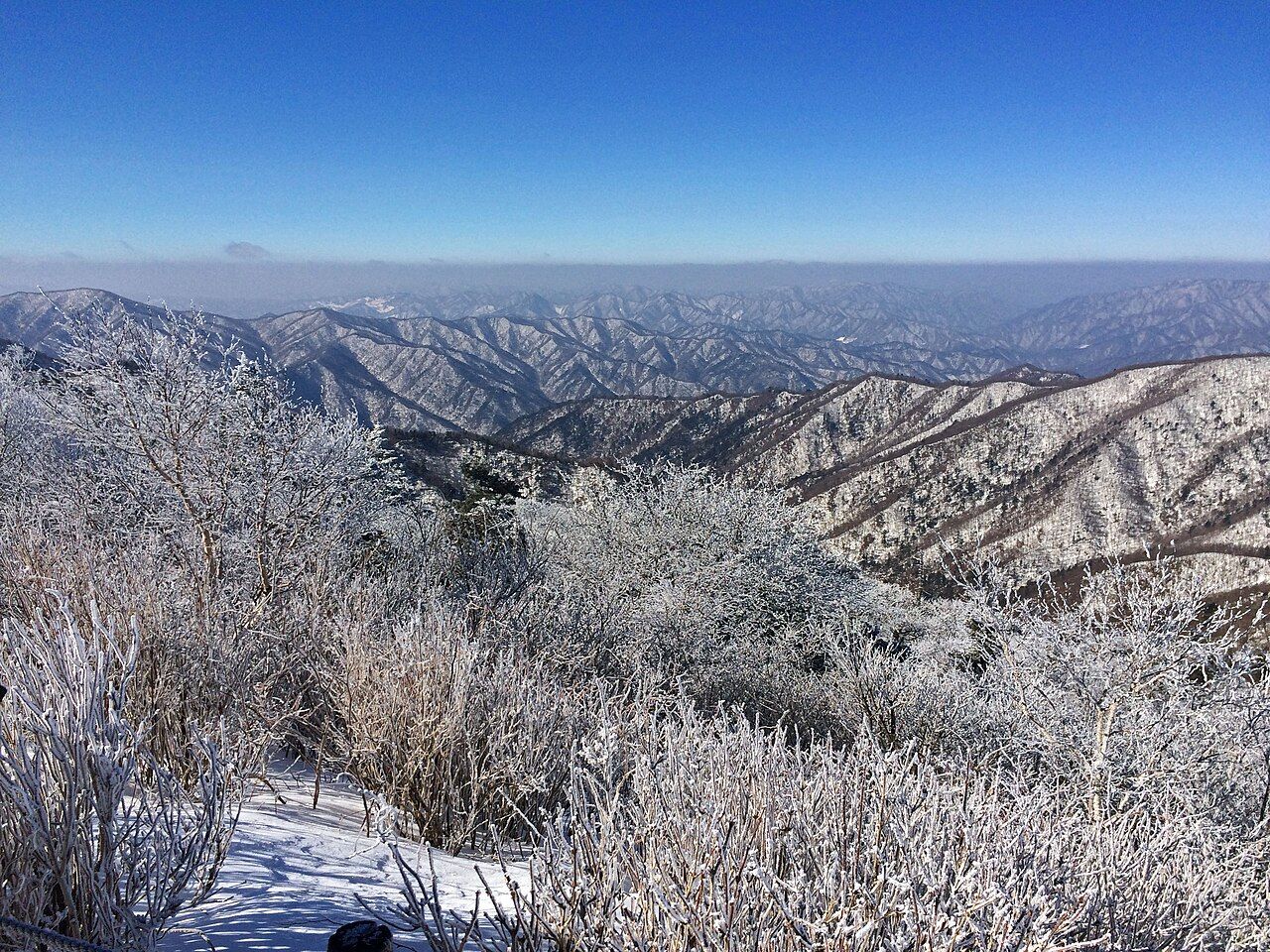
What lies above Sangwonsa? A steep trail climbs to a shrine on the slope, one of a handful of places in Korea said to hold relics of the Buddha, and continues towards Birobong, Odaesan’s highest peak. The climb takes several hours return and is steep and rocky in places. It is a serious walk, not an automatic sequel to a pleasant stroll beside a stream. In winter, snow often lies in the fir forest from December into March; the ridges are colder still, and the high route can close in fire season and after heavy snow.
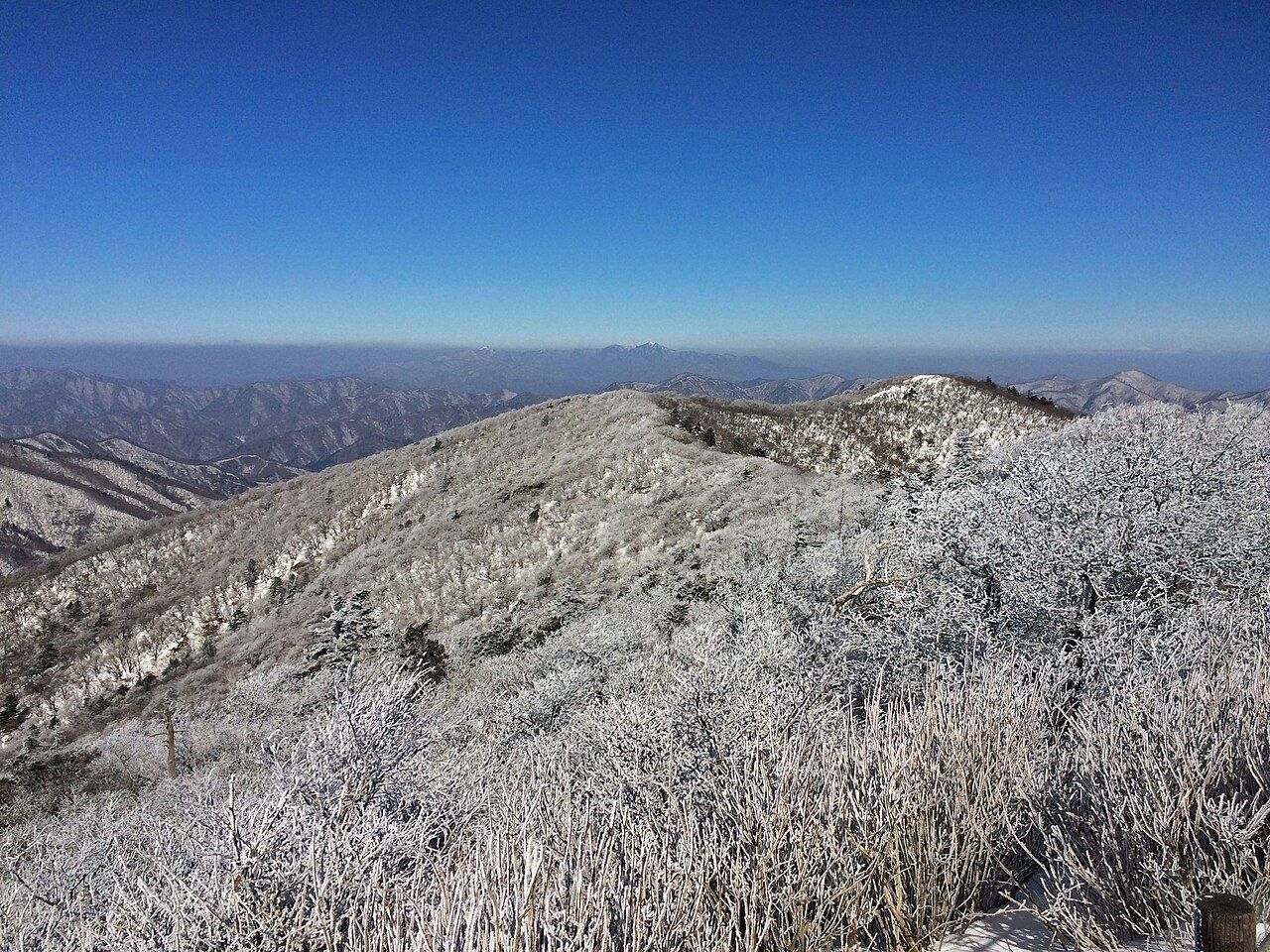
What does the mountain look like from that height? Ridges, and in winter rime over them. The view belongs to a different scale from the courtyard pagoda, though both are part of the same landscape. Spring comes late, with fresh green in May. Summer is cooler than the coast, and rain fills the stream. Autumn colour reaches its height around the middle of October, earlier than on the coast; the forest’s dark firs make a useful counterpoint to the changing slopes.
Could this day be paired with somewhere else on the same side of the ridge? There is Daegwallyeong, and the Pyeongchang mountains; the guide to getting around by KTX and bus answers a different sort of question. But Odaesan’s day has already travelled from the fir trees to the bell, from the valley floor towards the ridges. By evening, the sound of the bell is meant to reach beings in sky, on land and in water. Which part of the valley would still be listening?
Credits: Ken Eckert; Creative Commons BY-SA 4.0; Albert Lee1; Creative Commons BY-SA 4.0