Pyeongchang is a broad stretch of high, forested country west of Gangneung, with cold rivers and farm villages as well as Olympic venues. The 2018 Winter Games put its mountain events here; the ice sports were held at the Olympic Park in Gangneung. The medals have gone home. The hills, rather inconveniently for anyone expecting a purpose-built theme park, remain.
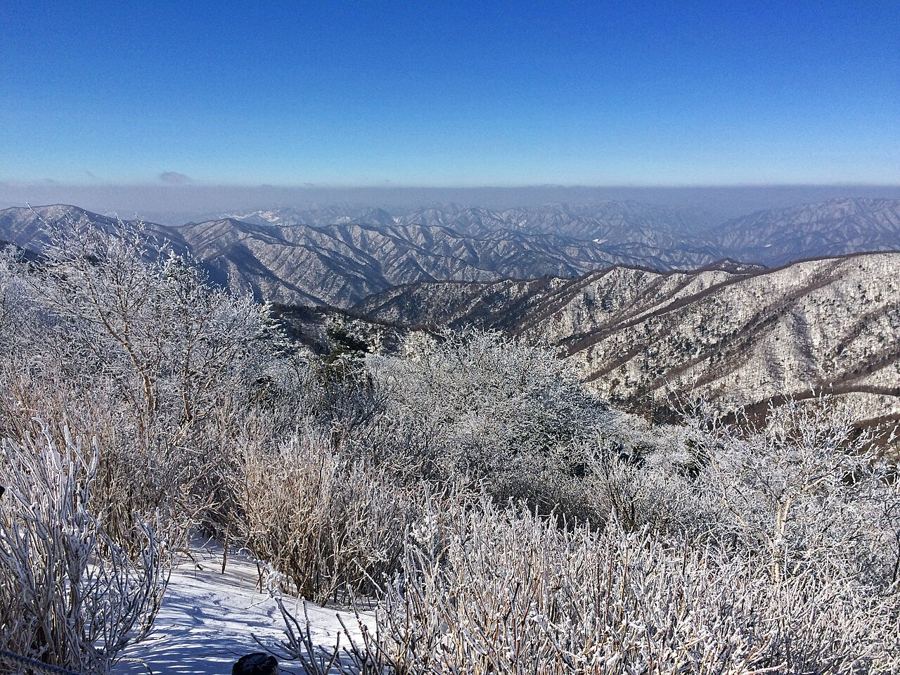
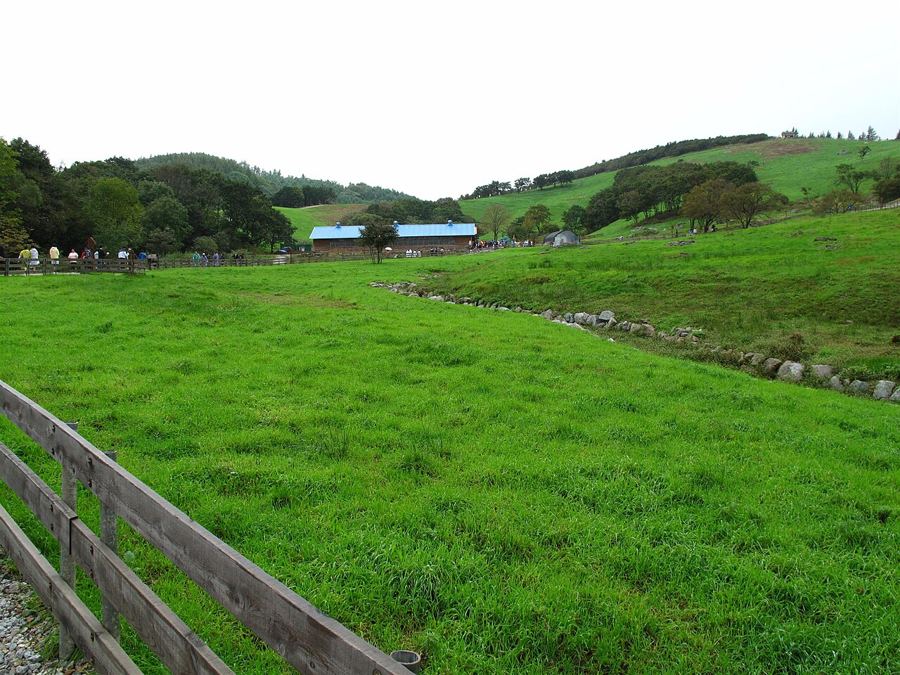
Is this only a winter destination? No. Winter is when Pyeongchang draws its largest crowds, but the landscape has a second life once the snow melts. The slopes turn green, walking paths and mountain-bike trails open in some areas, and gondola rides are available in some parts of the hills. The air stays cool even in midsummer. It is a change of scene from the coast, though not a guarantee that the weather has agreed to behave.
Daegwallyeong
Are the Olympic venues all one enormous ski resort? Not quite. The mountain cluster around Alpensia sits on a high plateau west of the pass, and its events left a collection of quite different venues among the hills. The ski-jumping centre is the most conspicuous: its tall towers rise above a stadium used for ski jumping and several other events. Cross-country and biathlon trails run through nearby forest. A short drive away, the sliding centre’s concrete channel twists down a hillside for bobsleigh, luge and skeleton.
The ski-jump tower makes the clearest impression, partly because it offers a direct lesson in how far an athlete is prepared to leave solid ground behind. When the observation level is open, the view reaches across the hills and down the jump. The venues are used for training and events; the Olympic label does not mean every part is always open to visitors. Sport, as it turns out, continues after the spectators have gone.
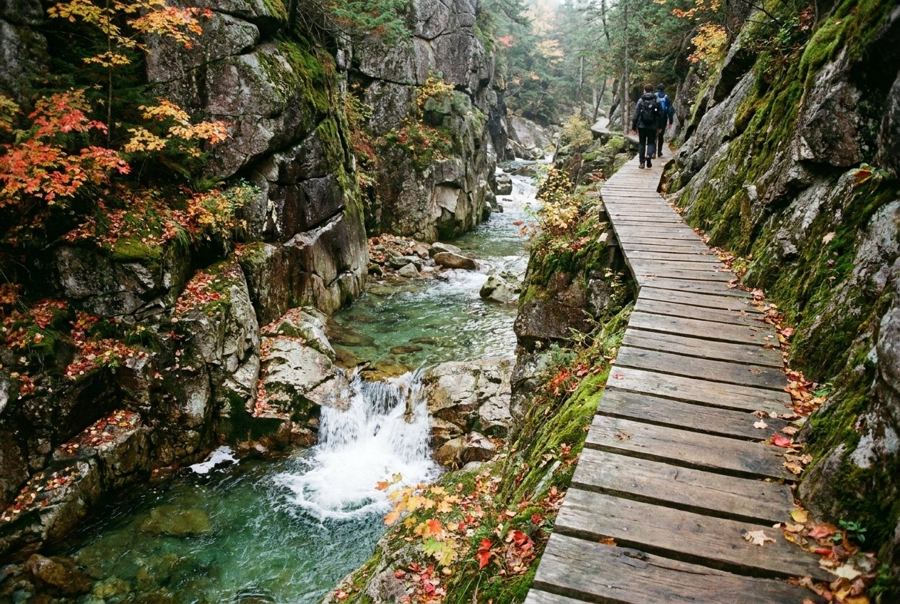
Does Pyeongchang become quiet when the snow goes? The crowds thin from their winter peak, but the hills do not go blank. Forests of birch, fir and pine surround walking routes ranging from short outings to longer days on foot. Nearby Odaesan National Park adds longer hikes, temples and a fir-forest path. Summer here is not simply winter with the white bits removed; it has its own walking country, and the slopes look rather less like sporting equipment.
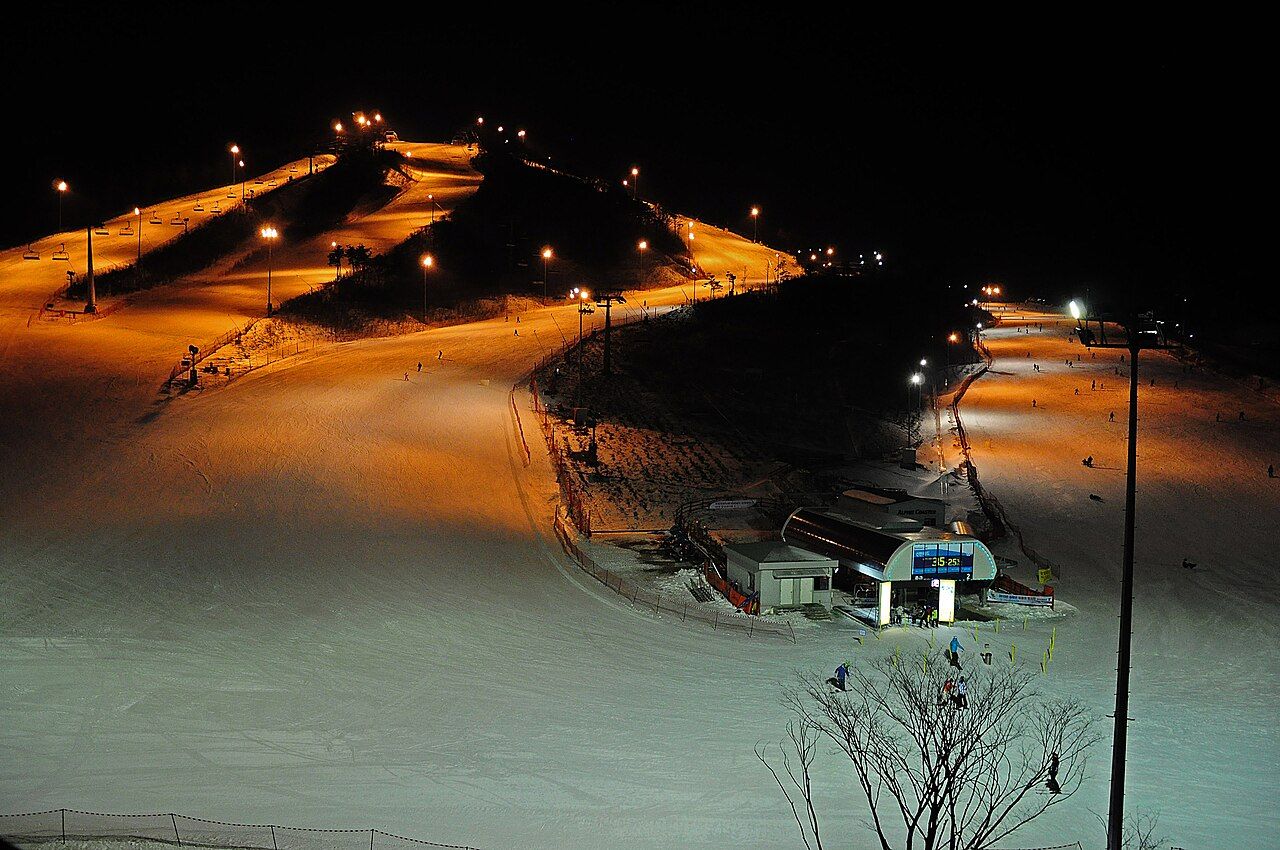
Is the skiing only for serious competitors? No. The resorts at Alpensia and in the surrounding hills have runs from gentle beginner slopes to steeper pistes used in competition. Snowboarders are part of the winter scene, and many slopes are floodlit for night skiing. The high ground has reliable snow and winter is long and cold. In other words, there is plenty of skiing for people who are not trying to make a living by launching themselves down a mountain.
Next stop: Daegwallyeong: a pass with sheep, snow and turbines Mountains
Bongpyeong
Are the white fields in Bongpyeong really snow? No, though late-summer buckwheat flowers make a convincing case for the confusion. West of the Olympic area, the small market town is known for buckwheat, or memil. In late summer, usually from late August into September, fields flower white across the hillsides. It is a brief seasonal transformation, and a more persuasive one than any argument that summer is just the off-season for skiing.
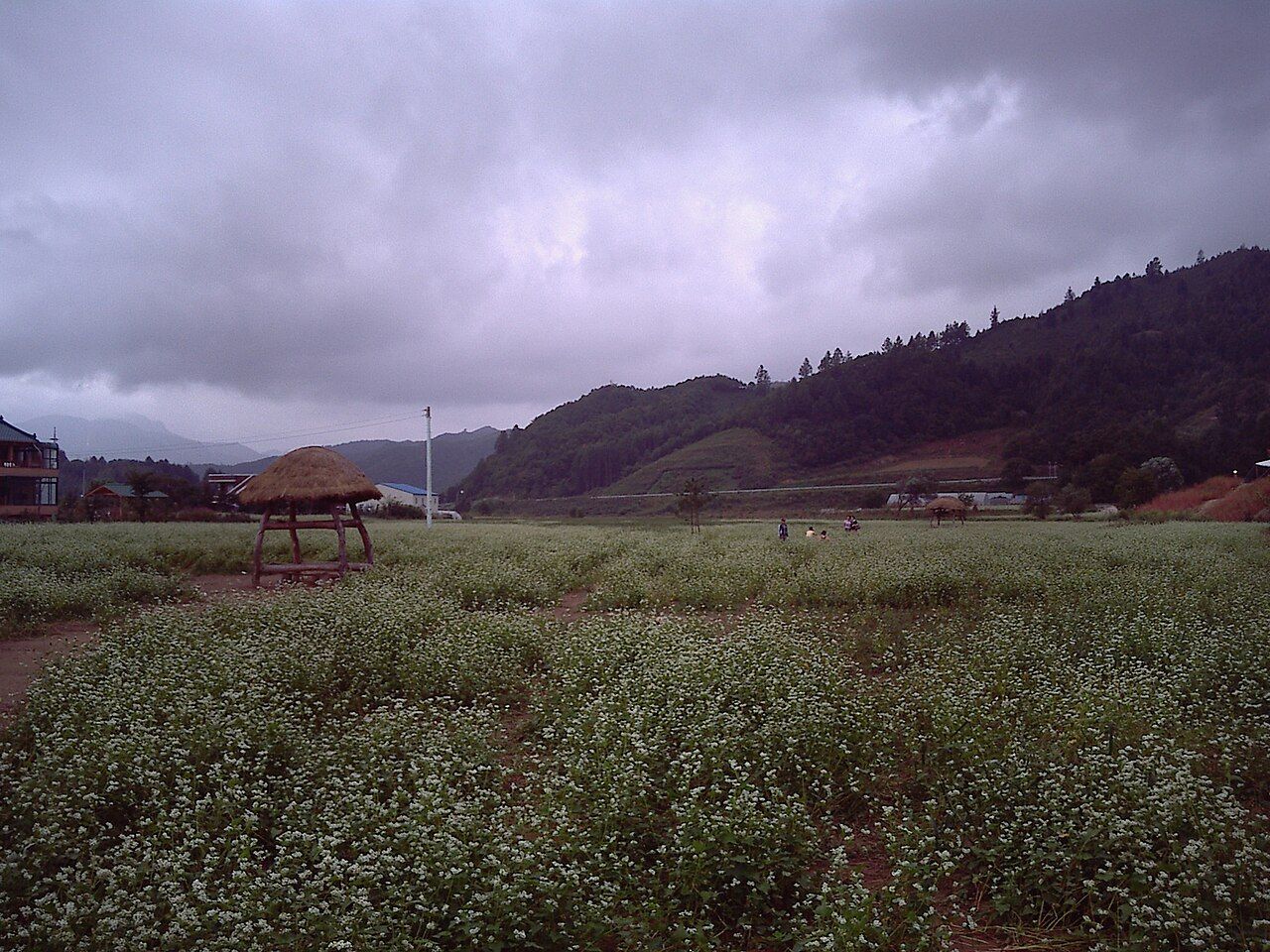
Is the town’s connection to buckwheat only about the fields? No. The countryside was the setting for a short story by Lee Hyo-seok, often translated as When the Buckwheat Flowers Bloom. Its travelling trader walks between markets at night under a full moon. The story is taught in Korean schools, and Bongpyeong has made it part of the town’s identity, with a literary village and museum honouring the writer. There is a festival for the flowers and the story, with walks through the fields, food stalls and performances.
Then there is the food, which is a sounder reason to take buckwheat seriously than its ability to resemble snow. Memil guksu or makguksu means buckwheat noodles, served cold in broth or spicy sauce. Memil jeon is a thin buckwheat pancake, often filled with kimchi or vegetables. Bongpyeong’s five-day market still has vegetables, herbs and buckwheat products. The noodles are my favourite: the flowers may be the more famous sight, but a field does not usually arrive dressed in broth.
So is Pyeongchang best understood as an Olympic stop? The Games explain the jumps, tracks and stadiums, but not the whole place. There is winter sport on the high slopes, summer walking in the forests, and a buckwheat town whose story is tied to a flowering field. Gangneung is close enough to make the contrast between mountains and coast part of the same stretch of country. For the rail-and-bus side of that journey, see the guide to the KTX and buses.
Credits: Lcarrion88; Creative Commons BY-SA 4.0; Ken Eckert; Creative Commons BY-SA 4.0