Gangneung Olympic Park
The first surprise is how much room there is between the buildings. Olympic memories tend to arrive in the mind as crowds, flags and people moving urgently towards a medal. Here, the plaza is open, the halls stand apart, and the crowds are mostly a matter of memory. It is a fair start to a day in a place designed for an event that did not intend to be quiet.
What happened here? In 2018, the Winter Olympics divided their events between the mountains around Pyeongchang and the coast at Gangneung. Skiing and sliding went inland; skating, hockey and curling came to this new sports park on the edge of the city. For a few weeks the park was among the busiest places in Korea. The distinction between a long queue and an Olympic queue is probably more important to the people who stood in them than to history.
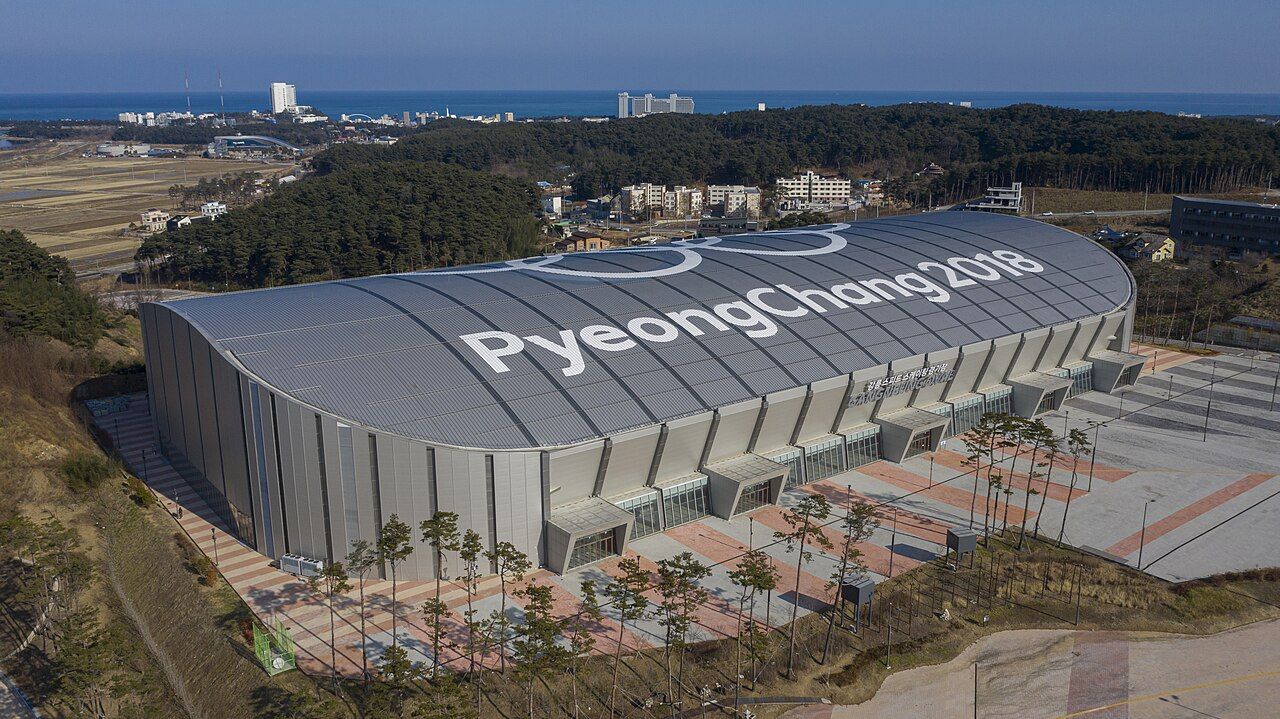
What does the plaza say now? Not very much, which is one of its better qualities. There are broad paved spaces and sculptures left from the Games, including the tall skate-blade shape, while the long curve of the Oval roof gives the open ground something to look at. The park sits on low land near the sea. From higher ground nearby, the line of the water can be seen just beyond its far edge.
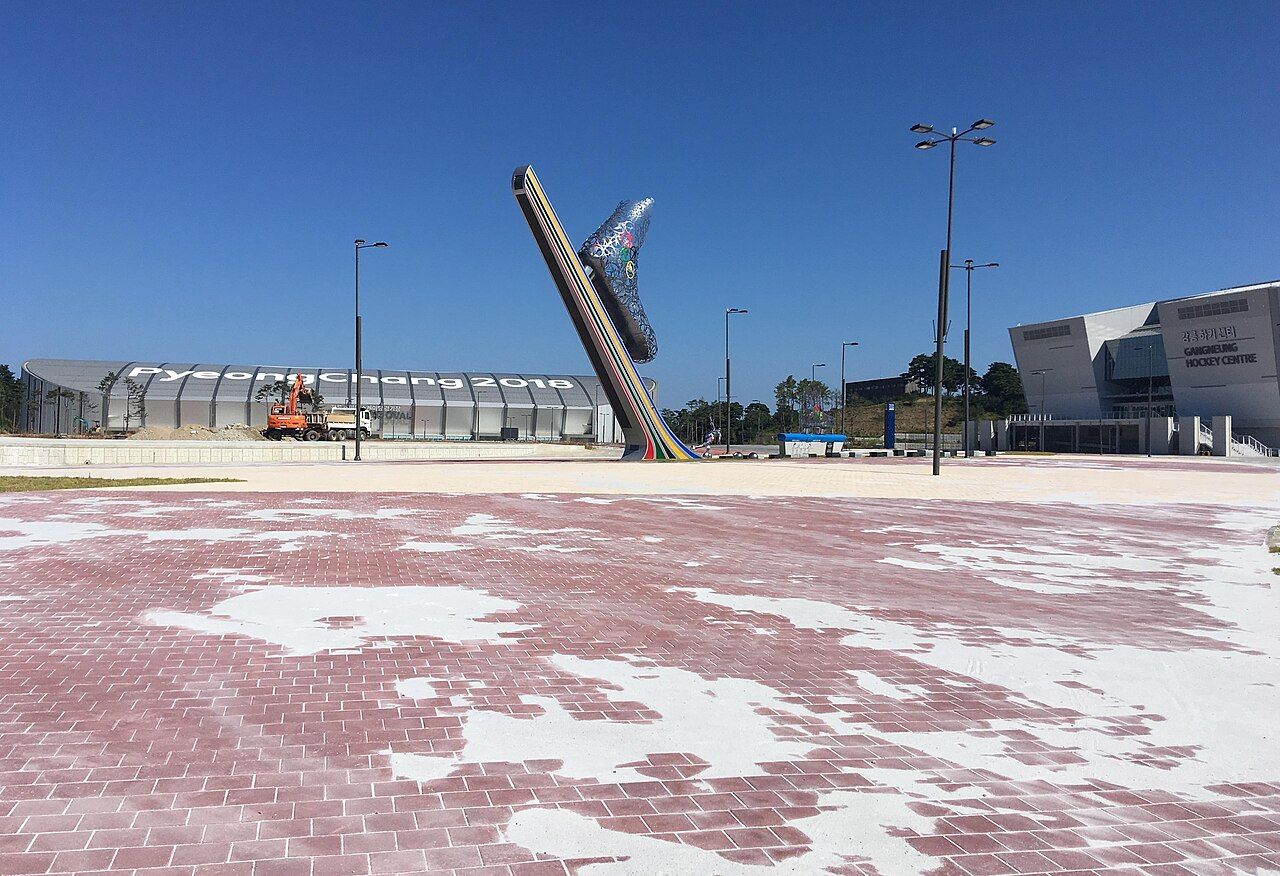
Which buildings are these? The Ice Arena held figure skating and short track speed skating. The long, low Oval was built for long track speed skating. Hockey had its own centre, and curling took place in a converted older ice rink. A second hockey venue stood at a university campus elsewhere in the city. The Olympic cluster is therefore not quite the whole story, though the park makes a convincing picture of the coastal events.
What filled the space during the Games? Alongside the competitions, there was a fan zone, pavilions, performances and medal celebrations. That is a considerable change of mood from a quiet walk among closed halls. The same buildings can hold a crowd one season and appear rather large for the number of people passing through them the next. Olympic architecture has to live with this comparison; it is not always a comfortable neighbour.
Does the day get onto the ice? Sometimes. Public skating sessions are offered at times, and competitions can be free or inexpensive to watch. The calendar decides what is happening, rather than the visitor’s strong feeling that something ought to be happening. Some venues have found regular use for national competitions, training and community skating. The curling centre has kept a place in its sport, and the Ice Arena has continued to host events.
The Oval has had a less settled future, with its use changing over time. This is the less triumphant part of the Olympic afterlife, but also the more honest one. A building does not become useful forever simply because an important race once happened inside it.
Did the Games return? In January 2024, Gangwon Province hosted the Winter Youth Olympic Games. Young athletes competed in skating and hockey in these halls, six years after the Winter Olympics. A short-track race gives the Ice Arena its old purpose back, at least for a while: speed, noise and people leaning towards the track as if doing so might help.
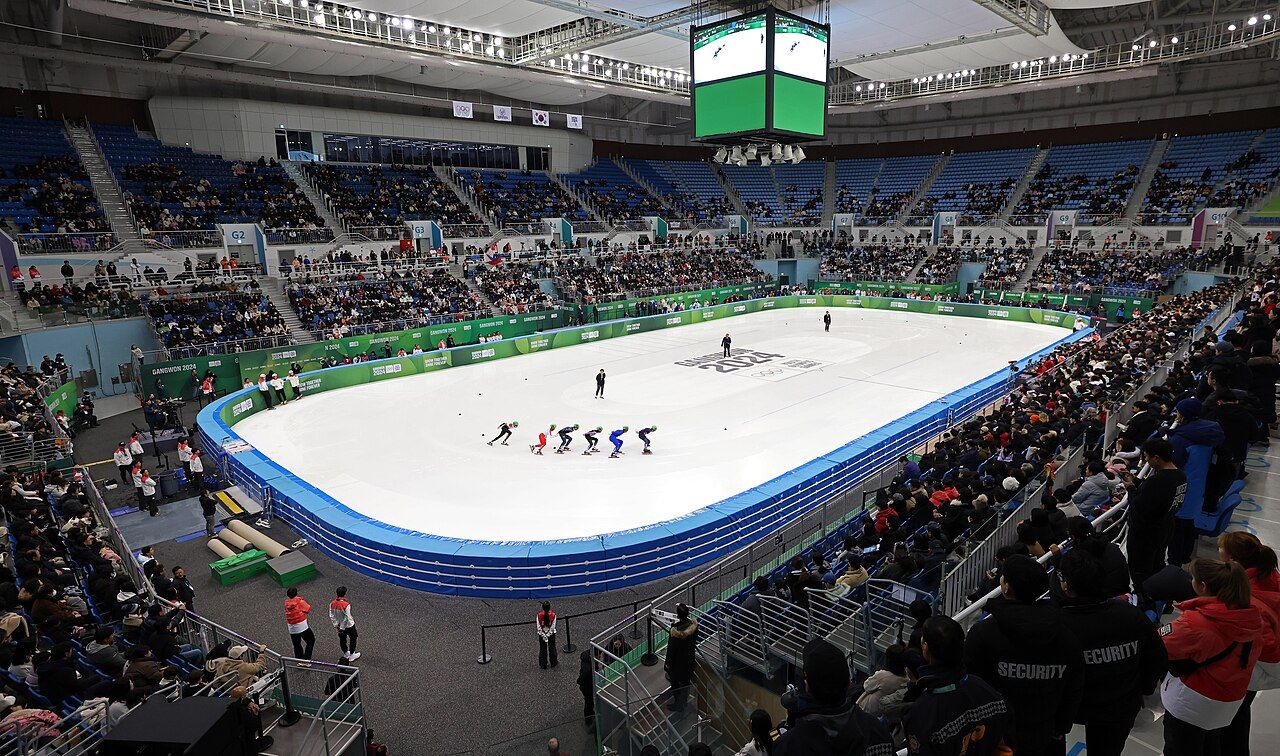
What does the park become as the day goes on? A place to walk, even when no event is taking place. The paths and plaza remain open, and the space is generally quiet outside competitions. The buildings do not need to be full for the scale to register. There is a particular Olympic afterthought in standing on an empty plaza and trying to fit the noise of February 2018 into it.
Next stop: Pyeongchang: the mountains beyond the medals Mountains
Was the lasting legacy really a set of arenas? For many visitors, the railway matters more. The high-speed line from Seoul to Gangneung opened in December 2017, just before the Games, reducing the journey from the capital to around two hours. Before it, the coast meant a long bus journey over the mountains or a slow train. The line has helped make trips from Seoul to Gangneung’s beaches, markets and cafes common, and weekend trains fill quickly. The story of getting to Gangneung by KTX and bus follows that change; the mountain events are covered in Pyeongchang and the Olympic mountains.
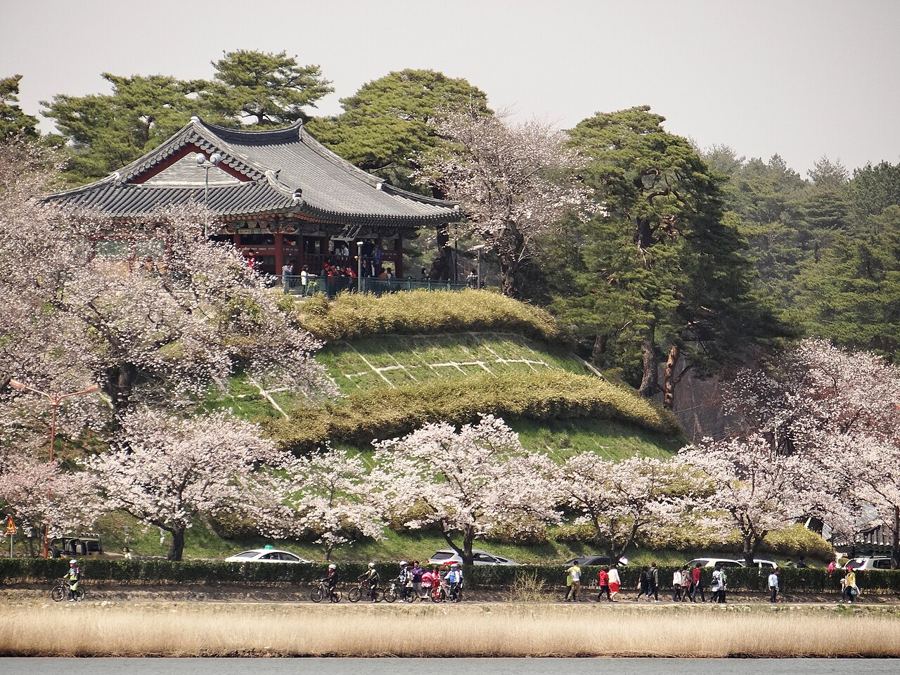
Where does the day go after the park? The coast is close, and Gyeongpo Lake offers a walk beyond the Olympic grounds. The park’s halls belong to a recent, highly public moment; the lake and the shore offer a different pace, without requiring the buildings to pretend they were never there. By evening, the question may be less what the Games left behind than what a city chooses to do with the space. How long does an Olympic echo last when the plaza is quiet?
Credits: Mobius6; Creative Commons BY-SA 4.0; Christophe95; Creative Commons BY-SA 4.0; Scroozle; Creative Commons BY-SA 3.0